

Archaeologists Uncover Roman Necropolis Beneath Zadar Neighborhood

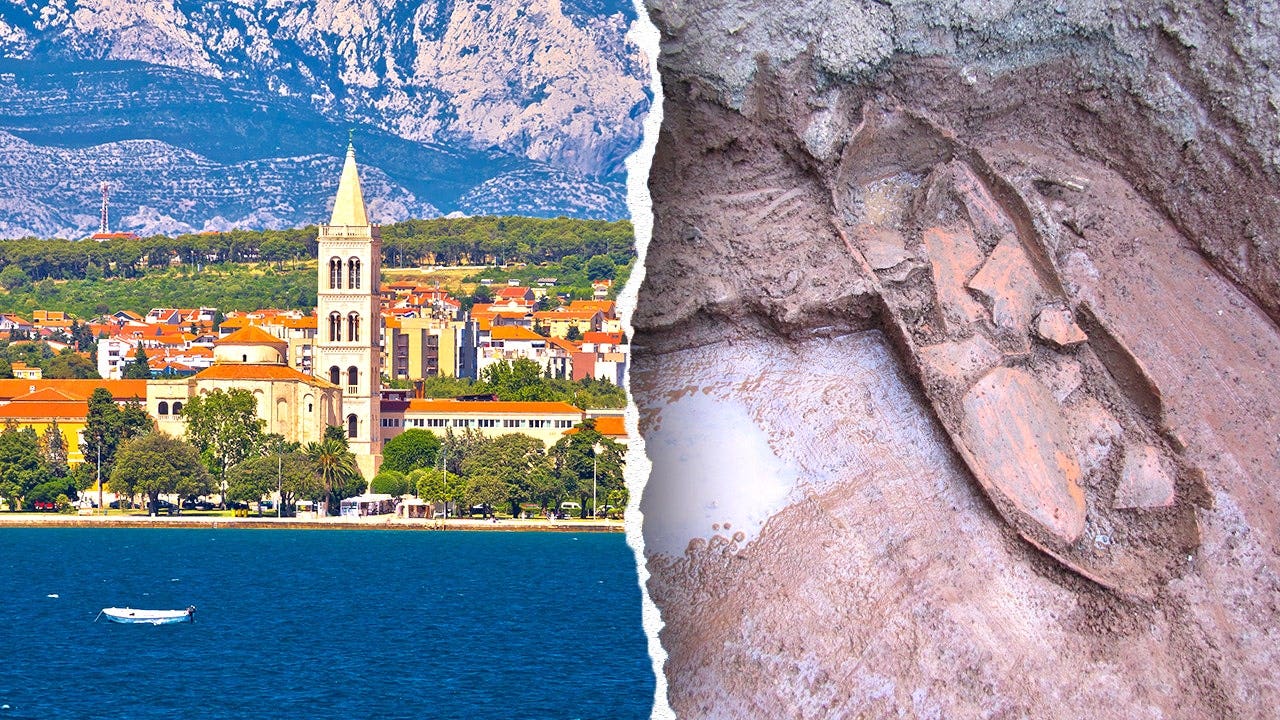
Archaeologists have uncovered ancient Roman graves in the Relja district of Zadar, a coastal city in Croatia known for its coastline and historic Roman ruins.
The University of Zadar's Department of Archaeology announced the discovery on social media. The necropolis dates from the first century B.C. to the fifth century A.D. and lies beneath the busy Relja neighborhood, which includes a major shopping center and landmarks. Across the wider Relja area, archaeologists have found 3,000 graves.
In Roman times, cemeteries stood outside city walls, often along main roads. Romans buried their dead here for nearly 500 years along one such route, the department said.
Today the area ranks among Zadar's most active and developing parts. But when the necropolis began, it sat in the suburban zone.
The site produced around 15 burials, said Igor Borzić, a professor at the University of Zadar. The graves show the standard development of funerary practices over centuries, he told Fox News Digital on May 3.
Cremation dominated in the first and second centuries A.D. Grave goods included glass balsamaria, small glass vessels, ceramic bowls, oil lamps, coins and other offerings.
By the second century, inhumation or body burial grew more common. Over time, these burials held fewer grave goods. That change reflects shifts in views of the afterlife and wider religious moves from pagan traditions of classical antiquity to Christianity's rise.
Overall, the finds from these 15 or so graves indicate that Roman Iader's population tracked cultural and religious patterns across the Roman Empire. This points to a connected, cohesive and trend-aware society in the vast imperial system.
Such discoveries under a modern city do not surprise in Zadar, Borzić said. Nothing truly unexpected has appeared, though each find carries its own story.
Modern archaeology draws on lab analyses to uncover origin, diet, health and causes of death. New and possibly surprising details may emerge there, he said.
Key items include a burial that may predate Roman Zadar, from the prehistoric Liburnian period. Carbonized remains from the second or third century A.D. likely came from food or grains and await analysis.
Artifacts from the site will undergo processing and study before temporary display in the Department of Archaeology's collection.
The site also turned up 20th-century items from the Italian occupation of Zadar. That underscores the city's lasting role, Borzić said. Its strategic spot on eastern Adriatic sea routes and fertile hinterland kept Zadar central through many eras.
What's Your Reaction?
 Like
0
Like
0
 Dislike
0
Dislike
0
 Love
0
Love
0
 Funny
0
Funny
0
 Wow
0
Wow
0
 Sad
0
Sad
0
 Angry
0
Angry
0





Comments (0)