

Alaska Landslide Triggers Second-Tallest Recorded Megatsunami in Remote Fjord

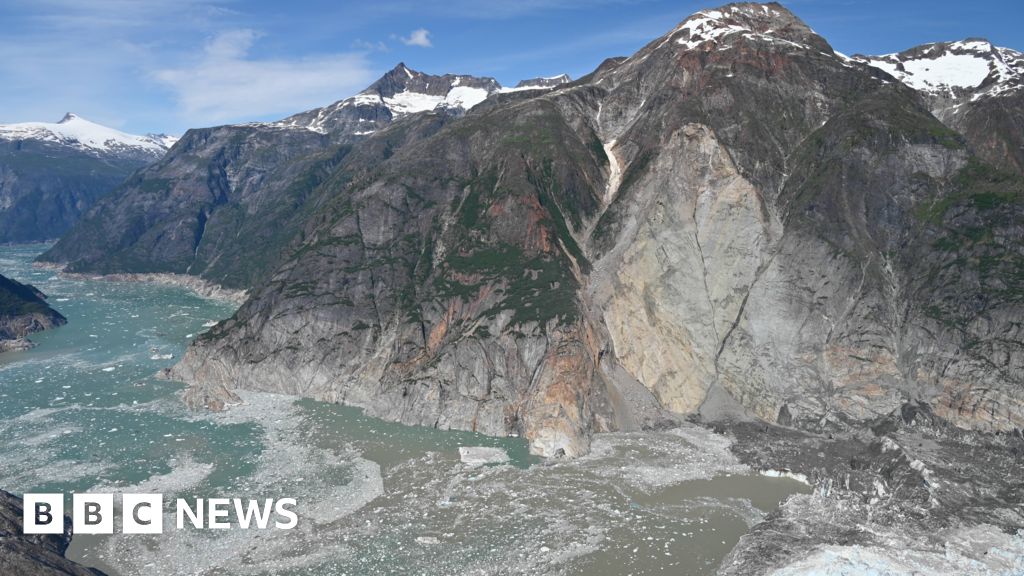
Scientists say a massive megatsunami triggered by a landslide in southeast Alaska last summer ranks as the second tallest ever recorded and highlights risks from melting glaciers.
The wave swept through remote Tracy Arm Fjord, causing destruction. A new analysis shows small earthquakes set off the slide, dumping 64 million cubic meters of rock – equal to 24 Great Pyramids – into the water in under a minute. That impact produced a wave almost 500 meters tall.
The event occurred in the early morning hours, sparing tourist cruise ships, according to the researchers.
Alaska geologist Dr. Bretwood Higman visited the site and called it "a close call." "We know that there were people that were very nearly in the wrong place," he said. "I'm quite terrified that we're not going to be so lucky in the future."
Megatsunamis occur when landslides from earthquakes or unstable rock hit water. They stay local and fade quickly, unlike open-ocean tsunamis from quakes or underwater volcanoes, such as the 2011 Japan event that traveled thousands of miles and killed many.
The largest megatsunami happened in the 1950s and topped 500 meters.
Dr. Higman reached Tracy Arm Fjord, a cruise ship hotspot for Alaska's natural sites, weeks after the wave. He saw broken trees scattered on the mountainside and in the water, plus large areas of bare rock stripped of soil and plants.
Alaska faces high megatsunami danger from its steep mountains, narrow fjords and common quakes.
Research in the journal Science, using field observations, seismic and satellite data, outlined the sequence and wave height. It ties worsening collapses to climate-driven glacier melt.
Dr. Stephen Hicks of University College London said the glacier had been "helping to hold up this piece of rock." As the ice pulled back, it exposed the cliff base, "allowing that rock material to suddenly collapse into the fjord."
He and his team, who have tracked tsunamis for years, expressed concern. "More people are now going to remote areas – often these tourist cruises are going to see the natural beauty of the area to actually learn more about climate change – but they are also dangerous places to be."
Dr. Higman said megatsunami risks are rising sharply. "At this point, I'm pretty confident that these are increasing not just a little bit, but increasing a lot," he said. "Maybe in the order of 10 times as frequent as they were just a few decades ago."
What's Your Reaction?
 Like
0
Like
0
 Dislike
0
Dislike
0
 Love
0
Love
0
 Funny
0
Funny
0
 Wow
0
Wow
0
 Sad
0
Sad
0
 Angry
0
Angry
0



Comments (0)