

Xi Jinping Hosts Putin and Trump in Quick Succession as China Seeks Global Role

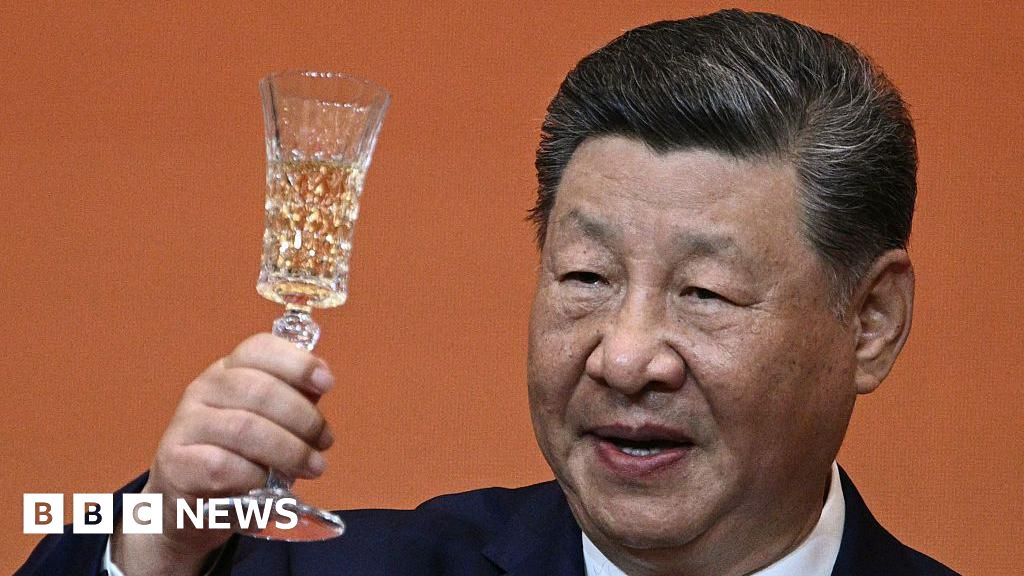
Cheering children, a military honour guard, cannon fire and a marching band marked Vladimir Putin's arrival outside the Great Hall of the People. The scene closely resembled the reception given to Donald Trump the previous week.
Two high-stakes presidential visits within days fit the image Xi Jinping wants to project: a leader willing to engage with all sides. For China, the meetings signal that its large economy and diplomatic reach now draw world leaders to Beijing.
Samir Puri of King's College London said the new era of world affairs is less centred on the West. He added that China holds considerable latent power and prefers to use its stature gradually rather than through direct intervention in conflicts.
The optics looked similar, with Xi appearing confident as host. The politics behind the two visits differed sharply. Putin has visited China more than 20 times and maintains a close personal tie with Xi. Yet the war in Ukraine and Western sanctions have left Russia dependent on Beijing, now its top trading partner and largest buyer of oil and gas.
Talks produced more than 20 agreements on trade and technology, but no approval for the long-stalled Russian gas pipeline that Putin has sought for years. A joint statement brought no major breakthroughs.
Dr Zheng Runyu of the Centre for Russian Studies at East China Normal University in Shanghai said both countries need each other, but Russia needs China more on the global stage. He noted that deep cooperation with China is vital for Moscow as it faces current challenges.
Xi also held talks with Trump. Stronger trade ties with other nations and China's control of rare earth minerals and advanced manufacturing have strengthened Beijing's position. The Chinese leader negotiated from a position of greater equality amid Trump's unpredictability.
In meetings with both leaders, Xi dealt with men entangled in costly wars that have lasted longer than expected. Trump's involvement in the Middle East has become a global crisis that has hurt his approval ratings at home. Putin's invasion of Ukraine, now in its fifth year, has isolated Russia and imposed heavy costs on its own people.
Five years ago China appeared headed toward diplomatic isolation. Its borders were closed during the pandemic that Trump called a Chinese virus. Relations with the West had worsened amid aggressive Chinese diplomacy, criticism over human rights in Xinjiang, and tighter control over Hong Kong. Western sanctions followed, and China responded with its own measures.
Beijing has since repositioned itself as a key centre of diplomacy and trade. It has moderated its diplomatic tone, recognising that an economic slowdown requires stable foreign investment and trade. Earlier confrontation had pushed regional partners such as South Korea, the Philippines and Vietnam closer to Washington.
Since Trump's election, China has repaired ties with Australia, Canada and the United Kingdom. Leaders from those countries and Germany have visited Beijing to pursue deals.
For a decade Xi has promised the great rejuvenation of the Chinese nation. The past week offered domestic propaganda value, showing the Chinese leader as the man world powers seek out.
Yet the visits also revealed limits. Xi mentioned only the Middle East conflict, telling Putin that a full end to the war in Iran was of utmost urgency. He made no reference to Russia's invasion of Ukraine.
Xi and Putin condemned treacherous military strikes, the use of negotiations as cover for attacks, the assassination of leaders, the destabilisation of sovereign states, and the kidnapping of national leaders for trial.
The statement drew attention because of its silence on Ukraine, where hundreds of thousands have died. European governments may question how far Beijing is prepared to act as an even-handed player.
China has tried to stay neutral in the Ukraine war, though the United States and Europe have pressed it to cut economic support for Moscow. Beijing fears losing an ally if Putin falls and worries about instability on its border.
Samir Puri said Xi could avoid comment on Ukraine, which in effect allows Russia to continue its invasion. He added that he would be surprised if China pushed for a ceasefire or outlined a post-war settlement.
Despite the high-level diplomacy, Xi faces a continuing challenge. China's authoritarian system, strengthened under his rule, remains controversial and distrusted by many governments.
What's Your Reaction?
 Like
0
Like
0
 Dislike
0
Dislike
0
 Love
0
Love
0
 Funny
0
Funny
0
 Wow
0
Wow
0
 Sad
0
Sad
0
 Angry
0
Angry
0




Comments (0)