

Uyghur Mother Details Torture, Child's Death and Prison Abuse in China's Xinjiang Camps

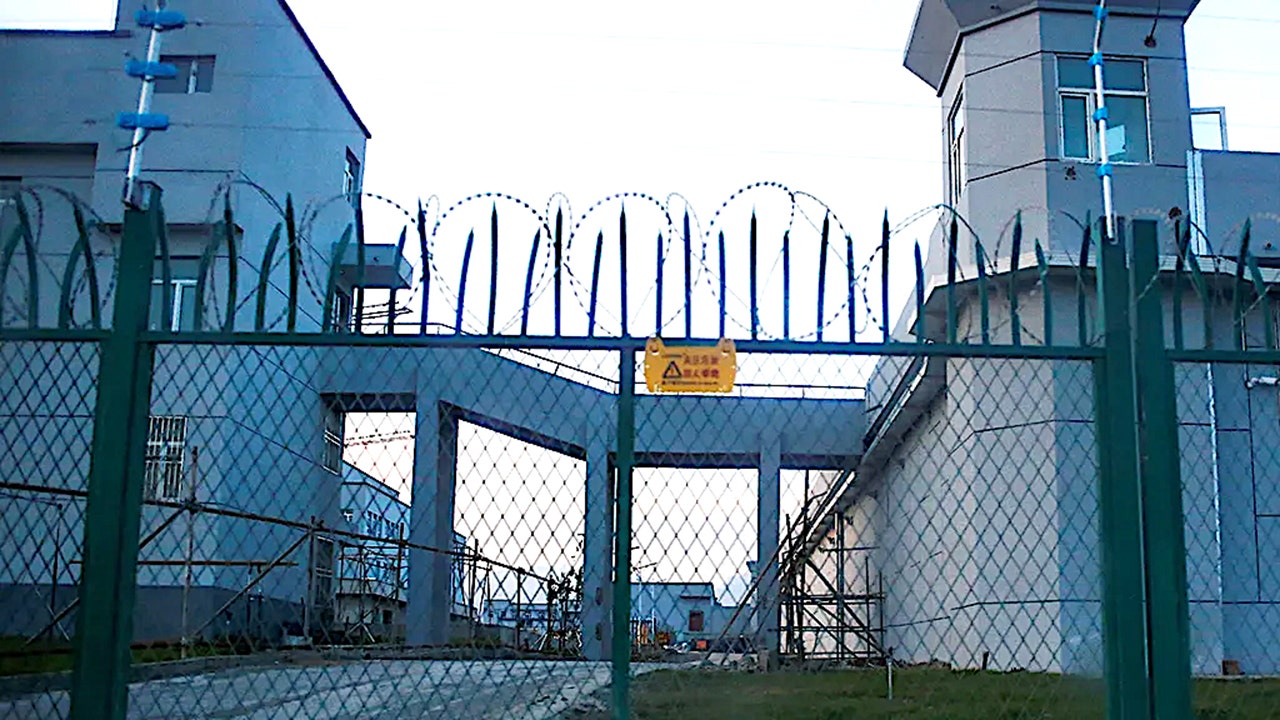
Mihrigul Tursun speaks with remarkable control at first.
The 35-year-old Uyghur mother, dressed in a neatly pressed blue suit in Washington, answers questions softly and cautiously. But the memories soon flood out in vivid, painful detail, as if the years since China's detention system have vanished.
One memory leads to another: underground cells, interrogations, women screaming at night, the stench of overcrowded prison rooms, her infant son's motionless body in her arms as she tried to warm him back to life.
For Tursun, the horror persists every day.
Fear lingers too, not for herself but for family members she believes remain vulnerable in China because she has spoken publicly about her ordeal due to her faith.
Her account comes as President Donald Trump visits China for talks with Xi Jinping on trade, security and regional tensions. To Tursun, China destroyed her family, ruined her health and left psychological scars she battles daily.
She speaks out because few survivors of China's detention system can or will tell their stories.
"People think this only happened in history," she said. "But it is still happening."
Tursun was born in Xinjiang, China's far western Xinjiang Uyghur Autonomous Region and home to millions of Uyghurs, a predominantly Muslim ethnic minority with their own language and culture. Human rights groups, researchers and former detainees have accused Beijing of mass detention, forced labor, political indoctrination and severe religious repression against Uyghurs and other Muslim minorities.
China denies the claims and calls the facilities vocational training centers to fight extremism and terrorism.
Tursun's troubles with Chinese authorities started early. At age 10, the government sent her to Mandarin-language schools inside China to assimilate Uyghur children.
"They educate us as Chinese mind," she said.
Later, she moved to Egypt for business administration studies, married an Egyptian and gave birth to triplets in 2015: two boys and a girl.
When the children were two months old, her parents urged her to bring them to China. She resisted, citing their young age, but her mother insisted.
On May 12, 2015, she flew to China with the newborns.
The nightmare began right after landing in Beijing. At the airport, two people offered to carry the babies through border control, then identified themselves as police.
"They say, 'Keep silent. Follow us,'" she recalled.
Officers separated her from the children and questioned her for hours about Egypt, asking if she joined political or anti-Chinese activities. She begged to see her babies for breastfeeding.
Instead, they hooded her head, handcuffed her and sent her to detention in Xinjiang, where interrogations and torture started.
Weeks later, authorities released her temporarily after saying one child was sick. Escorted to a Urumqi hospital, she found her surviving son and daughter on different floors, on oxygen.
The next day, doctors gave her papers to sign: a death certification for her infant son.
"They say, 'This is your son,'" she recalled softly.
Doctors offered no explanation, treating her as a political suspect. For three days, she kept his body at her parents' home under police watch.
As Muslims, the family wanted a mosque burial, but authorities blocked it.
"The body stayed with me three days," she said. "I try to give him warmth. I try to let him wake up."
He never opened his eyes again.
After burial, authorities evicted her family and detained her again. From 2015 to 2018, she moved between prisons and facilities, facing psychological abuse, interrogations and torture.
One interrogation stands out. After she said God would punish them, officers replied, "Chinese Communist Party is God. Xi Jinping is God."
They shaved her head and shocked it with electricity until she passed out.
Tursun described systematic medical exams on detainees, including blood and organ checks. Activists cite similar claims in accusations of organ harvesting from prisoners of conscience, which Beijing denies.
In one facility, more than 60 women crammed a small cell under constant watch. Some had not seen sunlight in over a year.
Many were professionals: teachers, doctors, neighbors she knew.
Others were young. A 17-year-old girl from a remote village, unfamiliar with the world, asked how people fit in airplanes.
Guards later took her away. She returned bloodied and traumatized from sexual attack. Two months on, she died.
"No one care about that," Tursun said, tearing up. Guards dragged the body like trash.
Her husband eventually found her and the children. After Egyptian intervention, both signed pledges of silence and she left China.
Now in the United States with her surviving children, she gained refuge after 2018 congressional testimony.
She counts herself fortunate. Her children live safely in America, free from Xinjiang surveillance.
But survival differs from healing. Her physical and mental health stay fragile; trauma disrupts sleep, memory and routines.
"There is no one hour I forget," she said.
Sometimes she no longer wants to live. Her children and duty to women left behind keep her going.
Former Ambassador-at-Large for International Religious Freedom Sam Brownback, who interviewed her for his book on China's religious persecution, says such stories reveal the Chinese Communist Party's fear of faith.
"This is the issue they fear the most: religious freedom," Brownback said in Washington as Trump reached Beijing. "President Trump, you’re the president that’s done more on religious freedom than any modern president… You need to take this message to President Xi Jinping and his crushing of religion in China."
"Our fight is not with the Chinese people," he added. "It’s with the party."
Chinese Embassy spokesperson Liu Pengyu told Fox News Digital that China protects religious belief lawfully. He cited nearly 200 million believers, over 380,000 clerical personnel, about 5,500 religious groups and more than 140,000 registered worship sites.
Beijing regulates religious affairs tied to national and public interests, opposes illegal acts under religion's guise, and accuses foreign nations and media of interfering on religious freedom pretexts. He urged journalists to respect facts and end attacks on China's policies.
As the interview ended, Tursun composed herself and walked Washington's streets like any young mother. Only she bears unimaginable memories.
What's Your Reaction?
 Like
0
Like
0
 Dislike
0
Dislike
0
 Love
0
Love
0
 Funny
0
Funny
0
 Wow
0
Wow
0
 Sad
0
Sad
0
 Angry
0
Angry
0



Comments (0)