

US Produces Nuclear Weapons at Cold War Levels Amid China Expansion, Iran Threat

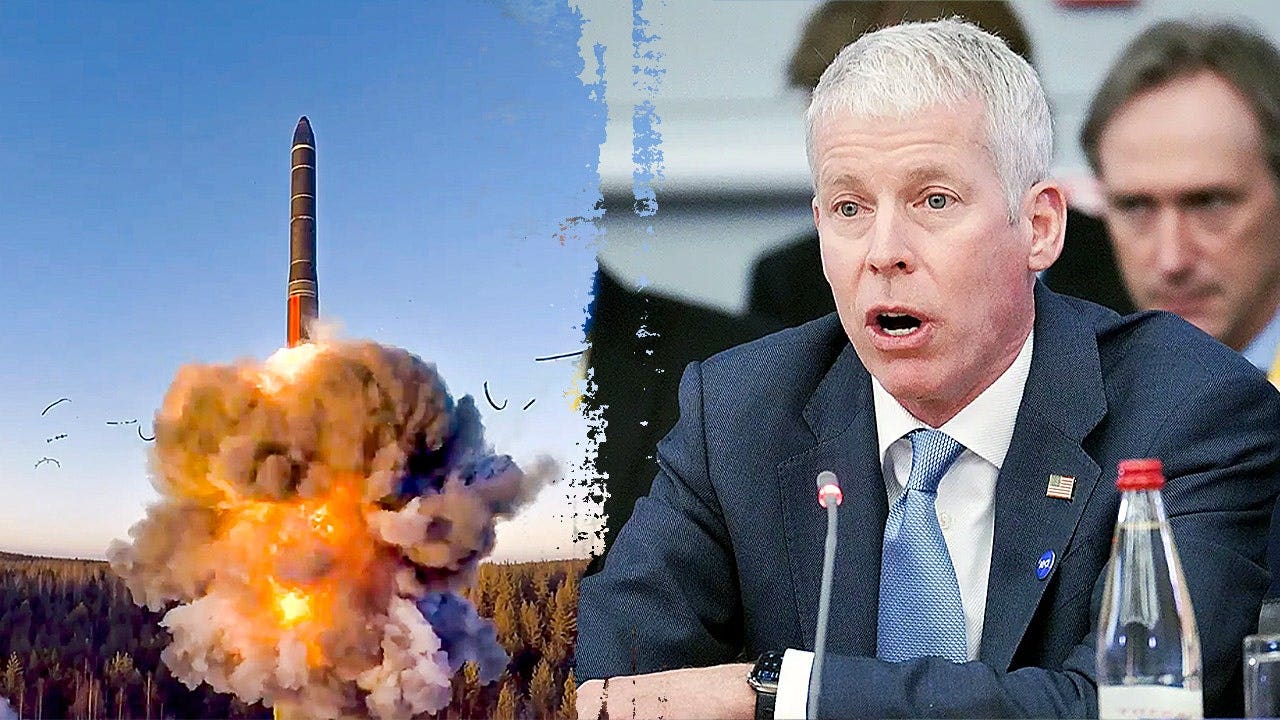
Energy Secretary Chris Wright told lawmakers Thursday that the United States is producing nuclear weapons at levels not seen since the Cold War. Officials warned of a rapidly expanding Chinese arsenal and growing nuclear threats from Iran.
"Today, NNSA is delivering more new nuclear weapons and plutonium pits than at any time since the Cold War," Wright said during a Senate Armed Services Committee hearing. He described it as a broader US "nuclear renaissance."
The ramp-up comes as China undertakes what lawmakers called an "unprecedented" expansion of its nuclear forces. Senate Armed Services Committee Chairman Roger Wicker, R-Miss., warned that Beijing is moving beyond a minimum deterrence posture. He said China under President Xi Jinping is building a far larger and more sophisticated nuclear arsenal.
"China's building a far larger and more sophisticated nuclear force," Wicker said. He pointed to the rapid construction of hundreds of new missile silos, expanded mobile missile systems, ballistic missile submarines, and investments in long-range bombers. "All of these measures flow from and to a strategy designed to surpass the United States in the coming decade."
Wicker said China's nuclear buildup accompanies a broader push to convert economic strength into military advantage, including dominance in shipbuilding, critical minerals, and key dual-use technologies.
"Deterrence is expensive, but this is a competition we cannot afford to lose," he said.
For decades, China kept a relatively small "minimum deterrent" nuclear posture. US officials now say Beijing is building a larger and more survivable force across land, sea, and air platforms. Pentagon estimates project China's arsenal could exceed 1,000 operational nuclear warheads by 2030, up from more than 600 today. The United States maintains roughly 3,700 active nuclear warheads in its stockpile.
Wright said the US is responding with a sweeping modernization effort. Seven major warhead programs are underway simultaneously to keep each leg of the nuclear triad operational.
"Thanks to President Trump's leadership, America's nuclear renaissance is here," Wright said.
Some lawmakers questioned whether the US nuclear enterprise can sustain the pace. Sen. Jack Reed, D-R.I., warned that the National Nuclear Security Administration is already under strain, especially after dismissing hundreds of trained nuclear personnel last year.
"These experts are exceedingly hard to recruit and retain," Reed said. He noted the agency previously had roughly 2,000 personnel supporting Pentagon nuclear requirements.
Reed cautioned that new proposals, including expanded nuclear-powered naval capabilities, could stretch resources further and increase demand for warhead production that the agency struggles to meet.
Wicker criticized the administration for not requesting funding for a nuclear sea-launched cruise missile warhead program. He called it a matter of complying with existing law.
"The United States cannot afford to forego credible, flexible response options while our adversaries' nuclear forces grow day by day," he said.
The hearing also addressed Iran's nuclear program. During questioning from Sen. Richard Blumenthal, D-Conn., Wright said Iran is weeks away from enriching uranium to weapons-grade levels.
"They are weeks — a small number of weeks — away to enrich that to weapons grade uranium," Wright said.
He noted Iran already has uranium enriched to 60%, plus significant quantities at 20%, putting it close to weapons-grade capability.
"When you're at 60%, you are … way more than 90% of the way there for the enrichment necessary for weapons grade uranium," he said. "It’s very concerning."
Asked if the US should target Iran's full stockpile of enriched uranium, estimated at roughly 12 tons, Wright indicated support.
"I think that's the wise strategy. Ultimately, the goal is to prevent future enrichment of uranium as well," he said.
Tensions with Iran have raised concerns about global energy markets, especially disruptions to oil flows through the Strait of Hormuz.
"A whole administration was well aware of that risk," Wright said when asked if the White House anticipated potential fallout.
Pressed on mitigating impacts on American households, Wright stressed restoring global energy flows. He said the US would ensure free movement of oil through the region "either in a, in an agreement … or without a deal."
Wright defended the administration's push for more funding for nuclear programs to restore US strategic dominance.
"We lost our mojo a bit in designing new weapons and modernizing our weapons," he said. "It is absolutely essential that every power in the world believes and understands that the United States has the top nuclear arsenal."
What's Your Reaction?
 Like
0
Like
0
 Dislike
0
Dislike
0
 Love
0
Love
0
 Funny
0
Funny
0
 Wow
0
Wow
0
 Sad
0
Sad
0
 Angry
0
Angry
0






Comments (0)