

US charges Raúl Castro with murder over 1996 downing of two planes

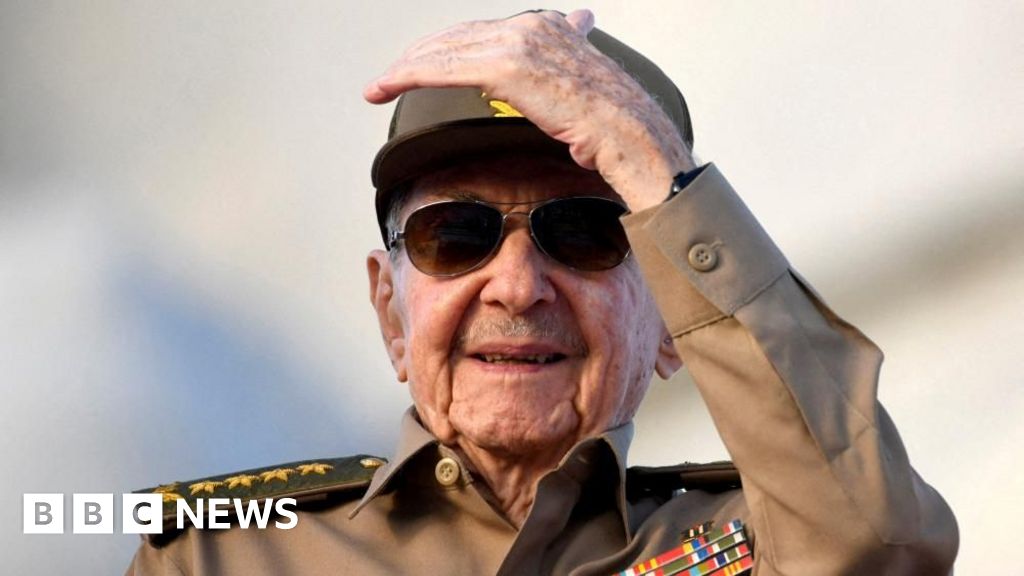
The United States has charged former Cuban leader Raúl Castro with conspiracy to kill US nationals and other crimes over the downing of two planes between Cuba and Florida in 1996.
The case, unveiled on Wednesday, revives charges originally filed in 2003. It accuses Castro and five others of shooting down aircraft belonging to the Cuban American group Brothers to the Rescue and killing four people, including three Americans.
Castro, now 94, was head of Cuba's armed forces at the time and faced international condemnation over the incident.
As the US seeks to increase pressure on Cuba's communist government, President Miguel Díaz-Canel called the charges a political maneuver without legal foundation.
Speaking at Freedom Tower in Miami, Acting Attorney General Todd Blanche announced that the US would also charge Castro with destruction of aircraft and four individual counts of murder over the deaths of Armando Alejandre Jr, Carlos Alberto Costa, Mario Manuel de la Peña, and Pablo Morales.
"The United States, and President Trump, does not, and will not, forget its citizens," Blanche said.
The Justice Department's new charges target a key figure in Cuba's communist leadership at a time when the country faces intense US pressure to make political and economic reforms.
"I think the strategy is to increase the pressure gradually to the point where the Cuban government will give in and surrender at the bargaining table," said William LeoGrande, an expert on Latin American politics at American University.
The US has imposed sanctions on Cuba and a blockade on oil shipments that has led to blackouts and food shortages.
Earlier on Wednesday, US Secretary of State Marco Rubio issued a message to the Cuban people timed to the country's independence day.
"President Trump is offering a new path between the US and a new Cuba," Rubio said.
Rubio told island residents that a Cuban military-run conglomerate known as GAESA is primarily responsible for the blackouts and food shortages the country continues to face. GAESA owns or operates most of the profitable parts of the Cuban economy, from ports to gas stations to five-star hotels.
In response, Díaz-Canel accused the US of lying and imposing collective punishment on the Cuban people. He also said the indictment of Castro was being used to justify possible military action against Cuba and accused the US of distorting the facts around the downing of the planes. He claimed Cuba acted in legitimate self-defense within its jurisdictional waters.
Asked about the prospects of bringing Castro to the US to face charges, Blanche said there was a warrant for his arrest. "We expect he will show up here, by his own will or another way," he said.
Castro, nearly 95, remains an influential figure on the island and is acknowledged as the surviving leader of the Cuban Revolution. He has stepped back from active government and party roles, but during his 2008-2018 presidency he and former US president Barack Obama presided over a short-lived thaw in relations between Washington and Havana.
Blanche said he would not compare the Castro case to that of Venezuelan President Nicolás Maduro. In January, the US carried out a military operation to seize Maduro and bring him to the United States after the Justice Department indicted him.
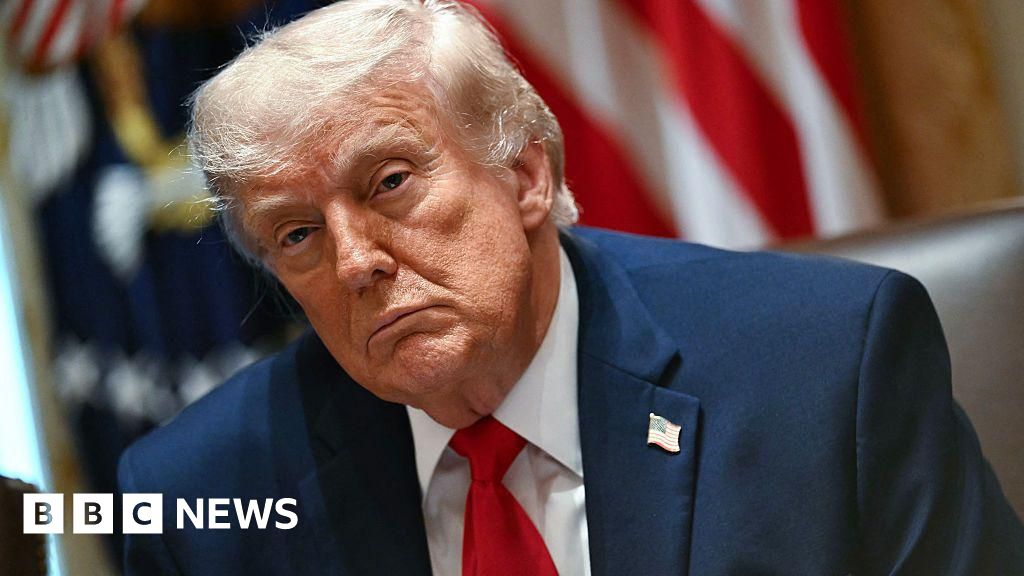
US President Donald Trump was asked about the political aspect of the indictment. "A lot of those people are related to me in the sense that I've had such a great relationship with Cuban-Americans," Trump said. "On a humanitarian basis, we're here to help."
The Miami center where US officials announced the indictment was filled with Cuban Americans, many representing exile organizations that have long opposed the Cuban government from within the United States. Surrounded by pictures of the four people who died in the 1996 crashes, attendees described being pleased by the news.
"It was time, 67 years of that murderous regime," said Isela Fiterre. "Raúl Castro did not merely kill four individuals. Over the course of many years, he has killed countless people." She said it is never too late for justice and that she is grateful to the Trump administration for taking this step.
Another attendee, Mercedes Puid-Soto, said she felt very happy. "Justice has been served," she said. "It's very important that the families can close that chapter, and we Cubans too."
Still looming over the announcement was the question of whether the Trump administration will use the indictment in a similar way to the one against Maduro, as a justification to carry out a military operation under the cover of a law enforcement action, said Roxanna Vigil, an international affairs fellow at the Council on Foreign Relations.
On the Cuban side, state media outlets blasted what they called the false accusations and showed signs of further entrenching into a no-surrender position against US pressure.
What's Your Reaction?
 Like
0
Like
0
 Dislike
0
Dislike
0
 Love
0
Love
0
 Funny
0
Funny
0
 Wow
0
Wow
0
 Sad
0
Sad
0
 Angry
0
Angry
0


Comments (0)