

Ukrainian surrogate Karina turns to paid pregnancies amid war hardship as parliament eyes foreign ban

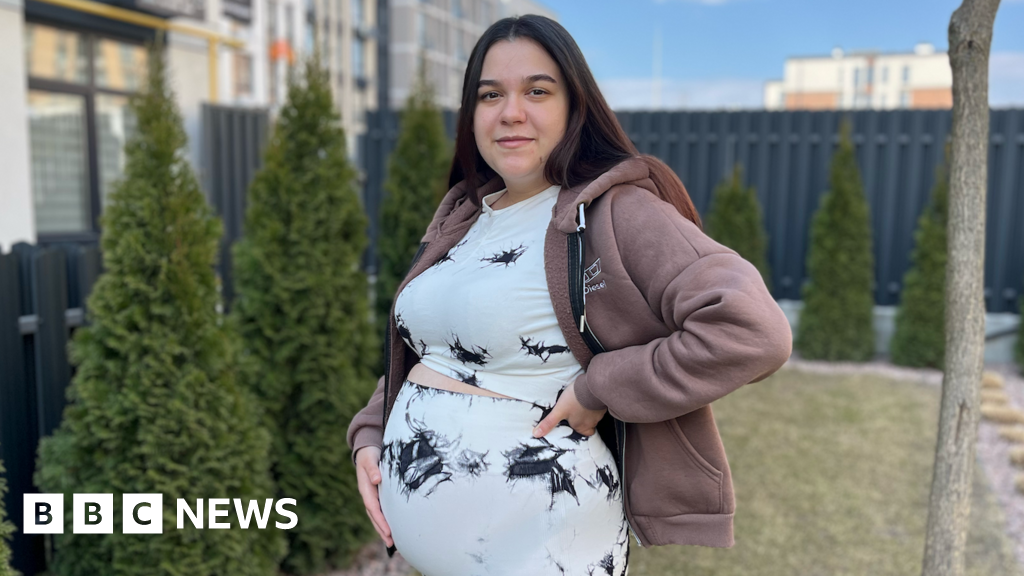
Karina Tarasenko, 22, is six months pregnant, but the fetus in her womb comes from a Chinese couple's egg and sperm. The woman from eastern Ukraine works as a surrogate.
Her home in Bakhmut was destroyed at age 17 when the city turned into one of the fiercest battlegrounds in the early days of Russia's full-scale invasion. With most of the city reduced to rubble and ash, she and her partner relocated to Kyiv. They had trouble finding steady jobs.
One day in a shop, with just enough money for bread and diapers for their one-and-a-half-year-old daughter, Karina decided to pursue paid surrogacy.
She says the war forced her hand. The conflict has cost millions of jobs and businesses, driven up inflation and slashed Ukraine's GDP. "At first, becoming a surrogate made me angry and disappointed, but now I've just accepted it," says Karina Tarasenko. She lives in an apartment on Kyiv's outskirts, provided by her surrogacy clinic, and is carrying a girl.
She stands to earn £12,500 ($17,000), about double Ukraine's average salary, with most of the payment coming after birth. She was set to receive £15,500 ($21,000), but her pay dropped after one twin died, per her contract.
Despite early doubts, Karina now plans to have as many surrogate babies as possible to save for a house.
That choice may soon vanish. Before the war, Ukraine ranked as the world's second-largest hub for commercial surrogacy after the United States. The conflict cut into the industry, but surrogacies have almost returned to pre-war levels, experts told the BBC.
Ukraine's parliament is now weighing a bill for stricter oversight and an effective ban on foreigners, who account for 95% of intended parents. The measure enjoys broad support.
The bill seeks to rein in an industry accused of commodifying reproduction and exploiting poor women. Backers say Ukrainian women should not carry babies for foreigners while war has cratered birthrates, though surrogacy births remain a tiny share.
"Because of the war the number of women who are desperate is growing, and clinics offer them this opportunity because Western couples want to buy babies cheaply," says Maria Dmytrieva, a women's rights activist. She opposes all surrogacy on ethical grounds and calls the bill too weak. She wants a full ban.
She faults clinics for targeting poor women via social media ads. An AI-generated ad from a clinic in January showed a woman choosing between stove wood or children's clothes, playing on wartime hardship. In 2021, BioTexCom Centre for Human Reproduction, Ukraine's biggest surrogacy clinic, ran a "Black Friday sale" on surrogate babies.
BioTexCom defended the ads to the BBC as effective for raising awareness.
The clinic has faced other heat. In 2018, the prosecutor's office probed chief executive Albert Tochilovsky and two ex-staffers for suspected human trafficking and related crimes. The probe paused for international cooperation and foreign information.
BioTexCom and Tochilovsky say they follow the law and reject the claims. The clinic told the BBC the case stemmed from a DNA mismatch with parents and baby. Staff were not at fault, they said, blaming sperm collection abroad.
The firm says it helps aspiring parents, lets women earn legally and covers their medical care, housing and food.
Karina first approached BioTexCom but switched clinics after feeling mistreated.
Some babies get abandoned when intended parents back out. Ukrainian law holds intended parents responsible post-birth, banning abandonment. Cross-border enforcement proves tough.
Wei, now 5, suffered brain damage from premature birth in 2021 via BioTexCom. He lives in a Kyiv state home for disabled children. During a BBC visit, he ate mashed banana with friends. He cannot sit up, hold his head or see well and needs lifelong care.
His Southeast Asian intended parents declined to take him after learning his condition. They vanished despite outreach from authorities and BioTexCom.
His surrogate mother wanted nothing to do with him; Ukrainian law freed her of obligations.
Valeria Soruchan of Ukraine's Health Ministry, who backs law changes, says "a lot" of surrogacy babies get left behind. No exact government figures exist. She supports banning foreigners but not surrogacy itself, citing poor regulation.
Tochilovsky called it a "tragedy" and said clinics share responsibility for abandonments. No law requires clinics to fund state homes, which mix public and private money. BioTexCom has not paid for Wei's care.
Kids like Wei rarely get adopted. Fifteen families reviewed his file; none wanted him.
Commercial surrogacy has fans too. Himatraj and Rajvir Bajwa of London failed for five years to conceive, including two IVF rounds, before surrogacy. Rajvir, 38, has severe endometriosis and multiple sclerosis.
They skipped the UK, where only altruistic surrogacy is legal—no payments beyond expenses—and arrangements are informal via friends, family or nonprofits. UK surrogates hold legal rights until a parental order transfers them.
The Bajwas worried about lacking instant rights; rare cases exist of surrogates reneging.
Ukraine offered structure and lower costs. They paid BioTexCom about £65,000 ($87,770) last year, versus over £110,000 ($150,000) in the US. They had a positive experience.
They made an embryo via IVF in London, shipped it to Kyiv for storage. In June, they came for the birth but stayed three months amid Russian bombing, dodging shelters while awaiting UK paperwork and passport.
They met their surrogate with chocolates and flowers. "It was obviously always their choice and it's a means for them. And if it's something that will help them, then, at the end of the day, I'm sure everybody's happy with the end result."
Karina dismisses exploitation claims. "No-one is forcing us. This is my body, my decision... I'll get my reward for giving them happiness."
She opposes the law change, which would wreck her home-buying plans. Looking at her belly, she says: "I know this is not my child, but I love her. I talk to her. When she kicks, I tell her that her parents are waiting for her. I just hope she has a good life."
What's Your Reaction?
 Like
0
Like
0
 Dislike
0
Dislike
0
 Love
0
Love
0
 Funny
0
Funny
0
 Wow
0
Wow
0
 Sad
0
Sad
0
 Angry
0
Angry
0








Comments (0)