

UK heat spikes intensify as background climate warms

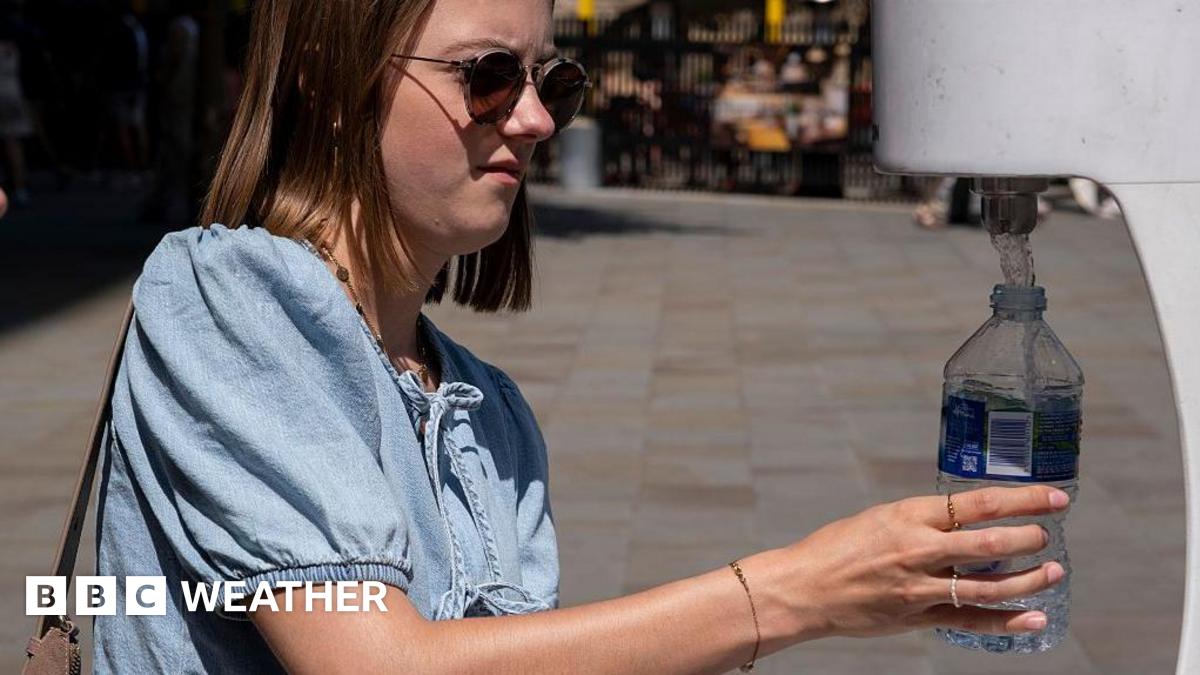
With temperatures hitting a record 35.1C this week, Britain has experienced an exceptional May heatwave.
Temperatures rose rapidly in the days before the peak, climbing as much as 10C in just two days in some places. A gradual increase of a degree or two each day used to be more typical.
Meteorologists have noticed that the quick jump from average to extreme temperatures, sometimes called a heat spike, is occurring more often.
Ed Hawkins, professor of climate science at the University of Reading, told the BBC that today's heat events are emerging earlier, intensifying faster and occurring across a much warmer background climate.
Dr Ségolène Berthou of the Met Office said experts cannot yet state that extreme temperatures spike faster than in the past, but several factors point to an explanation.
The Met Office State of the Climate 2024 report shows that in parts of the UK the hottest days are warming around twice as fast as typical days. Compared with 1961-1990, the number of days 5C above average has doubled and days 10C above average have quadrupled.
Dr Berthou said extreme temperatures are increasing faster than average temperatures.
Summer daytime highs are already about 1.5C warmer when the 1991-2020 period is compared with 1961-1990.
After the UK recorded 40.3C in July 2022, Met Office studies found the chance of exceeding 40C is now more than 20 times higher than in the 1960s.
The higher baseline means similar weather patterns now cross heatwave thresholds more easily.
How fast temperatures rise also depends on how dry the land and air are. Dry ground heats up faster because less energy goes into evaporation.
UK summer soils are becoming drier as the climate warms, with Met Office projections showing earlier seasonal drying and more frequent droughts, especially in southern and eastern England.
Large, slow-moving areas of high pressure, known as blocking highs or heat domes, bring sinking air that dries out and heats the atmosphere further. Studies suggest that when these systems occur, the heat and dryness they produce are more intense than in the past.
Professor Sarah Perkins-Kirkpatrick of the Australian National University said the conditions are now set for quicker temperature rises once high pressure moves in.
The warmest UK summer weather usually arrives with a south or south-easterly wind that draws hotter air from southern Europe and North Africa. Europe is warming at about twice the global average, so this source region starts from a higher temperature.
Wind shifts can occur quickly, moving from a cooler westerly flow one day to a hot southerly flow the next and producing a heatwave within a couple of days.
Sea surface temperatures around the UK may add to the effect. Dr Berthou noted more frequent and persistent marine heatwaves in waters around Britain.
In June 2023, London temperatures climbed from 23C on 8 June to 31C by 10 June while sea surface temperatures were 3-5C above average. A study in the journal Nature found the marine heatwave added about 1C to near-surface air temperatures over land in June and 1.5C by early July. June 2023 became the UK's hottest June on record, with mean temperatures 2.5C above average; roughly 0.6C of that warmth was linked directly to the marine heatwave.
Seas around the UK have warmed by about 0.3C per decade and could be 2.5C warmer by 2050.
Heatwaves kill people. During the summer of 2025, about 24,000 people died across Europe because of heatwaves.
The elderly, the young and people with existing health conditions face the greatest risk, especially when temperatures rise quickly.
Professor Perkins-Kirkpatrick said a rapid jump from 20C to above 30C hits vulnerable people hard if they have little time to adapt. The body comes under greater strain and is more prone to heat exhaustion and heatstroke.
Evidence shows heat-related death risk is highest in the first days of exposure before the body acclimatises.
Dr Berthou said further scientific analysis is needed to determine whether the factors discussed cause peak temperatures to occur sooner during hot spells.
What's Your Reaction?
 Like
0
Like
0
 Dislike
0
Dislike
0
 Love
0
Love
0
 Funny
0
Funny
0
 Wow
0
Wow
0
 Sad
0
Sad
0
 Angry
0
Angry
0










Comments (0)