

UK, Europe Sign Declaration Urging Courts to Ease Migrant Deportations

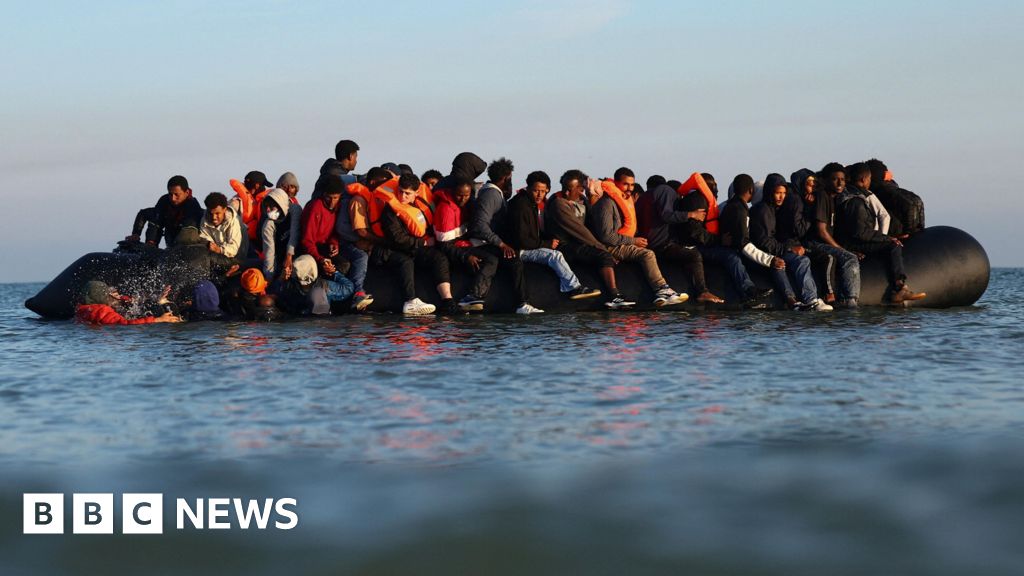
The United Kingdom and other European countries signed a declaration at a summit in Moldova on Friday that urges courts to reconsider how they handle migration cases. The goal is to simplify deportations of illegal migrants.
The agreement warns that European democracy risks erosion unless states can better address people smuggling and modern migration pressures.
UK Foreign Secretary Yvette Cooper called the deal a "common-sense approach" ahead of the summit. She said she wants to prevent systems from being "unfairly gamed."
The European Convention on Human Rights, drafted after World War II, sets basic rights and freedoms across Europe. The Strasbourg court enforces it.
The declaration does not rewrite the human rights law, a process that would take years. Instead, it sends a political message from all member states to human rights judges. It calls for greater attention to public interest and democracy in migration rulings.
All 46 members of the Council of Europe signed the document. That political body oversees the human rights court and operates separately from the European Union.
The declaration notes that pressures on European countries have changed significantly or were unforeseen when the convention was written. It affirms that states have "the undeniable sovereign right" to set immigration policies and remove foreign nationals in the public interest.
Critics said the wording weakens human rights protections or will have no impact on migration since judges can disregard it.
On people smuggling by gangs or hostile states, the declaration states the phenomenon "risks undermining support for and the integrity of the Convention system."
It argues countries like the UK should pursue deals with others, including possible "return hubs" outside Europe.
"A hostile state or other actor cannot be allowed to undermine European democracies and the values on which the Convention is founded and to abuse the system that it was established to protect," the document says.
The UK has explored similar deals, but no firm agreements have resulted.
In 2023, the UK Supreme Court ruled the previous government's Rwanda asylum policy unlawful for failing to treat genuine refugees fairly.
The agreement stresses that Article 3 of the ECHR bans torture outright. But a failed migrant cannot block deportation by claiming possible inhuman or degrading treatment at home.
Courts should not halt expulsions of failed migrants solely because their home countries have subpar hospitals or social conditions, the declaration says.
"Where an individual is being expelled or extradited, the quality of accessible healthcare in the receiving state should only give rise to a real risk of [inhuman] treatment ... in very exceptional circumstances,"
it states.
The UK government and others hope this language will help deflect removal challenges.
The document also reaffirms that the right to family life does not prevent deportation. National courts, not Strasbourg, should balance that issue.
What's Your Reaction?
 Like
0
Like
0
 Dislike
0
Dislike
0
 Love
0
Love
0
 Funny
0
Funny
0
 Wow
0
Wow
0
 Sad
0
Sad
0
 Angry
0
Angry
0










Comments (0)