

Trump-Xi Summit Set for May 13-15 in Beijing Amid Iran War and Trade Concerns

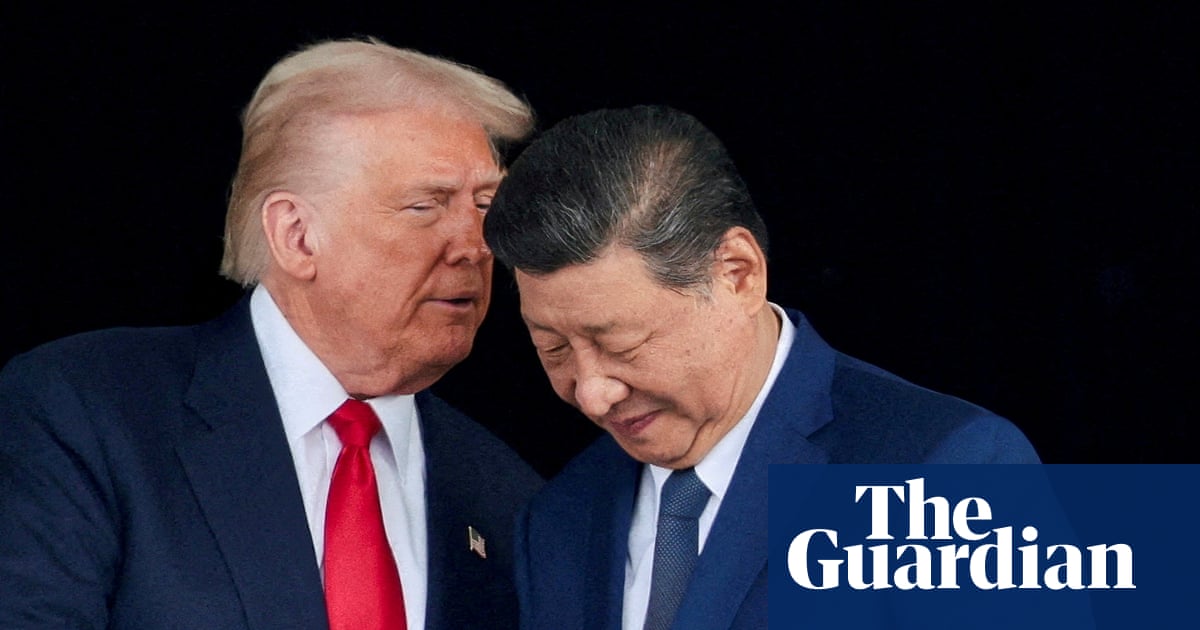
A White House official confirmed on February 20 that US President Donald Trump would travel to Beijing the following month to meet Chinese leader Xi Jinping, with the US-China trade war topping the agenda.
One week later, Trump approved joint strikes with Israel against Iran, igniting a new war in the Middle East. The conflict's effects reached beyond the region and alarmed Beijing. Officials postponed the presidential summit.
The Trump-Xi meeting now is set for May 13-15 in Beijing, and China's priorities have changed.
Beijing wants to block a return of the sky-high tariffs Trump announced last year, which hit 145% before a truce in October. More urgent now is reopening the Strait of Hormuz, the route for half of China's crude oil. China has fared better than other Asian countries against the energy shock, owing to its varied energy sources and stockpiles. Still, a global recession poses a greater danger to its economy. Exports account for about a fifth of China's GDP. If the world stops buying goods, China will feel the pain.
"There is no country whose national interests are advanced by the perpetuation of this conflict," Ali Wyne, a senior adviser at the International Crisis Group, said in a briefing last week. China is better prepared than many US allies and partners in Asia to handle a short-term halt in Strait of Hormuz shipping, he added, but a longer disruption would prove more difficult.
The key question for the Trump-Xi summit is what China will do to end the conflict.
Reports last month said China urged Iran to negotiate a ceasefire with the US. Last week, Iranian Foreign Minister Abbas Araghchi met his Chinese counterpart Wang Yi in Beijing. Wang called for a comprehensive halt to hostilities in the Middle East and voiced support for Iran safeguarding its sovereignty and security, according to the Chinese account.
The US has grown clearer in seeking China's aid for a deal with Iran. Treasury Secretary Scott Bessent said the administration wants Beijing to increase pressure on Iran to reopen the waterway.
That request alone may alter the summit between the two leaders. Trump "is in a situation where he is asking the Chinese president to help," said Dali Yang, a political science professor at the University of Chicago. That stance puts Trump in unfamiliar territory.
China's sway over Iran could give Beijing bargaining power on trade and Taiwan, the summit's other main topics.
China posted a record $1.2tn trade surplus last year despite the trade war, with the US as its top customer. The fight featured tit-for-tat moves like high tariffs and Beijing's curbs on rare earth exports, resembling sumo wrestling, Yang said. The sides fought to a draw.
Yang and other analysts see no big trade deal ahead. A vague statement might let both claim success. The most likely result is extending the October truce reached in South Korea.
Such an outcome would be an uneasy compromise for Beijing, said Da Wei, an international relations professor at Tsinghua University, in a recent German Marshall Fund interview. "We want stability and predictability. Of course the level of tariff is important, but predictability is more important," he said. "We don’t want to just review it or postpone it for another year or several months. That would create uncertainty for the business environment."
Da said arms sales to Taiwan loom larger for the summit. Last year, US Congress approved an $11bn arms package to Taiwan, the self-governing island Beijing claims as its territory. The State Department has held it up before the Trump-Xi talks, but Beijing wants it canceled outright.
On Friday, after months of debate, Taiwan's legislature passed a $25 billion special defense budget. The sum is two-thirds of the government's original request, enough for US purchases but not local weapons making. A State Department spokesperson called further delays in homegrown capabilities a concession to the Chinese Communist Party.
Beijing understands Congress oversees arms sales, not just the president. Still, it may press Trump for softer language. A shift from the current US stance of "does not support" Taiwan independence to "opposes" it would aid Beijing's aim to shape global views, where Taiwan, never ruled by the Chinese Communist Party, belongs to China.
Wang told US Secretary of State Marco Rubio on a recent call that Taiwan poses the biggest risk in China-US ties. China's foreign minister urged the US to create new room for cooperation over Taiwan.
Beijing views the Trump administration as milder than past ones, including Trump's first White House term. Trump eased limits on advanced semiconductor sales to China, offered scant backing for Taiwan, ordered the Pentagon to drop threat mentions of China from defense plans, and predicted a "big, fat hug" from Xi in Beijing.
China "very much appreciates the respect that President Trump has shown President Xi," Yang said.
What's Your Reaction?
 Like
1
Like
1
 Dislike
0
Dislike
0
 Love
1
Love
1
 Funny
0
Funny
0
 Wow
0
Wow
0
 Sad
0
Sad
0
 Angry
0
Angry
0




Comments (0)