

Trump-Xi Summit Exposes Taiwan Tensions in U.S.-China Rivalry

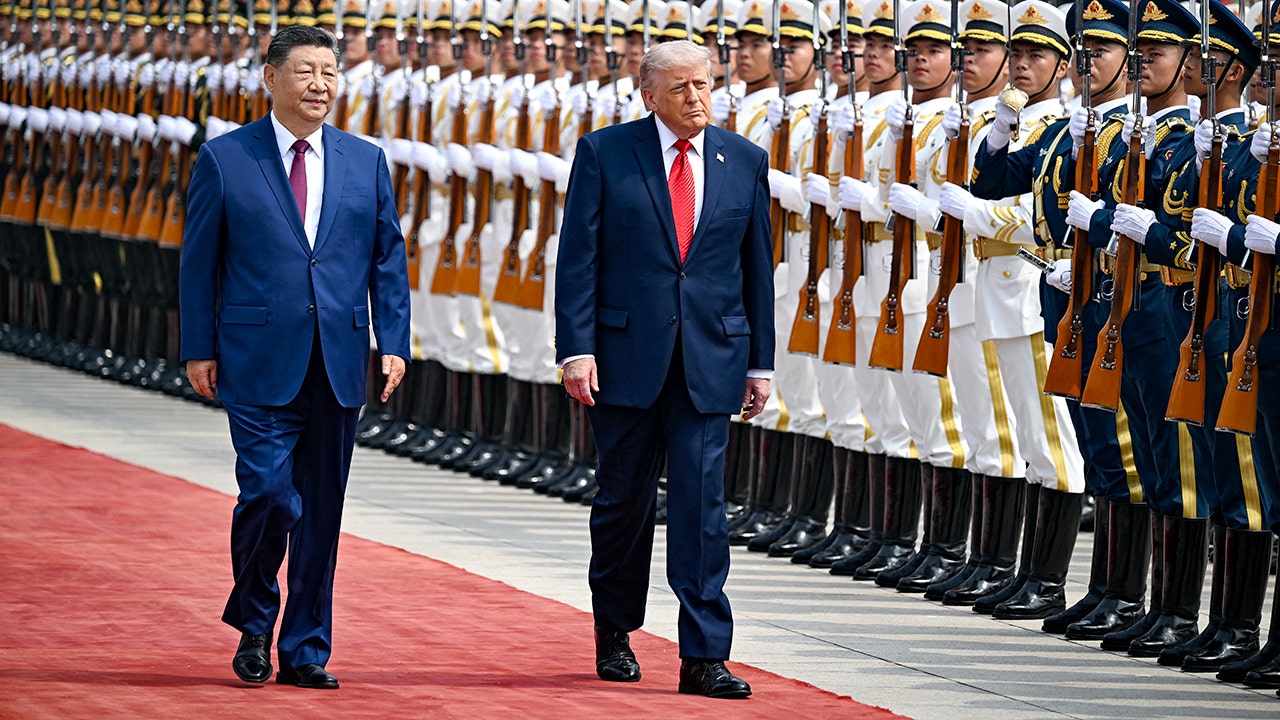
Before President Donald Trump left for Beijing, the summit with Chinese leader Xi Jinping was expected to reveal more than routine talks on tariffs and trade. It instead showed that the United States and China are operating under conditions that resemble a new Cold War, shaped by military power, economic leverage, competing technological goals and opposing views of global order.
The two-day meeting at Beijing’s Great Hall of the People produced headlines about ceremony and limited trade talks. Beneath those surface details, three points stood out. Taiwan dominated the agenda. Iran showed the limits of Chinese cooperation. And Xi used language drawn from ancient Greek history to frame the rivalry.
The summit managed tensions. It did not resolve them.
Xi warned Trump directly that mishandling Taiwan could lead to clashes and even conflicts between the two nations. According to the Chinese foreign ministry readout, Xi said Taiwan is the most important issue in China-U.S. relations. He added that if it is handled properly, the bilateral relationship will enjoy overall stability. Otherwise, the two countries will have clashes and even conflicts, putting the entire relationship in great jeopardy.
That language was deliberate. Taiwan anchors the first island chain, the geographic barrier from Japan through the Philippines that limits China’s naval reach into the Pacific. Taiwan’s manufacturers produce most of the world’s advanced semiconductors. Under the Taiwan Relations Act, Washington is committed to providing Taiwan the means to defend itself. A Chinese seizure would damage American credibility with allies from Tokyo to Manila.
Chinese officials choose their words carefully during state summits. Xi’s warning was not routine diplomacy. It was a reminder that Beijing sees Taiwan as the central test of Communist Party legitimacy. Trump did not respond to a reporter’s question about Taiwan while standing beside Xi, and the White House readout of the meeting never mentioned Taiwan.
Xi also invoked the Thucydides Trap, the idea that war often erupts when a rising power threatens to displace an established one. He asked publicly whether the United States and China could overcome the Thucydides Trap and establish a new paradigm for relations between great powers.
Even as Trump spoke of friendship, trade and deals on the return flight to Washington, Xi framed the relationship in terms of historic rivalry and potential conflict.
The summit also showed that Washington and Beijing remain divided over Iran. Both sides said the Strait of Hormuz must remain open and that Iran cannot obtain a nuclear weapon. According to the White House readout, Xi expressed interest in buying more American oil to reduce China’s dependence on that waterway.
The substance told a different story. China depends on Gulf oil for most of its energy imports, giving Beijing a stake in regional stability. Yet intelligence reporting has shown that Chinese-linked entities provided Iran with dual-use technologies, missile components and sodium perchlorate, a key solid-rocket fuel precursor, even as Washington objected.
Xi told Trump privately that China would not provide Iran military equipment and wanted the strait reopened, but offered no concrete plan and no public commitment. The summit produced few wins on Iran.
Beijing may cooperate where Chinese interests overlap with America’s, especially on energy flows and regional stability. But Washington should not confuse tactical alignment with strategic partnership. Iran remains useful to Beijing because it distracts Washington, strains American military resources and complicates the U.S. posture across the Indo-Pacific.
Trump achieved one immediate objective: preventing the summit from deteriorating into open hostility. His personal diplomacy reduced short-term tensions and preserved direct communication between nuclear powers managing simultaneous crises over Iran, Taiwan and the global economy. Washington and Beijing are now practicing managed rivalry, competing intensely while working to prevent direct conflict.
The real struggle extends far beyond trade. It includes semiconductor dominance, rare earth minerals, cyber operations and control of the computing infrastructure that will define the next generation of military power. That is why Nvidia’s Jensen Huang joined the delegation as a last-minute addition.
His presence symbolized the contest for computing dominance. Both governments understand that whoever leads in advanced machine-learning systems and computing infrastructure will hold military and geopolitical advantages for decades to come.
Xi understands that fully. China is rapidly integrating automated decision systems into military command networks, predictive surveillance platforms and cyber operations, not only for economic competitiveness but for strategic dominance that could render American power secondary before a shot is ever fired.
Americans should resist interpreting the summit’s warm optics as evidence the rivalry is fading. The state banquets, the Temple of Heaven tour and Trump’s September White House invitation to Xi created an image of stability. The substance of what Xi said points elsewhere.
Xi effectively told the United States that Beijing prefers cooperation, but on Taiwan it will not bend. The historical concept he chose to frame that message, the Thucydides Trap, is a pattern that ends in war 12 times out of 16. It was not accidental.
That leaves Washington with a strategy that is difficult but unavoidable. America must strengthen deterrence in the Indo-Pacific, accelerate semiconductor independence and maintain open communication channels between nuclear powers. Deterrence only works when an adversary believes America possesses both the capability and the will to act.
The Trump-Xi summit did not create the danger now approaching from Beijing. It simply made visible what serious analysts have understood for years. The new Cold War is already here. The summit proved it.
What's Your Reaction?
 Like
0
Like
0
 Dislike
0
Dislike
0
 Love
0
Love
0
 Funny
0
Funny
0
 Wow
0
Wow
0
 Sad
0
Sad
0
 Angry
0
Angry
0




Comments (0)