

Trump Touts Trade Deals After China Summit but Taiwan, AI Issues Linger

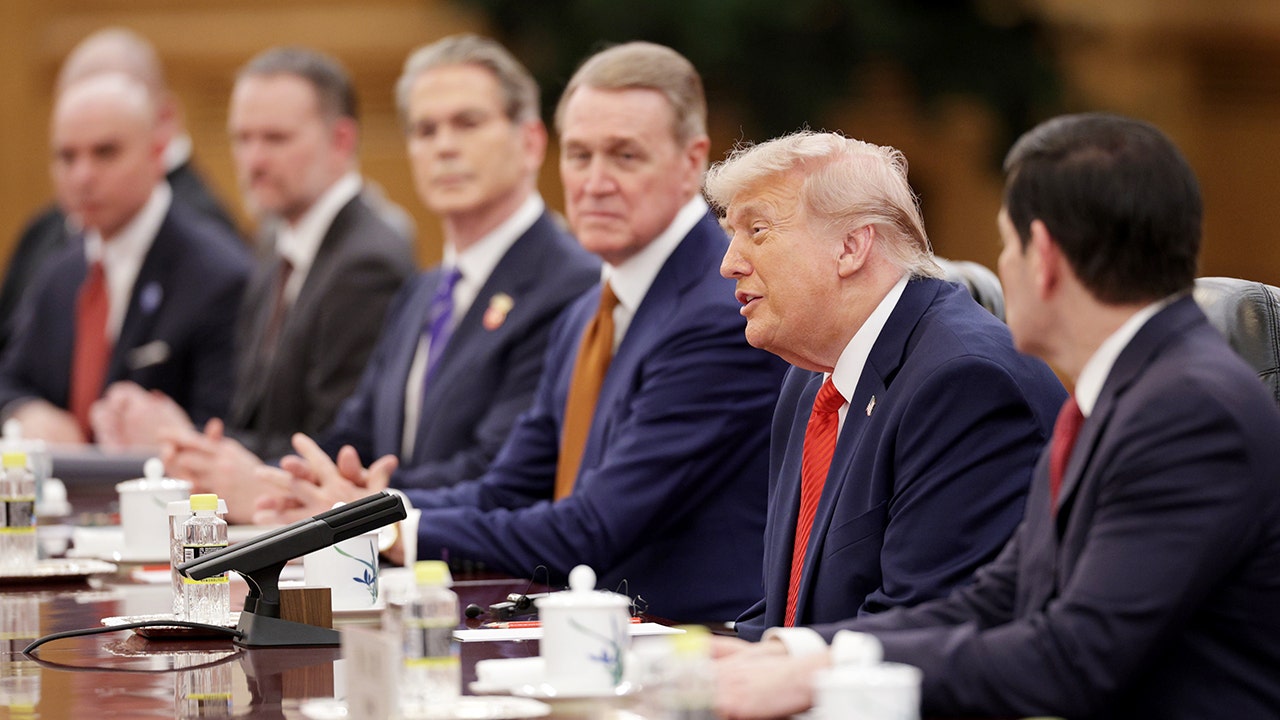
President Donald Trump returned from his summit in China with President Xi Jinping praising trade progress and improved relations. Major issues in the U.S.-China relationship, including trade, Taiwan, artificial intelligence and human rights, showed no firm public breakthroughs.
"We had a great stay. It was an amazing period of time. President Xi’s an incredible guy. We’ve made a lot of great trade deals," Trump said Friday aboard Air Force One while heading back to the White House.
The trip provided Trump with economic highlights such as potential Chinese purchases of Boeing aircraft, U.S. soybeans and American energy. Public statements and Trump's remarks indicated several major questions remained unresolved.
On Taiwan, Xi warned during the summit that mishandling the issue could lead to clashes and even conflicts between the two countries. Trump said he heard Xi out on Taiwan and added, "He does not want to see a fight for independence because that would be a very strong confrontation."
No pledge came from Beijing to reduce military pressure, and the core Taiwan dispute showed no visible easing. Lawmakers have pressed Trump on Taiwan’s security and U.S. arms sales to the island, though Washington does not formally recognize Taiwan as a sovereign state and follows a longstanding One China policy.
"We’ve had it for thousands of years. And then, at a certain period of time, they left that they were going to get it back. They had the Korean War. A lot of things happened and all this. But no, yeah — Taiwan, he feels very strongly. I made no commitment either way," Trump said, referring to Xi’s view and Beijing’s historical claim to the island.
A White House official said Trump will decide soon on a new Taiwan arms package. The official pointed to Trump’s December 2025 approval of $11.1 billion in arms sales to Taiwan and noted his record aligns with decades of U.S. policy. Trump approved more Taiwan arms sales in his first term than any previous president, and his first-year total in the second term exceeded the full amount under former President Biden.
Human rights cases involving jailed Hong Kong media mogul Jimmy Lai and detained house-church pastor Ezra Jin, also known as Ezra Jin Mingri, shadowed the summit. Trump said Xi is giving very serious consideration to releasing Pastor Jin, though Lai’s situation appears less certain.
"That’s a tougher one. I did bring it up. It’s a tough one for him. It’s a tough one," Trump said. "He said Jimmy Lai is a tough one for him to do. You know, he went through a lot — right and wrong, he went through a lot. So he told me that would be a tough one. He said he’s going to strongly consider the pastor."
Jin’s family and advocates have urged Washington to press Beijing for his release. Lai, a British citizen, Hong Kong media tycoon and pro-democracy activist, has been jailed under Hong Kong’s national security law. Neither case produced a public release commitment before Trump left Beijing.
Lai’s daughter, Claire, praised Trump and Secretary of State Marco Rubio for their continuous commitment to freeing her father during an appearance on The Brian Kilmeade Show Friday. "Of course, the dream was that he would fly back with my father this time, but I am still extremely confident that he is the president and this is the administration that will secure my father’s freedom," she said.
China’s AI advances concern U.S. policymakers and technology leaders as Washington considers ways to maintain its edge in advanced chips, computing power and export controls. Trump said aboard Air Force One that discussions about chips did not come up, though the two sides talked about possible AI guardrails.
U.S. officials said China continues to decide whether to buy advanced U.S. chips or speed up domestic alternatives. "As to whether the Chinese are going to buy [U.S. chips] or not, they’re making their own determinations," U.S. Trade Representative Jamieson Greer said Friday on Bloomberg TV. "They’re very committed to domestic production. They often see U.S. high tech as a threat to them. If we’re ahead of the game on AI chips, sometimes they feel that can stop their own growth."
Trump said China may want to try and develop its own chips.
At the final meeting, Trump described fantastic trade deals from the summit. He said China agreed to buy 200 Boeing planes and showed interest in as many as 750 after initial deliveries. Few details emerged on specific agreements, but Trump mentioned pledged agricultural deals while noting tariffs were not discussed.
"The farmers are going to be very happy. They’re going to be buying billions of dollars of soybeans," Trump said. He added during a gaggle on Air Force One that he and Xi did not discuss tariffs, despite duties serving as a key pressure tool on Beijing.
"We didn't discuss tariffs - I mean they're paying tariffs. They're paying substantial tariffs," he said. The talks followed a Supreme Court ruling that limited Trump’s use of emergency powers to impose duties.
Trump suggested an energy deal was near, with China set to buy oil from Texas, Louisiana and Alaska. "They’re going to go to Texas. We’re going to start sending Chinese ships to Texas and to Louisiana and to Alaska. And I think that was another thing that was agreed to. That’s a big thing," he said.
On Iran, Trump cited a diplomatic gain, saying Xi assured him China would not provide military equipment to Tehran and both leaders agreed Iran cannot get a nuclear weapon. Broader concerns persist over Beijing’s economic support for Iran through oil purchases, dual-use exports and intermediary networks. China remains a major buyer of Iranian crude despite U.S. sanctions.
Trump said Xi and his wife will visit the U.S. in September.
What's Your Reaction?
 Like
0
Like
0
 Dislike
0
Dislike
0
 Love
0
Love
0
 Funny
0
Funny
0
 Wow
0
Wow
0
 Sad
0
Sad
0
 Angry
0
Angry
0


Comments (0)