

Trump Gains Economic Leverage Over China Through Energy Independence and USMCA

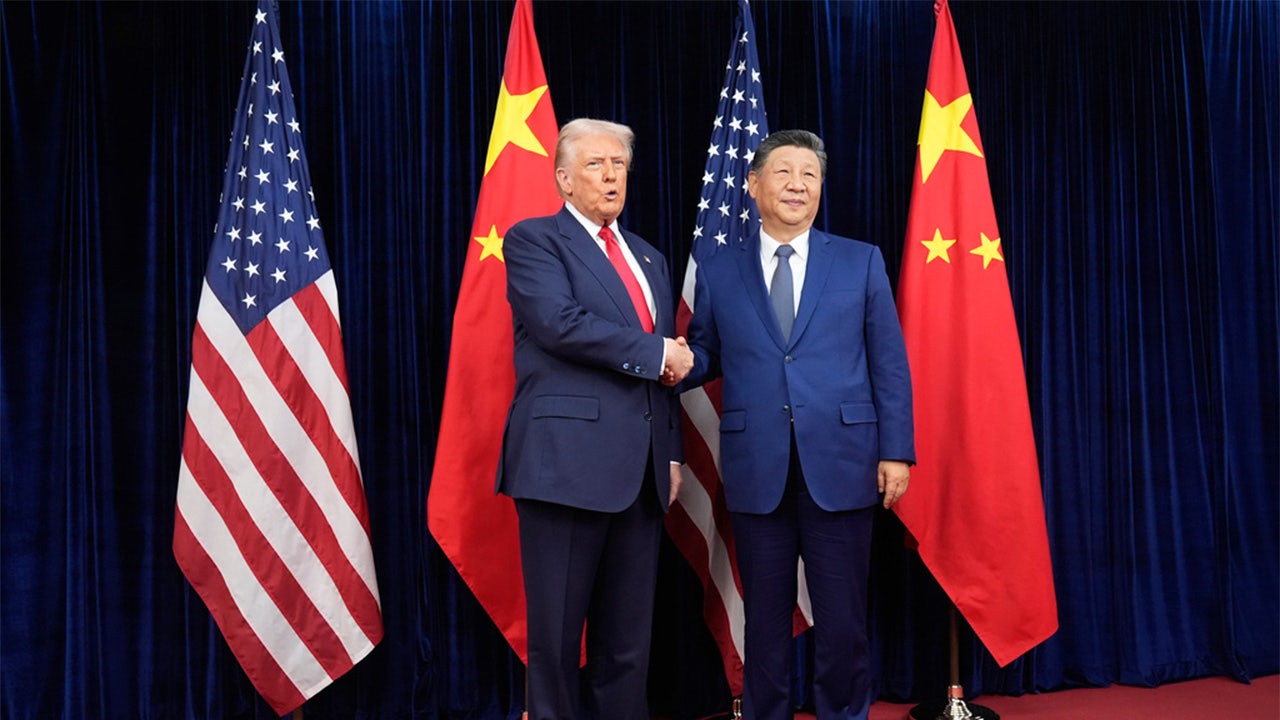
China held a simple advantage in U.S. negotiations for decades by making itself economically indispensable through its role in global supply chains vital to American economic security. Washington weakened its position with energy policies that left the country exposed to Beijing's strategy. President Trump's economic and trade actions changed that dynamic. As Trump prepares to meet Xi Jinping in Beijing, the U.S. holds a stronger position.
Trump's deregulatory agenda and tax reforms spurred investment in American industry after years of stagnation. His administration views a productive, growing U.S. economy as key leverage to resist pressure from the Chinese Communist Party. China's growth has slowed while the U.S. economy stayed resilient.
Trump's drive to boost domestic energy production created good-paying jobs and built economic resilience against foreign turmoil. The U.S. once depended on other nations for oil and natural gas. Now Trump's policies turned it into an energy powerhouse and net exporter. Global market disruptions still affect American consumers, but they hit Beijing harder. China relies on energy imports from Iran and Venezuela to fuel its manufacturing edge. Cutoffs from those sources leave Xi Jinping weaker.
Trump's tariff push against Beijing forms part of a broader strategy to counter threats to America. He sees manufacturing as central to national power. A key move replaced the North American Free Trade Agreement, or NAFTA, with the United States-Mexico-Canada Agreement, or USMCA. Unlike NAFTA, USMCA protects workers better and secures supply chains long dependent on China.
Sixteen of 21 key manufacturing sectors increased exports under USMCA. In petroleum, chemicals and wood, U.S. exports to Canada and Mexico grew faster than to the rest of the world. U.S. vehicle suppliers offer a prime example. USMCA requires 75 percent of a vehicle's value to originate in North America, prompting manufacturers to shift supply chains from Chinese factories to this continent. U.S. vehicle parts production reached $349 billion annually, up more than $37 billion from 2019 levels. The automotive supplier sector added 61,000 jobs and now employs over 930,000 workers in all 50 states. Nearly one-third of U.S. exports go to Canada and Mexico in this setup.
This supply chain strength cuts Beijing's leverage. China embeds its production deeply in global chains to make confrontation costly for the U.S. USMCA undercuts that by letting American firms source from trusted North American partners under common rules.
Trump heads to China with strong economic leverage from a deregulated domestic economy, record North American manufacturing and reduced reliance on Chinese capacity.
China makes about 30 percent of the world's manufactured goods but consumes only 18 percent. It dumps the surplus into global markets with state subsidies covering losses. Trump's North American industrial policy offers the first real Western response.
What's Your Reaction?
 Like
0
Like
0
 Dislike
0
Dislike
0
 Love
0
Love
0
 Funny
0
Funny
0
 Wow
0
Wow
0
 Sad
0
Sad
0
 Angry
0
Angry
0










Comments (0)