

Trump Arrives in Beijing for Summit with Xi on Trade, Taiwan and Iran

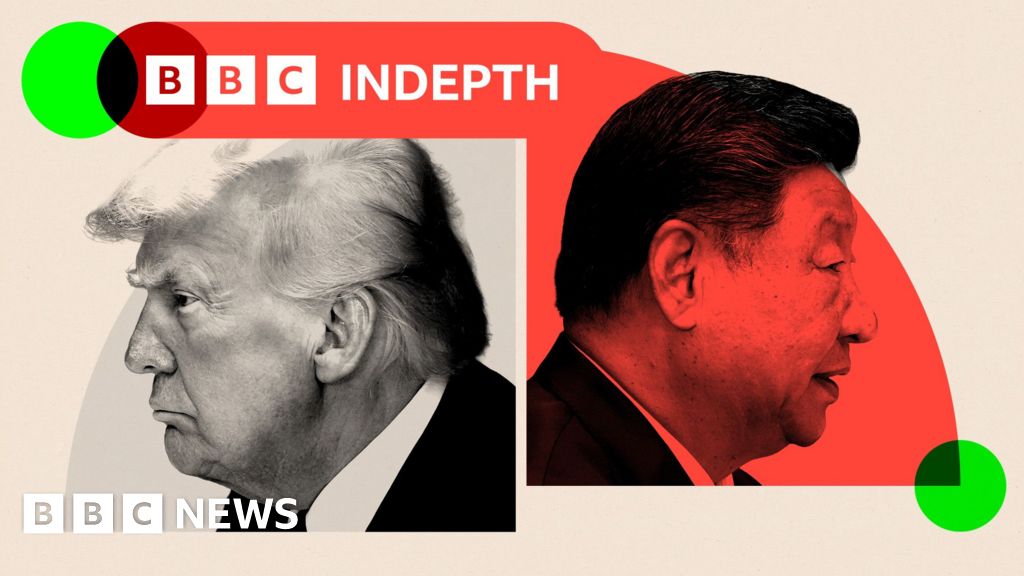
Security has tightened around Beijing's Tiananmen Square for days amid social media rumors of a parade or major event. China has prepared an elaborate welcome for US President Donald Trump, including talks, a banquet and a visit to the Temple of Heaven, where emperors once prayed for good harvests.
Trump and Chinese President Xi Jinping hope the summit yields results. The meeting between the world's two most powerful leaders addresses global trade, tensions over Taiwan and competition in advanced technologies.
US-China relations took a back seat for months as Trump focused on the war with Iran, military operations in the Western Hemisphere and domestic issues. That changes this week with high stakes on the table.
The ongoing US trade war and Iran conflict hurt China's economy but bolster Xi politically. The visit could lay groundwork for cooperation or conflict ahead.
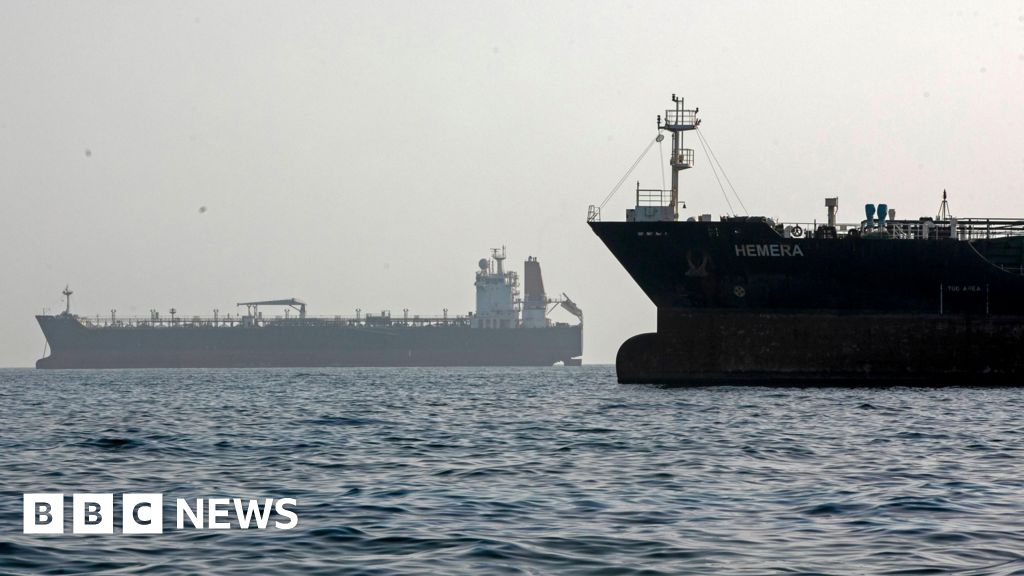
China has joined Pakistan as a mediator in the US-Israel war against Iran, now in its third month. Beijing officials and their Pakistani counterparts proposed a five-point plan in March for a ceasefire and reopening the Strait of Hormuz. Chinese officials have urged Iran toward talks behind the scenes.
China wants the war to end despite its show of strength. Slower growth and higher unemployment already strain the economy. Rising oil prices have increased costs for petrochemical-based goods like textiles and plastics by 20% for some producers.
China's oil reserves and leadership in renewables and electric cars offer some protection, but the export-dependent economy suffers. Any help for the US would come with demands.
Iranian Foreign Minister Abbas Araghchi visited Beijing last week to highlight China's Middle East influence. US Secretary of State Marco Rubio said, "I hope the Chinese tell him what he needs to be told. And that is that what you are doing in the Strait is causing you to be globally isolated. You're the bad guy in this."
The US has pressed China not to block a new UN Security Council resolution condemning Iran's attacks on ships in Hormuz after Russia vetoed an earlier one. Ali Wyne, senior research and advocacy advisor for US-China relations at International Crisis Group, said, "I think if we're going to bring Iran back to the negotiating table in an enduring way, I think that the United States recognises that China is going to play some role."
Trump has downplayed China's ties to Iran. After recent US sanctions on a China-based refinery for Iranian oil, he told a journalist, "It is what it is, right? We do things, too, against them."
On Taiwan, the Trump administration sent mixed signals. The US announced an $11 billion arms deal with Taiwan last December, angering China. Trump has questioned defending Taiwan, which China claims as its territory. "He considers it to be a part of China," Trump said of Xi, "and that's up to him, what he's going to be doing."
Trump complained Taiwan offers little in return for US security and imposed a 15% tariff last year, accusing it of stealing US semiconductor manufacturing.
Rubio said Taiwan will come up in Beijing but the aim is to avoid new tensions. "We don't need any destabilising events to occur with regards to Taiwan or anywhere in the Indo-Pacific," he said. "And I think that's to the mutual benefit of both the United States and the Chinese."
China's Foreign Minister Wang Yi told Rubio last week he hoped for US "right choices" on Taiwan. Beijing has increased military flights and naval activity around the island almost daily.
Analysts doubt China will press for US policy changes from 1982. John Delury, senior fellow at the Asia Society's Centre on US-China Relations, said, "I just don't think that President Xi is going to go for that. Even if Trump says something kind of left field that looks like some capitulation on Taiwan, because he's not so careful with his use of language, the Chinese know better than to put much stock in that, because he can reverse it with a Truth Social post a week later."
Trade tensions nearly sparked a new war this year. Trump imposed tariffs over 100% at times on China, its largest partner. China cut rare earth exports and US farm purchases, hurting Trump's voter base.
Tensions eased after Trump and Xi met in South Korea last October and a February Supreme Court ruling limited presidential tariff powers.
Trump wants more Chinese buys of US farm goods. China seeks an end to a new US probe into unfair practices that could lead to fresh tariffs. Michael O'Hanlon, Phil Knight Chair in Defense and Strategy at Brookings Institution, said, "It could be tough for the US to give up investigations of all unfair Chinese trade practices given how widespread and distorting the latter still are."
CEOs from Nvidia, Apple, Exxon, Boeing and others will join Trump, according to Reuters. China, now the top trade partner for over 120 countries, needs economic stability.
Ryan Hass, director of the John L. Thornton China Center at Brookings, said, "So long as the visit proceeds smoothly and Trump concludes he was treated respectfully, then the uneasy calm in the bilateral relationship will endure. If, on the other hand, Trump leaves feeling disrespected or trifled with, then he could have a change of heart."
China invests heavily in AI and humanoid robots as Xi's "new productive forces." US officials accuse China of stealing technology, leading to export curbs on microprocessors.
TikTok's resolution favored the US amid mutual suspicions. Yingyi Ma from the John L. Thornton China Center at Brookings said, "An opening chapter of an AI cold war is emerging. The White House has accused China of 'industrial scale' theft of American AI models, while Beijing reportedly moved to prevent Meta from acquiring Manus, a Chinese-founded AI start-up now based in Singapore. The deeper contest is not over who copies whose model, but over the talent capable of building the next generation of frontier AI."
China processes 90% of global rare earths, vital for tech from smartphones to jet engines. Trump wants access. The US could trade high-end chips for rare earths.
The summit runs Thursday and Friday with little time for deals, but it could shape superpower ties for years.
What's Your Reaction?
 Like
0
Like
0
 Dislike
0
Dislike
0
 Love
0
Love
0
 Funny
0
Funny
0
 Wow
0
Wow
0
 Sad
0
Sad
0
 Angry
0
Angry
0


Comments (0)