

Trump Arrives in Beijing for Summit with Xi amid Trade and Taiwan Tensions

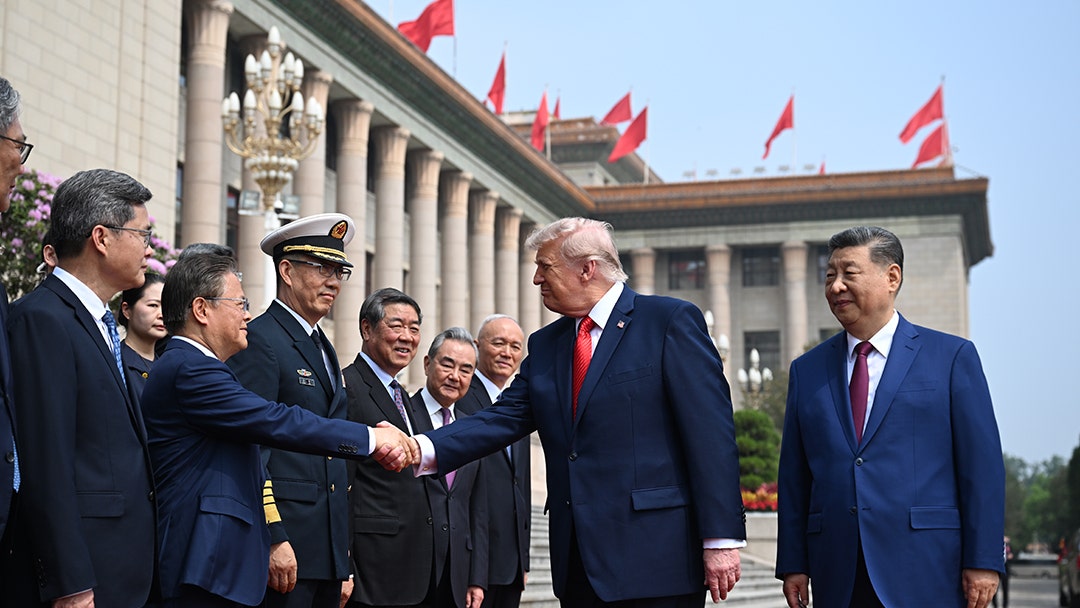
President Donald Trump arrived in Beijing for a high-stakes summit with Chinese President Xi Jinping. Both Washington and Beijing aim to stabilize one of the world's most consequential rivalries without yielding on deeper strategic disputes.
The two-day visit marks Trump's first trip to China since 2017. It comes amid rising tensions over trade, artificial intelligence, Taiwan and the fallout from the war with Iran. The White House frames the summit as a chance for new economic agreements and rebalancing the U.S.-China relationship. Analysts say Beijing's priorities extend further and focus on the long term.
"Trump arrives seeking headline deals and visible momentum ahead of the midterms," wrote Zongyuan Zoe Liu, senior fellow for China studies at the Council on Foreign Relations. "Xi is playing a longer game, focused on strategic patience rather than substantive compromise."
Topics on the agenda include trade, aerospace, agriculture and energy agreements, plus creation of a U.S.-China Board of Trade and Board of Investment, according to the White House.
White House spokeswoman Anna Kelly said Trump's goal is to "deliver more good deals on behalf of our country" while safeguarding U.S. national security.
Trump took part in a welcome ceremony and bilateral meeting with Xi on Thursday morning local time in Beijing. That was followed by a tour of the Temple of Heaven with the Chinese leader and a state banquet later.
Chinese Embassy spokesperson Liu Pengyu said Beijing sees the summit as a chance to stabilize ties between the world's two largest economies. "Heads-of-state diplomacy plays an irreplaceable role in providing strategic guidance for China-U.S. relations," Liu said in a statement to Fox News Digital. "We welcome President Trump’s state visit to China. China stands ready to work with the U.S. to expand cooperation and manage differences in the spirit of equality, respect and mutual benefit, and provide more stability and certainty for a transforming and volatile world."
For Xi, analysts say the top priority is avoiding further escalation with Washington while buying time for China's slowing economy. China grapples with weak domestic demand, deflationary pressure and industrial overcapacity.
A recent report by the U.S.-China Economic and Security Review Commission warned that Beijing is doubling down on state-led industrial policy despite structural weaknesses in its economy. The commission described China as running a "two-speed" economy, where much of the broader economy stagnates while sectors prioritized by the Chinese Communist Party get massive state support and expand beyond market demand.
The report also flagged a new "China Shock 2.0." It argued Beijing's excess industrial capacity and record trade surplus are disrupting global markets and boosting foreign dependence on Chinese-controlled supply chains in batteries, pharmaceuticals, semiconductors and artificial intelligence. "Chinese policy seeks simultaneously to reduce China’s reliance on foreign technology while increasing the world’s dependence on China," the commission noted.
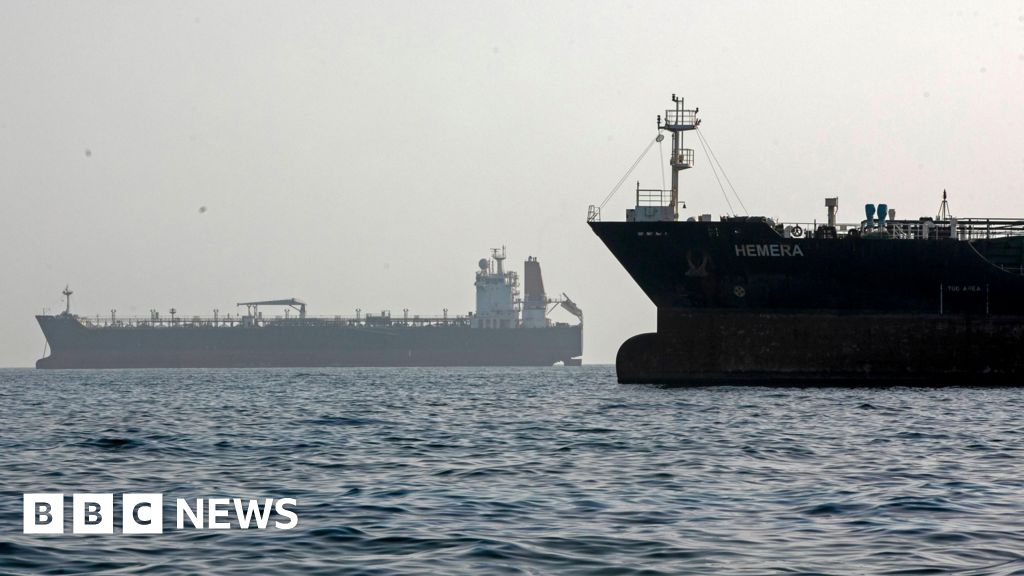
Xi enters the talks with leverage from the ongoing Iran crisis and global energy disruptions. Trump faces domestic pressure over rising energy prices linked to Middle East instability and threats near the Strait of Hormuz. Beijing remains one of Iran's largest oil customers and keeps political ties with Tehran.
Susan Thornton, former acting assistant secretary of state for East Asian and Pacific affairs during Trump’s first term, said in a recent Stanford University Asia-Pacific Research Center interview that expectations for major breakthroughs should stay low despite the summit's symbolism. "The primary value lies in the act of meeting itself," Thornton said. She added that Beijing may view America's renewed Middle East focus as a strategic plus. "It seems like they are kind of hanging back and waiting to see what will happen," she said. Thornton argued a U.S. entanglement there could distract Washington from China.
Agriculture offers a potential area for progress. The White House pushes Beijing for expanded purchases of U.S. farm products ahead of the summit, especially soybeans and grains, per a Reuters report Tuesday. Traders and analysts told Reuters that China’s interest in major new soybean deals may be limited by weak domestic demand and cheaper Brazilian alternatives. Markets watch for deals on corn, sorghum, wheat, beef and poultry, seen as less politically charged.
More than a dozen U.S. business executives, including leaders from Cargill, accompany Trump on the visit.
Survivors of China's religious persecution urge the administration not to ignore Beijing's crackdown on religious groups and dissidents. Ahead of the summit, Trump pledged to raise the case of imprisoned Chinese pastor Ezra Jin after advocacy by his daughter, Grace Jin Drexel, who accuses Beijing of persecuting Christians.
Former U.S. officials told Fox News Digital they doubt human rights will take center stage at a summit focused on easing tensions and stabilizing economic ties. Taiwan and technology restrictions also shadow the talks. Beijing opposes U.S. arms sales and support for Taiwan, while Washington has tightened export controls on China's advanced semiconductor and AI sectors.
Neither side appears eager for direct confrontation. For Trump, the summit offers economic wins and diplomatic engagement ahead of the 2026 midterms. For Xi, the goal is to preserve stability, avoid confrontation and position China for prolonged strategic competition with the United States.
What's Your Reaction?
 Like
0
Like
0
 Dislike
0
Dislike
0
 Love
0
Love
0
 Funny
0
Funny
0
 Wow
0
Wow
0
 Sad
0
Sad
0
 Angry
0
Angry
0








Comments (0)