

Trump-Appointed FEMA Council Proposes Overhaul to Shift More Disaster Duties to States

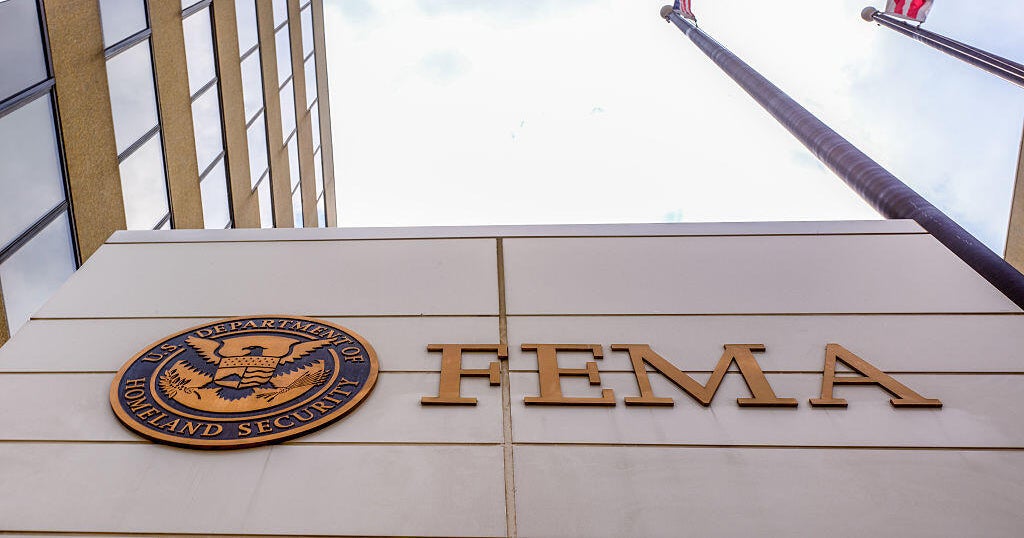
A council appointed by President Trump to reform the Federal Emergency Management Agency proposed a major overhaul that stops short of the administration's vows to dismantle it. The changes could reduce the number of disasters the federal government supports and the amount of money it distributes.
The FEMA Review Council's report declares it "time to close the chapter on FEMA." It argues the FEMA brand is damaged and should be replaced by a transformed agency with a leaner, less Washington-centered structure.
Appointed by Trump, the council suggests ways the administration could place far more responsibility on states, tribes and territories for disaster preparedness, response and recovery.
It proposes upending how the federal government determines which disasters to support, how FEMA pays states and other governments for recovery costs and what kind of assistance survivors receive, among other reforms.
Congress strengthened FEMA's federal coordination role after Hurricane Katrina. Reforms followed Hurricane Sandy to speed up recovery and make assistance more flexible. During the coronavirus pandemic, FEMA's mission expanded to include vaccination. This review argues that the accumulation of missions has pulled FEMA away from its core role and created bureaucracy, backlog and too much dependency on the federal government.
"These recommendations are all about accelerating federal dollars, streamlining the process, making it less bureaucratic so that Americans can get the help they need on the worst day of their lives," former Virginia Gov. Glenn Youngkin, a council member, said Thursday in a public meeting with nearly 6,000 virtual attendees.
The council submitted its report 15 months after Trump created the panel and nearly six months after its original November 2025 deadline.
Broad agreement exists that FEMA needs reforms to move faster and relieve bureaucracy. But the council's recommendations raise concerns among some disaster experts that shifting responsibilities will overwhelm some state and local governments, the private sector or survivors.
Homeland Security Secretary Markwayne Mullin said the report offered him "a clear direction and an oversight of an agency that is in need of reform, but is still mission capable."
The recommendations will now go to Trump, though many reforms would require congressional action. The White House did not immediately respond to questions about whether the president endorses them or what actions the administration might take next.
Among the most significant recommendations, the council calls for changing how states, tribes and territories qualify for federal support. It would replace a per-capita formula that weighs costs against population with a pre-defined set of metrics to trigger federal support.
It also recommended giving states direct payments within 30 days of a disaster, with a potential for another payment later, replacing the current reimbursement system after recovery work is done.
Survivors' assistance would change too. The council proposed limiting housing assistance to those whose homes are rendered uninhabitable and offering survivors a one-time payment instead of multiple avenues for rental, repair and replacement aid.
FEMA would focus survivor aid on emergency housing, moving away from long-term housing assistance. States could run their own housing programs while adhering to federal standards.
"States, figure it out," said council member and Florida emergency management director Kevin Guthrie. "Do what's best for you."
Other recommendations include shifting most flood insurance policies away from the National Flood Insurance Program, which is over $20 billion in debt, to the private market. It calls for continuing to align premium costs more closely with risk.
Trump has threatened to dismantle FEMA and repeatedly said he wants to push more responsibility for disaster preparedness, response and recovery to the states.
The 12-person council, co-chaired by Mullin and Defense Secretary Pete Hegseth, consists of current and former officials and emergency managers from predominantly Republican-led states.
Emergency managers, local leaders, nonprofits involved with disaster management and survivor groups awaited the findings, which were due roughly six months ago. The delay stemmed from clashes over drafts between former Homeland Security Secretary Kristi Noem and council members.
In compiling recommendations, the council reviewed 11,708 public submissions, surveyed 1,387 state, local, tribal and territorial governmental and nongovernmental partners, engaged all 50 states and territories, held listening sessions in 13 cities and conducted four tribal listening sessions.
The final recommendations dropped at least one controversial idea from past drafts: cutting the FEMA workforce by 50%, which appeared in a December draft reviewed by The Associated Press.
A spokesperson for The National Emergency Management Association told The Associated Press the group "broadly supports the overarching principles outlined by the council of less complexity in federal programs, faster assistance, and cost savings at all levels."
Some disaster experts worry local governments and nonprofits cannot fill potential voids from a federal pullback. Limiting survivor aid to those whose houses are uninhabitable "would dramatically increase the level of displacement and economic insecurity" for low-income survivors, said Noah Patton, director of disaster recovery at the National Low-Income Housing Coalition.
Former FEMA Administrator Craig Fugate told CBS News, "Reports are often issued — what changes is the question."
Most major changes would require legislative action. A FEMA reform act passed out of a House committee last year, but no further action has occurred.
Former FEMA chief of staff Michael Coen told CBS News, "The next step should be collaboration between the executive branch and Congress. The goals of these recommendations can't fully be implemented without legislative statutory changes." He added that "none of these recommendations will be easy to implement. FEMA has been changing and improving since 1979 and the work continues."
Patton said he doubted lawmakers could pass FEMA reform soon, especially with limited time before the midterm elections. "It is important to remember that these are suggestions — they aren't set in stone," he said.
What's Your Reaction?
 Like
0
Like
0
 Dislike
0
Dislike
0
 Love
0
Love
0
 Funny
0
Funny
0
 Wow
0
Wow
0
 Sad
0
Sad
0
 Angry
0
Angry
0









Comments (0)