

Three Die of Hantavirus on MV Hondius Cruise Ship from Argentina


Investigations continue into a hantavirus outbreak on the expedition cruise ship MV Hondius. The outbreak has killed three passengers and sickened at least eight others, several with laboratory-confirmed cases, according to the World Health Organization and health reports.
The ship traveled from Argentina across the Atlantic. At least five U.S. states—Texas, Virginia, Georgia, Arizona and California—are monitoring residents who returned from the voyage.
In the United States, hantavirus typically causes 800 to 900 cases a year, said Luis Marcos, a professor of medicine and director of the Infectious Diseases Fellowship Program at Stony Brook Medicine in New York. Centers for Disease Control and Prevention data show 890 cases reported nationwide from 1993 through the end of 2023.
"Most of these cases have been west of the Mississippi River, and classically the risk factors are being in contact with feces and urine from rodents," Marcos told Fox News Digital.
The most common strain, Sin Nombre, does not spread from human to human. "The transmission is not as efficient as other viruses," the doctor said.
Hantavirus usually spreads when people inhale particles from rodent urine, droppings or saliva. Less often, it passes through touching contaminated surfaces and then the mouth, nose or eyes. Person-to-person transmission does not occur except in rare cases.
Typical victims include campers or hikers who encounter rodent waste in remote areas. "The only proven human-to-human transmission has been with the Andean virus from South America—and that's what's happening now," Marcos said.
The current outbreak reportedly started with a couple who caught the virus in Argentina. "They were not symptomatic at all—the incubation period can be one, two, three or four weeks," Marcos said.
Infected people often suffer flu-like or COVID-like symptoms such as fever and muscle pain. "Some people may have mild disease, so not everybody will be very, very sick," he noted.
In severe cases, hantavirus causes hantavirus pulmonary syndrome, which fills the lungs with fluid and can kill. "The mortality rate [among those with HPS] is between 30% and 60%—so yes, it's a deadly virus," Marcos said.
Those at highest risk for human-to-human spread live in close contact where fluids can exchange. "The longest incubation period has been 56 days or so. It has to be really, really close contact," he said. "The transmission is not as efficient as other viruses."
Airborne droplet spread is possible but not as effective as with COVID, influenza or cold viruses. "For this cruise, it’s important to have people in quarantine for a period of time," Marcos said. Most cases appear within two to three weeks, though quarantine may last two months.
No antiviral treatments exist for hantavirus. Patients receive hospital supportive care, including ventilators if lungs fill with fluid until the virus passes.
No vaccine is available in the U.S., but several are in development. Marcos said the risk of a hantavirus pandemic is almost zero. "I don't feel a strong risk of a pandemic. The transmission is not like COVID. It's very different. I really think this is going to go away in the next two to three weeks, and we will know exactly the number of cases."
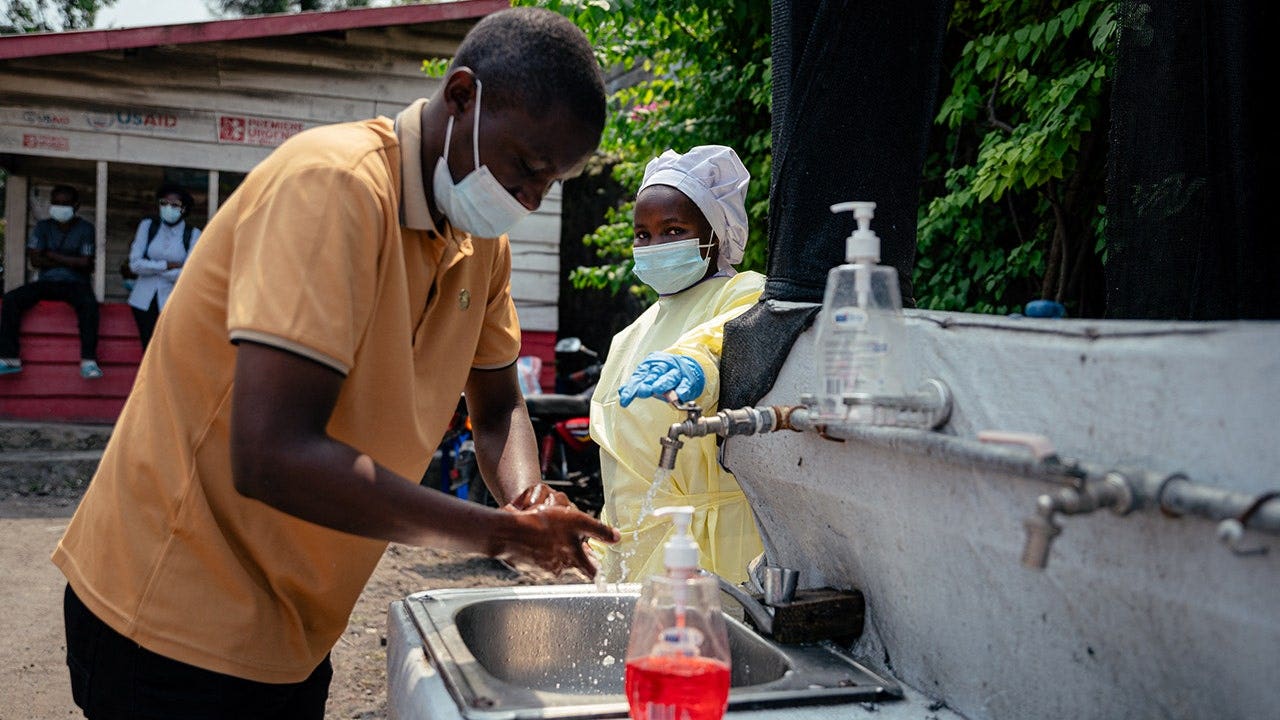
To prevent infection, Marcos recommends gloves and masks when cleaning areas with possible mouse presence, such as basements, along with proper ventilation and frequent hand-washing.
What's Your Reaction?
 Like
0
Like
0
 Dislike
0
Dislike
0
 Love
0
Love
0
 Funny
0
Funny
0
 Wow
0
Wow
0
 Sad
0
Sad
0
 Angry
0
Angry
0









Comments (0)