

Three Die of Hantavirus on Cruise Ship from Argentina; Contact Tracing Under Way

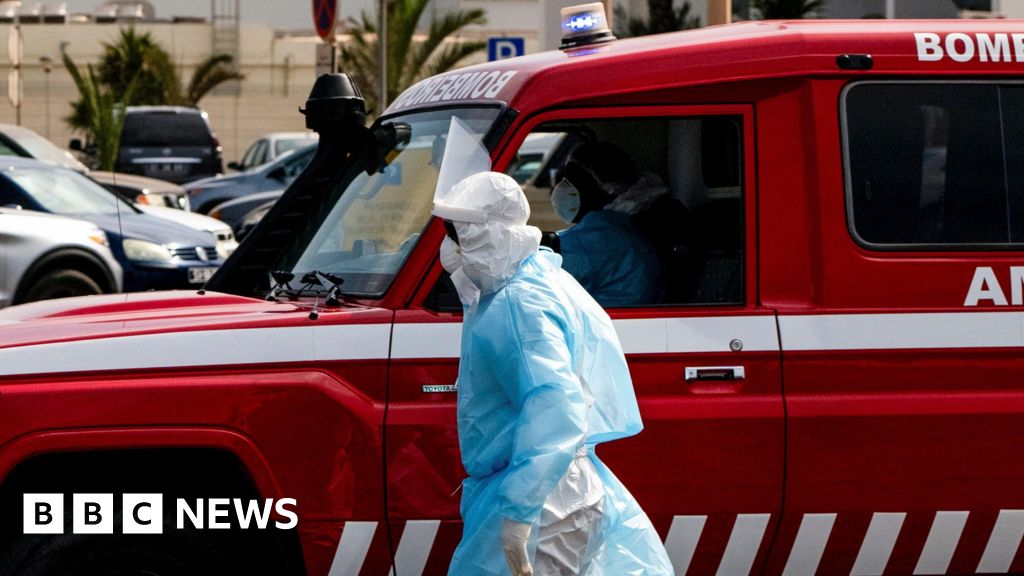
Authorities are treating a hantavirus outbreak on a cruise ship with international passengers as a serious matter. The MV Hondius, which left Argentina a month ago, has seen three passenger deaths either on board or after leaving the vessel. Three others were evacuated for treatment.
A large-scale effort is tracing potentially exposed people who have flown home to countries including the UK, South Africa, the Netherlands, the US and Switzerland.
Health experts say the risk to the general public is low. The contact-tracing operation has been "quite a mammoth effort," Prof Robin May, chief scientific officer at the UK Health Security Agency, told BBC Breakfast. He said it would continue "for some time."
Oceanwide Expeditions reported Thursday that 30 passengers, including seven Britons, left the ship when it docked at St Helena on April 24. The company said it contacted all who had disembarked. Two Britons who departed at St Helena reached health officials after flying home from Johannesburg. They are self-isolating voluntarily in the UK without symptoms.
In the US, officials in Georgia and Arizona confirmed to the BBC they are monitoring three returned passengers. None show symptoms.
Experts note the detected Andes strain can spread human-to-human. The World Health Organization says global infection risk stays low, as it does not spread easily like Covid or flu. Its latest update lists eight cases on the ship: three confirmed, five suspected.
The outbreak's origin remains unclear. Hantavirus usually comes from rodents, spread by inhaling contaminated air from urine, droppings or saliva. The cruise visited remote wildlife areas, so exposure could have happened there or before boarding.
Experts believe some shipboard infections passed between people in close contact. Even luxury cruises have cramped cabins and dining areas. South Africa's health minister confirmed the Andes strain in two passengers. Experts have seen it spread person-to-person in past outbreaks through prolonged close proximity.
Unlike measles, the Andes strain is not highly contagious. The three deaths include a Dutch woman who left at St Helena on April 24. She shared a cabin with her husband, who died on board April 11, though she is not a confirmed case.
The UKHSA says hantavirus does not spread through everyday contact in public spaces, shops, workplaces or schools. Symptoms appear two to four weeks after exposure, sometimes over a month. They mimic flu with fever, fatigue and muscle aches, plus possible shortness of breath, stomach pain, nausea, vomiting or diarrhea.
No specific treatment exists, but hospital care for symptoms can aid survival. British passengers from the ship must self-isolate 45 days in the UK, the UKHSA says. For the wider public, "the risk here is really negligible," Prof May added.
Nineteen Britons were passengers on the MV Hondius, bound from Argentina to Cape Verde, plus four British crew. UKHSA officials are coordinating their UK arrivals.
"It's important to reassure people that the risk to the general public remains very low," said Dr Meera Chand, UKHSA deputy director for epidemic and emerging infections.
Oceanwide Expeditions said Thursday no one remaining on board shows symptoms. Local health authorities inspected the vessel. Passengers are isolating, and professionals deep-cleaned the ship before planned evacuation.
What's Your Reaction?
 Like
0
Like
0
 Dislike
0
Dislike
0
 Love
0
Love
0
 Funny
0
Funny
0
 Wow
0
Wow
0
 Sad
0
Sad
0
 Angry
0
Angry
0







Comments (0)