

State Department Reviews All 53 Mexican Consulates in US Amid Rising Tensions

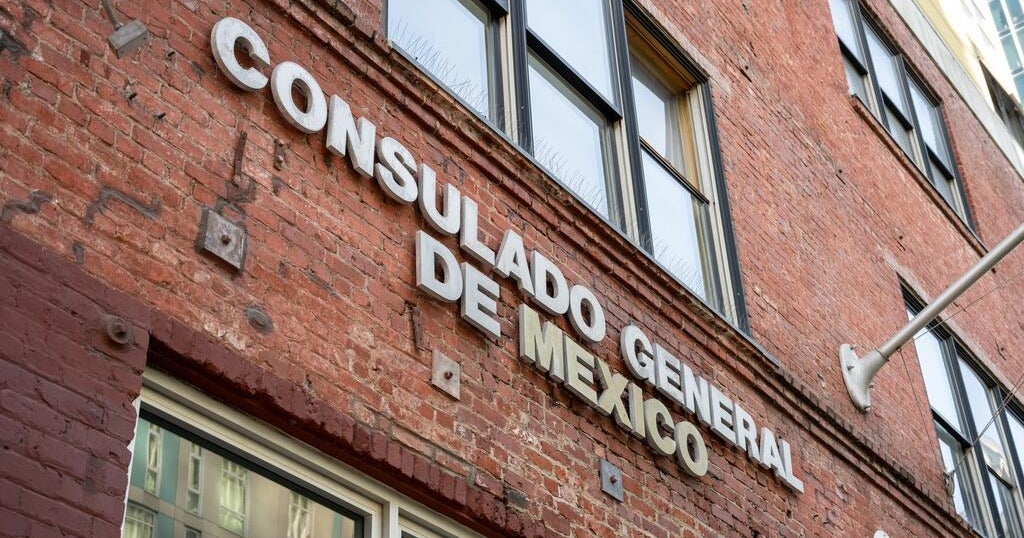
The State Department is launching a review of all 53 Mexican consulates in the United States, a U.S. official told CBS News on Thursday. The action could prompt Secretary of State Marco Rubio to order some diplomatic offices closed.
The review arrives as tensions between the two countries grow over security cooperation and cartel violence. It follows the deaths of two American CIA officers during a counter-narcotics operation in northern Mexico last month.
A State Department official said the review forms part of a larger push to match U.S. foreign policy with the Trump administration's priorities.
Dylan Johnson, assistant secretary of state for global public affairs, said the "Department of State is constantly reviewing all aspects of American foreign relations to ensure they are in line with the President's America First foreign policy agenda and advance American interests."
Mexico runs the biggest foreign consular network in the United States. Its offices deliver documentation and legal aid to millions of Mexican citizens nationwide. Most sit in border states and cities with large Mexican American populations, such as California, Texas and Arizona.
In recent years, U.S. consulate closures have signaled heightened tensions with rival nations more than routine diplomatic shifts. In 2020, as ties with Beijing soured, the Trump administration ordered China's consulate in Houston to close over espionage and intellectual property theft concerns. In 2017, the U.S. told Russia to shut its San Francisco consulate plus diplomatic sites in Washington and New York after Moscow expelled American diplomats.
Tensions between the U.S. and Mexico jumped last month after two American officials died. CBS News confirmed they worked for the CIA. The pair perished with two Mexican investigators when their vehicle crashed in a remote mountain area where officials targeted suspected drug labs.
U.S. Ambassador to Mexico Ronald Johnson announced the deaths of two embassy staff members in a post on X on April 19.
The operation sparked political backlash. Mexican President Claudia Sheinbaum said the American officers might lack federal authorization to work in the country. She demanded explanations from the Trump administration.
The clash has broadened lately. The U.S. brought drug trafficking and weapons charges against top Mexican political figures and sent several extradition requests, including one for Sinaloa Governor Rubén Rocha Moya.
Sheinbaum said this week that Mexico's Foreign Ministry sent Washington a diplomatic note seeking evidence from the U.S. Justice Department on the claims against Rocha and other senior officials. She added that Mexico's Attorney General's Office would probe if given credible proof.
Rocha rejected the charges as false. He said he would step aside temporarily to mount his defense and aid Mexican authorities as the case moves forward.
The U.S. Embassy in Mexico stated later that fighting corruption and transnational organized crime stays a joint goal for both nations. It would not address the specific claims but said corruption aiding organized crime "will be investigated and prosecuted wherever U.S. jurisdiction applies."
The diplomatic friction unfolds alongside a bigger CIA counternarcotics effort under Director John Ratcliffe. He has pushed a core Trump goal by boosting intelligence-sharing and training with Mexican antidrug units. That work includes drone surveillance flights over Mexico aimed at cartel activities.
Mexico debates its sovereignty and security ties with the Trump administration as President Trump has often suggested unilateral military strikes against cartels.
The CIA declined to comment.
CBS News has contacted the Mexican embassy in Washington, D.C., for comment.
What's Your Reaction?
 Like
0
Like
0
 Dislike
0
Dislike
0
 Love
0
Love
0
 Funny
0
Funny
0
 Wow
0
Wow
0
 Sad
0
Sad
0
 Angry
0
Angry
0

Comments (0)