

Russian Nationalists Raid Woman's Birthday Party in Arkhangelsk, Police Join Search for LGBT Propaganda

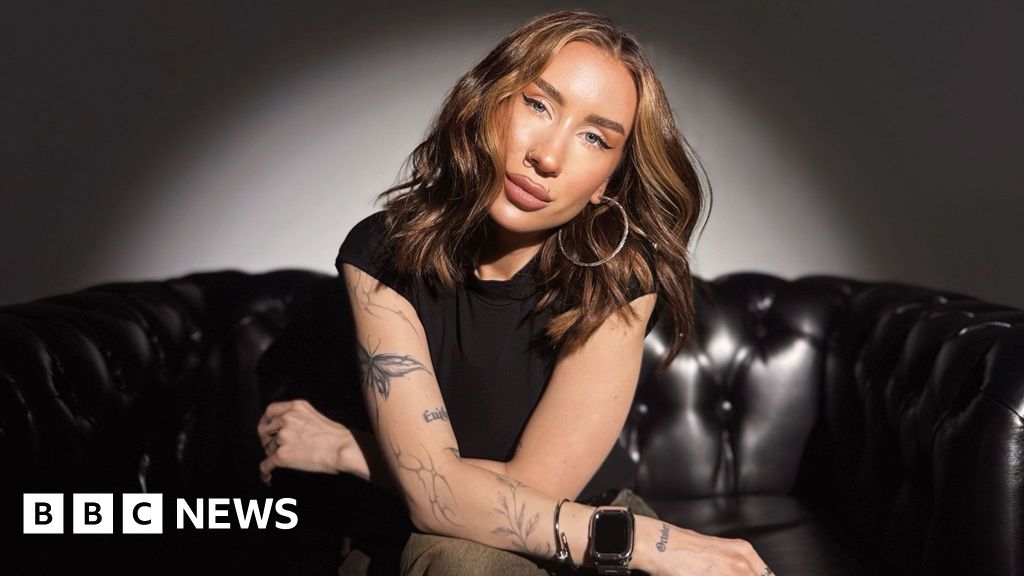
Katya was about to blow out the candles on her 30th birthday cake when masked men burst into the Arkhangelsk nightclub she had hired for the party. They began physically and verbally attacking her friends.
"They called us faggots and lesbians. I could hear violence from every corner," she told a BBC World Service investigation. Her mother was told to get down on all fours, she says.
Police joined the raid, as sometimes happens in these incidents. Russkaya Obshina said in a video it posted on social media that it was searching for evidence of LGBT "propaganda," which is illegal in Russia. The group found nothing of the kind, but law enforcement still interrogated Katya.
Russkaya Obshina leads a network of nationalist groups in Russia. The number of raids it has carried out jumped sharply over the past two years, the investigation found. Evidence also points to funding from charities run by Kremlin-linked figures.
Katya, known in Arkhangelsk for hosting parties for alternative crowds, said a law enforcement officer told her during questioning that she did not fit traditional values and that something was wrong with her.
She received a sentence of 200 hours of community service. One witness from Russkaya Obshina told the court that seeing a cross displayed at the party caused him emotional shock and deep confusion.
Katya now lives in fear after local media and the group's social channels covered her case, sparking widespread online harassment. She still chose to share her story with the BBC.
Over the past year, the BBC World Service spoke with half a dozen current and former Russkaya Obshina members, plus people like Katya affected by its actions.
These nationalists and religious Russians patrol towns and cities. They raid shops, warehouses, hostels, nightclubs and abortion clinics for activities they see as violating traditional values or the law. They push for prosecutions of their targets.
Migrants make up many targets. The group's videos show members confronting them at work or leisure and accusing them of crimes. One in four posts mentions migrants and often uses racist language, the investigation found.
Russkaya Obshina did not respond to the BBC's request for comment. On social media, it dismissed the allegations: "Even though Russkaya Obshina is an informal community of people, with no legal entity and no membership, the BBC's great thinkers have somehow 'found' former and current members of the Obshina… If you grab anyone off the street and call them a member of the Obshina, you can put any nonsense you like into their mouth."
One man, whom the BBC is calling Dimitry, left the group a couple of months ago. Like many members, he is a former soldier who returned wounded from the Ukraine front line, seeking purpose in Russian society.
Dimitry said he directs his military training at homegrown problems, which he blames on "foreign intrusion" into Russian culture. "People from other cultures come in and Russkaya Obshina responds like an antibody, stopping them harming the organism. You could say Russkaya Obshina is like a kind of doctor," he said.
Last year, the Russian Orthodox Church urged its bishops to partner with Russkaya Obshina. This built on existing ties and further legitimized the group in promoting church-aligned values.
The Russian government has pushed a traditional, nationalist image for years. That stance toughened after the full-scale Ukraine invasion in February 2022. In November that year, Putin signed a decree to preserve "traditional Russian spiritual and moral values."
Russkaya Obshina backs Russia's military operation in Ukraine. Last December, it formed a joint unit on the front line with the Espanola brigade, a far-right football fan regiment sanctioned by the UK government.
Documents seen by BBC Eye show funding from influential figures via charitable foundations, countering the group's denials. One major funder is a foundation run by sugar magnate Igor Khudokormov, a food producer tied to former agriculture minister and current Deputy Prime Minister Dmitry Patrushev. Patrushev's father once led Russia's security service and remains in Putin's inner circle, Russian media report.
Khudokormov's support for the group, active in Ukraine and against human rights, should worry his business partners, said Tom Keatinge, finance and security expert at the Royal United Services Institute. "Do you want… a Russian company providing critical materials into the food chain, especially [one run by someone]... funding the sort of activity he's funding? That's a question governments and companies have to answer."
The other funder named in documents is Sergei Mikheev, a media commentator who has worked with the Kremlin and Russian intelligence on election campaigns in former Soviet states.
Posts indicate the first raid took place in May 2023. From then through the end of 2025, the group carried out more than 900 raids, with police joining 300. The true number may be higher, as not all actions appear on public channels.
The BBC used a multi-agent AI system, directed by a reporter, to analyze social media from Russian nationalist groups and identify the most active ones.
Russkaya Obshina tries to fit into Russia's tradition of civilian patrols registered with authorities to aid police. But it is not registered, even though police have joined some raids.
Katya, a professional events organizer, has halted her parties. The raid, trial and community service mopping hospital floors upended her life. "For 10 years, I lived in a certain rhythm. It made me happy, it was my life. What do you feel when a part of you is taken away? You feel loss."
What's Your Reaction?
 Like
0
Like
0
 Dislike
0
Dislike
0
 Love
0
Love
0
 Funny
0
Funny
0
 Wow
0
Wow
0
 Sad
0
Sad
0
 Angry
0
Angry
0


Comments (0)