

Retired Gen. Kellogg Calls NATO Bloated and Overreliant on US Power

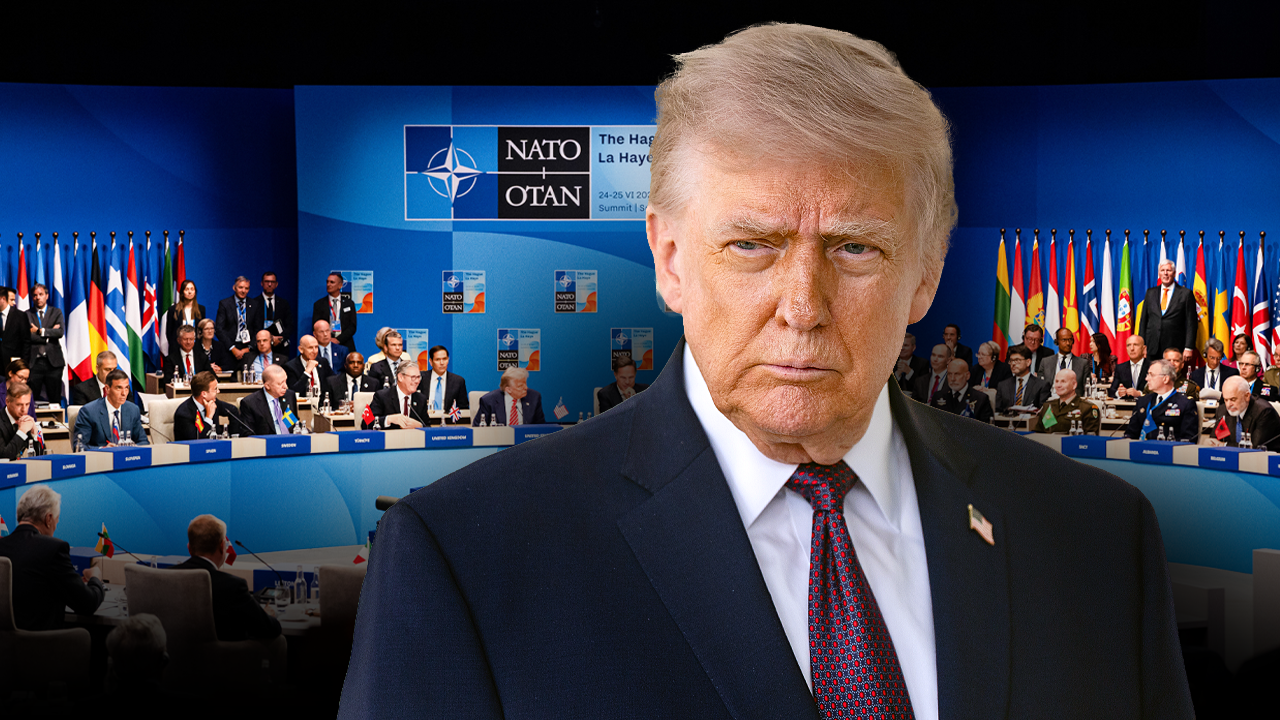
This is part one of a series on challenges facing the NATO alliance.
Retired Lt. Gen. Keith Kellogg, a former senior national security advisor, called NATO a "bloated architecture" overly dependent on American military power in an interview with Fox News Digital.
President Donald Trump has pressed NATO allies to boost defense spending. He ordered the withdrawal of 5,000 U.S. troops from Germany and signaled possible cuts in Spain and Italy. A larger issue has surfaced: despite years of rising European defense budgets, NATO relies heavily on the U.S. for missile defense, intelligence, logistics and nuclear deterrence.
The gap between political commitments and actual military capability now drives calls for structural changes as NATO faces threats from Russia and Middle East instability.
NATO's imbalance is real and longstanding, Kellogg said. He recalled telling Trump during his first term, "maybe you ought to talk about a tiered relationship with NATO." Kellogg described pushing for "a new, for lack of a better term, a new NATO, a new defensive alignment with Europe."
The alliance has expanded politically but not militarily, he said, creating a gap between commitments and capability. "You started with 12, and you went to 32, and in the process, I think you diluted the impact," he argued.
"They haven't put the money into defense. Their defense industry and defense forces have atrophied," Kellogg said. He noted that Britain struggles to deploy forces: its two aircraft carriers are under maintenance, and only one of six brigades functions. Kellogg, co-chair of the Center for American Security at the America First Foreign Policy Institute, said NATO needs something different.
John R. Deni, a research professor at the U.S. Army War College, disagreed. "It has never been more relevant," he said. NATO remains central to U.S. national security for two reasons, he explained. First, it gives the U.S. a comparative advantage over China and Russia, who lack anything similar. Second, it secures the most important U.S. trade and investment ties with Europe.
By around 2010, the U.S. accounted for 65% to 70% of NATO defense spending, according to analysis from Barak Seener of the Henry Jackson Society, a London think tank. "They’ve always been dependent on the U.S.," Kellogg said of European allies.
"The allies overall rely upon one another for deterrence and defense by design," Deni said. Alliances pool resources and aggregate strengths. He cited ground forces: allies have far more mechanized infantry than the U.S.
Deni conceded past overreliance. "In the past… it was fair to say that the European allies were overly reliant upon the Americans for conventional defense," he said, especially in the 2000s when the U.S. focused on Afghanistan and Iraq.
Seener called NATO "formally collective, but functionally asymmetric," with the U.S. supplying most high-end capabilities, especially nuclear deterrence through intercontinental ballistic missiles, submarine-launched systems and strategic bombers.
A NATO official told Fox News Digital, "The U.S. nuclear deterrent cannot be replaced, but it is clear that Europe needs to step up. There’s no question. There needs to be a better balance when it comes to our defense and security." The official cited U.S. global roles and fairness. "The good news is that the Allies are doing exactly that. They are stepping up, working together — and with the U.S. — to ensure we collectively have what we need to deter and defend one billion people living across the Euro-Atlantic area."
Dependence extends to intelligence, surveillance, reconnaissance, logistics and command systems, Seener said. "Without U.S. intelligence and surveillance, NATO loses situational awareness and early warning capabilities," he warned. Russia could attack Europe undetected without U.S. involvement.
Europe's equipment rates as B or C level, Kellogg said, lacking top systems. European nations use U.S. Patriot and THAAD for air and missile defense but have no comparable homegrown option. Underinvestment has atrophied their defense industries.
Alliance spending has risen sharply since Russia's 2014 Crimea invasion and spiked after 2022, Deni said. But capabilities take time. Poland, Romania, Norway and Denmark are buying U.S. F-35 jets, though full deployment will take years. "You can’t build an F-35 overnight," he said.
NATO needs to move further and faster, a NATO official said. Defense ministers agreed new targets in June 2025: a fivefold increase in air and missile defense, thousands more armored vehicles and tanks, millions more artillery shells. NATO also plans to double logistics, transportation and medical support, plus investments in warships, aircraft, drones, long-range missiles, space and cyber. "These targets are now included in national plans," the official said.
European allies lead multinational forces in Central and Eastern Europe. The U.S. and Canada head battlegroups in Poland and Latvia, with air policing and the KFOR mission in Kosovo ongoing.
Russia poses the biggest worry, said Kellogg, who served as Trump's special envoy for Ukraine and Russia in 2025. If U.S. forces are stretched elsewhere, NATO could falter on intelligence and logistics. "We won’t know until it happens," he said. "And then you won’t be able to respond to it."
Deni views NATO as a strategic asset. The question is whether allies can adapt fast enough.
What's Your Reaction?
 Like
0
Like
0
 Dislike
0
Dislike
0
 Love
0
Love
0
 Funny
0
Funny
0
 Wow
0
Wow
0
 Sad
0
Sad
0
 Angry
0
Angry
0







Comments (0)