

Psychiatrist Says Nottingham Killer Wanted Control in Assessment Before Release

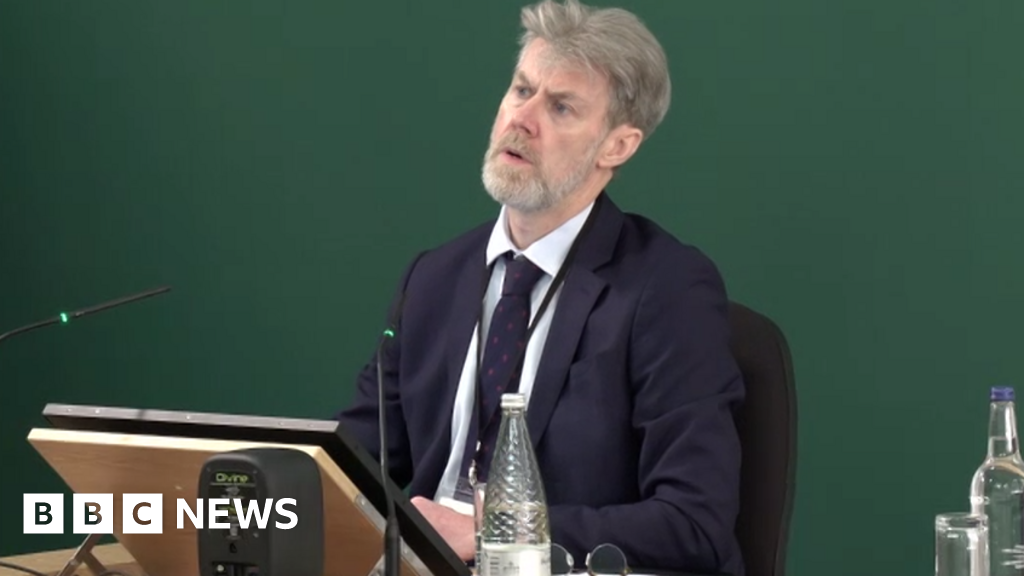
A psychiatrist who assessed Valdo Calocane after he assaulted a flatmate said the Nottingham attacks killer wished to take control during the evaluation.
Calocane, diagnosed with paranoid schizophrenia in 2020, stabbed Barnaby Webber, Grace O'Malley-Kumar and Ian Coates to death and tried to kill three others on June 13, 2023.
Police responded in January 2022 when Calocane put a flatmate in a headlock and held him hostage in their Faraday Road flat in Nottingham.
The next day, Dr. Mike Skelton, a consultant psychiatrist with the Nottinghamshire Healthcare NHS Foundation Trust crisis team, ruled that Calocane did not pose enough risk for detention under the Mental Health Act. He allowed Calocane to return home.
Skelton knew Calocane from prior meetings. Those included discussions after Calocane's release from two Mental Health Act sections at Highbury Hospital in August 2020, and a seclusion review in September 2021 after Calocane assaulted a police officer.
During that 2021 review, Skelton stood at Calocane's door and asked questions without eye contact. He cited safety concerns with the clearly very psychotic patient. The inquiry heard Calocane appeared guarded, curt, with a fixed stare and hostile edge.
In the January 2022 assessment after the flatmate incident, Skelton found Calocane polite and calm. Calocane invited them into the property, though police used a warrant to remove him, with 15 officers present.
Officers wanted to leave once Calocane reached Cassidy Ward at Highbury Hospital, but medical staff asked them to stay over safety worries.
Skelton knew Calocane had skipped medication despite claims otherwise. "It's clear that he does make statements and then when he's challenged or we have evidence, that sort of melts away," Skelton said.
He noted that schizophrenia patients often miss medicine, and it is the net effect on the person that matters for detention.
Calocane took one tablet in front of Skelton. "One tablet doesn't reduce the risk," Skelton said. "The first step was to see was he going to even do that, because if he didn't, he would have been detained immediately."
Police chose not to arrest Calocane after the assault, as the incident remained under investigation. His composure also factored in. "I went into that assessment expecting that I would be detaining that chap. Based on what we saw he was not detainable under the Mental Health Act," Skelton told the inquiry.
Skelton denied the release to the crisis team and back to his accommodation was a gamble or swayed by Calocane trying to dissuade sectioning. "We all agreed that this chap would be better off in hospital. But we did not have the legal powers at the time to enforce it based upon the assessment we saw," he said.
"He was able to, and it's very unusual, to push back and you could tell he wished to take control. And I thought it was very unusual, it did stay with me. A MHA assessment is based on 'are the criteria met?' And there are not individual elements. Crucially at the time I was not able to elicit acute psychotic symptoms."
"When we concluded the assessment and I concluded he wasn't detainable, the crisis team had to look after him. That wasn't comfortable for us. To suggest that we were not aware of the risk, it's not true."
Since Calocane was not detained, the university removed other tenants from the property for safety.
The crisis team checked on Calocane daily under a community plan while collecting evidence. Eight days later, another Mental Health Act assessment was ordered. "We saw the chap had been lying to us. We had genuine hard facts we could use," Skelton said.
The inquiry also heard from Josephine Baker, a crisis care practitioner nurse and team leader from February 2022. She visited Calocane on June 23, 2020, between his two Highbury Hospital stays that year.
In a prior phone call, Calocane denied hallucinations or abnormal thoughts. But during the visit, Baker said, he admitted hearing voices after some time. "He was quite open with the fact but he felt able to manage them now since being discharged. It could have potentially have been an early warning sign of relapse but I wasn't concerned about him. He was quite open and honest. He was calm and settled."
Baker also helped monitor Calocane in the eight days after Skelton's non-detention decision in January 2022. "VC didn't engage well so it was hard to be able to assess the risk that was posed at that time. I couldn't be sure he was taking his medication."
In January 2024, Calocane received an indefinite hospital order after pleading guilty to three manslaughter counts on grounds of diminished responsibility and three attempted murder counts.
The inquiry continues.
What's Your Reaction?
 Like
0
Like
0
 Dislike
0
Dislike
0
 Love
0
Love
0
 Funny
0
Funny
0
 Wow
0
Wow
0
 Sad
0
Sad
0
 Angry
0
Angry
0






Comments (0)