

Netanyahu Government Plans Defamation Suit Against New York Times Over Abuse Column

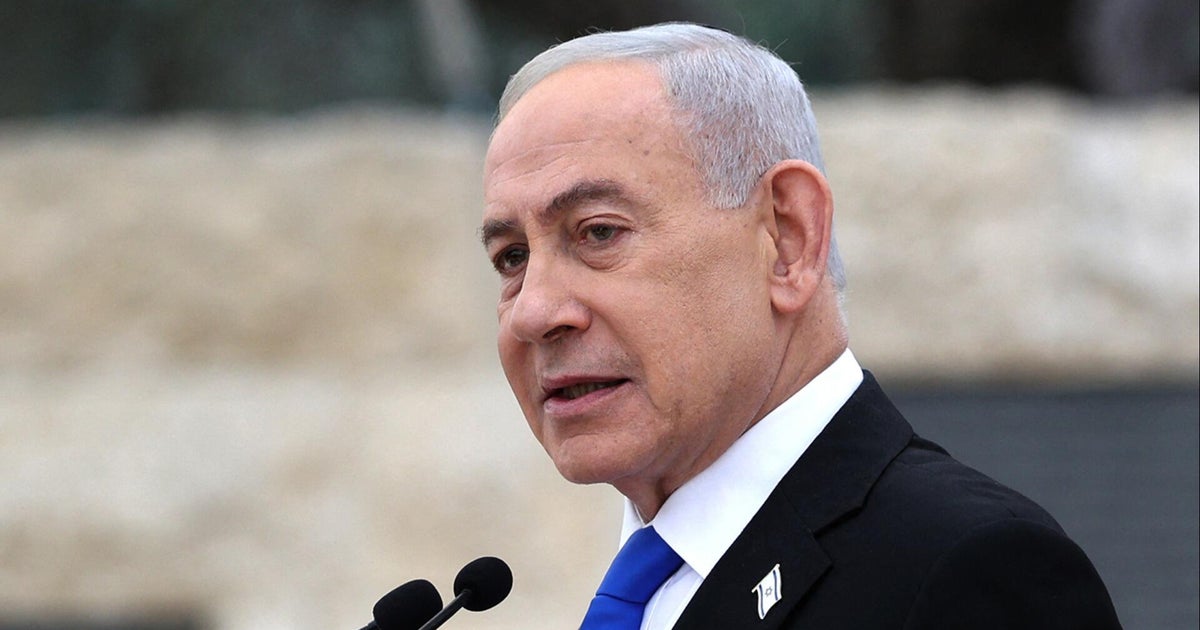
Israeli Prime Minister Benjamin Netanyahu's government plans to file a defamation lawsuit against The New York Times over an opinion column that alleged widespread sexual abuse of Palestinian prisoners.
Journalist Nicholas Kristof's column cited interviews with 14 men and women who said they had been sexually assaulted by Israeli settlers or security forces. Kristof noted he could not corroborate some accounts.
Israeli officials condemned the Times for publishing the column. Netanyahu's office called it "one of the most hideous and distorted lies ever published against the State of Israel." In a statement Thursday, the office said Netanyahu and Foreign Minister Gideon Sa'ar have instructed the initiation of a defamation lawsuit against The New York Times.
Netanyahu posted on X that his legal advisers will "consider the harshest legal action against The New York Times and Nicholas Kristof."
The Times defended Kristof's piece Wednesday night as a "deeply reported piece of opinion journalism."
"The accounts of the 14 men and women he interviewed were corroborated with other witnesses, whenever possible, and with people the victims confided in — that includes family members and lawyers," said Charlie Stadtlander, a Times spokesperson. "Details were extensively fact-checked, with accounts further cross-referenced with news reporting, independent research from human-rights groups, surveys and in one case, with U.N. testimony. Independent experts were consulted on the assertions in the piece throughout reporting and fact-checking."
It remains unclear if any litigation will be filed in the United States or Israel, or who the plaintiffs will be.
A government itself cannot sue for defamation in the United States, said Rodney Smolla, a First Amendment scholar and former president of Vermont Law and Graduate School. If Netanyahu or another government official brought the suit, Smolla said they would face a tough challenge.
"I think at the end of the day, courts would say this [article] is insufficiently targeting Netanyahu, and to allow him to sue is just too perilously close to allowing a suit by the government itself," Smolla said.
The New York Times can rely on the landmark New York Times v. Sullivan case, in which the Supreme Court limited public officials' ability to sue for defamation, said Nadine Strossen, former president of the American Civil Liberties Union.
Strossen said a plaintiff, whether Netanyahu or someone else, would have to show "that there was intentional or reckless falsity, that they knew or had great reason to know that what was being said was false."
"It can't be a matter of opinion or of analysis or of perspective. It has to be objectively falsifiable," Strossen said.
Yale Law professor Jed Rubenfeld also cited the Sullivan case. "I think there is probably zero chance of the suit succeeding," he said.
"If you write your criticism of a government impersonally without naming particular individuals, who you're saying are responsible for whatever the misconduct or crimes are….then you're within your First Amendment rights," Rubenfeld said.
Public figures in the U.S. have sued for millions over news coverage they viewed as unfair or defamatory. At trial, they must show the reporter or publisher acted with actual malice — knowledge that statements were false or reckless disregard for the truth.
Former President Trump has used lawsuits over coverage he disliked to secure pretrial settlements, including millions from news outlets' parent companies. Trump sued CBS News over a 2024 "60 Minutes" interview with former Vice President Kamala Harris. CBS called the lawsuit "completely without merit." Trump and CBS parent Paramount settled in 2025 for $16 million.
In 1983, Israel's then-Minister of Defense Ariel Sharon sued Time magazine over an article about a massacre in Lebanon. The case went to trial. A federal jury found the reporting false but concluded the magazine did not act with actual malice.
Smolla said Sharon had standing because the reporting specifically concerned him. He noted members of a small group can have legal standing, even if unnamed, if they believe they are implicated.
Kristof's column included a claim by a Gaza journalist that he was stripped naked and mounted by a dog as Israeli guards laughed. Kristof wrote that "the Palestinian prisoners and human rights monitors have also cited reports of police dogs being coached to rape prisoners."
Smolla said individual police dog trainers bringing claims "might" be viable plaintiffs. "There are only a small number of people with that expertise who have that assignment," he said.
Still, Strossen said even such a case would have little chance under the Sullivan standard, since individuals were not named. "It seems to me that would be an imaginative effort," she said.
What's Your Reaction?
 Like
0
Like
0
 Dislike
0
Dislike
0
 Love
0
Love
0
 Funny
0
Funny
0
 Wow
0
Wow
0
 Sad
0
Sad
0
 Angry
0
Angry
0








Comments (0)