

NASA's Psyche Spacecraft to Slingshot Past Mars Friday for Asteroid Mission Boost

NASA's Psyche spacecraft will fly past Mars on Friday to gain a boost from the planet's gravity and conserve propellant for the second half of its six-year voyage to the asteroid belt.
Launched in October 2023, the spacecraft bears the name of its target, a rare metal-rich asteroid that scientists think holds clues to how planet cores like Earth's formed. It began a 2.2-billion-mile trip to the object at that time.
The probe will pass within 2,800 miles of Mars' surface at closest approach, NASA said. Traveling at 12,333 miles per hour, it will use the planet's gravitational pull to accelerate and refine its path toward the asteroid.
Psyche, described by scientists as a metal world and one of the solar system's more unusual objects, lies in the asteroid belt between Mars and Jupiter. The spacecraft should arrive and start orbiting it by late 2029.
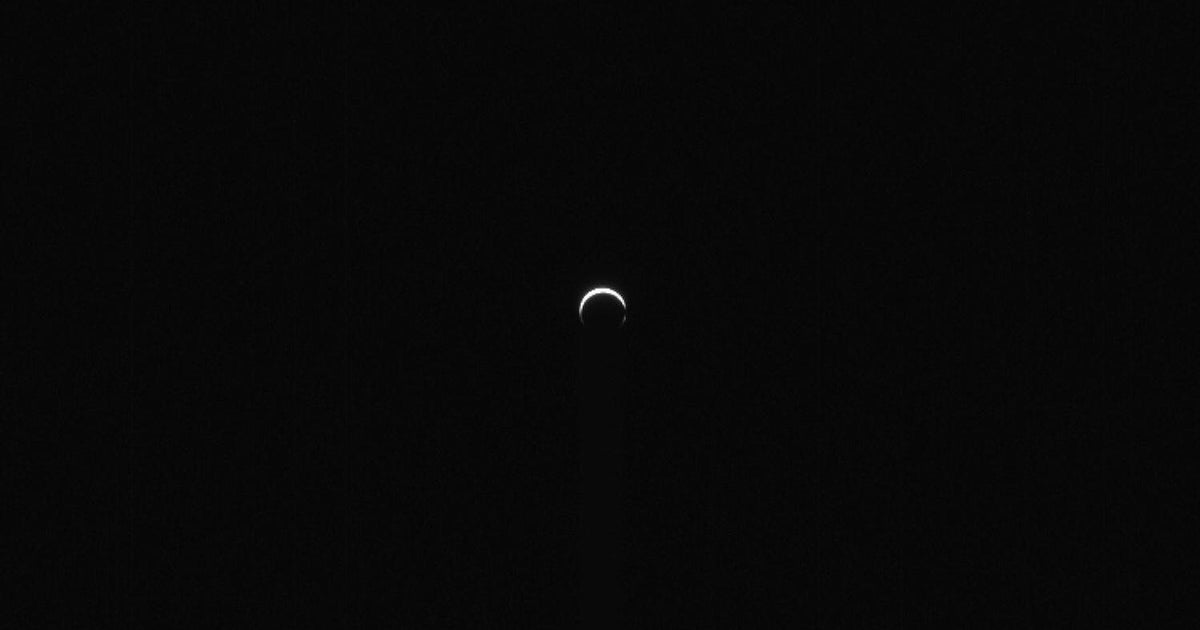
Operators plan to observe Mars during the flyby. They already released an image taken from 3 million miles away and intend to assemble a time-lapse from Friday's data.
Jim Bell of Arizona State University, one of the operators, said in a statement that Mars might lack its usual reddish color in some shots but expects the images to be just plain beautiful.
The flyby will let the spacecraft test a satellite feature for spotting objects near the asteroid Psyche.
Ultimately, though, the only reason for this flyby is to get a little help from Mars to speed us up and tilt our trajectory in the direction of the asteroid Psyche, said Lindy Elkins-Tanton, a lead investigator on the operations teams, in a statement. But if all our instruments are powered up, and we can do important testing and calibration of the science instruments, that would be the icing on the cake.
Few objects in the asteroid belt contain as much metal as Psyche, which holds nickel and iron, according to NASA's mission overview. Researchers suspect it is the exposed core of a rocky planet and could reveal details about the formation and evolution of worlds like Earth.
After reaching orbit, the spacecraft will image the asteroid's surface and analyze its makeup for about two years.
What's Your Reaction?
 Like
0
Like
0
 Dislike
0
Dislike
0
 Love
0
Love
0
 Funny
0
Funny
0
 Wow
0
Wow
0
 Sad
0
Sad
0
 Angry
0
Angry
0







Comments (0)