

Maine Senate hopeful calls for U.S. cooperation with China on climate

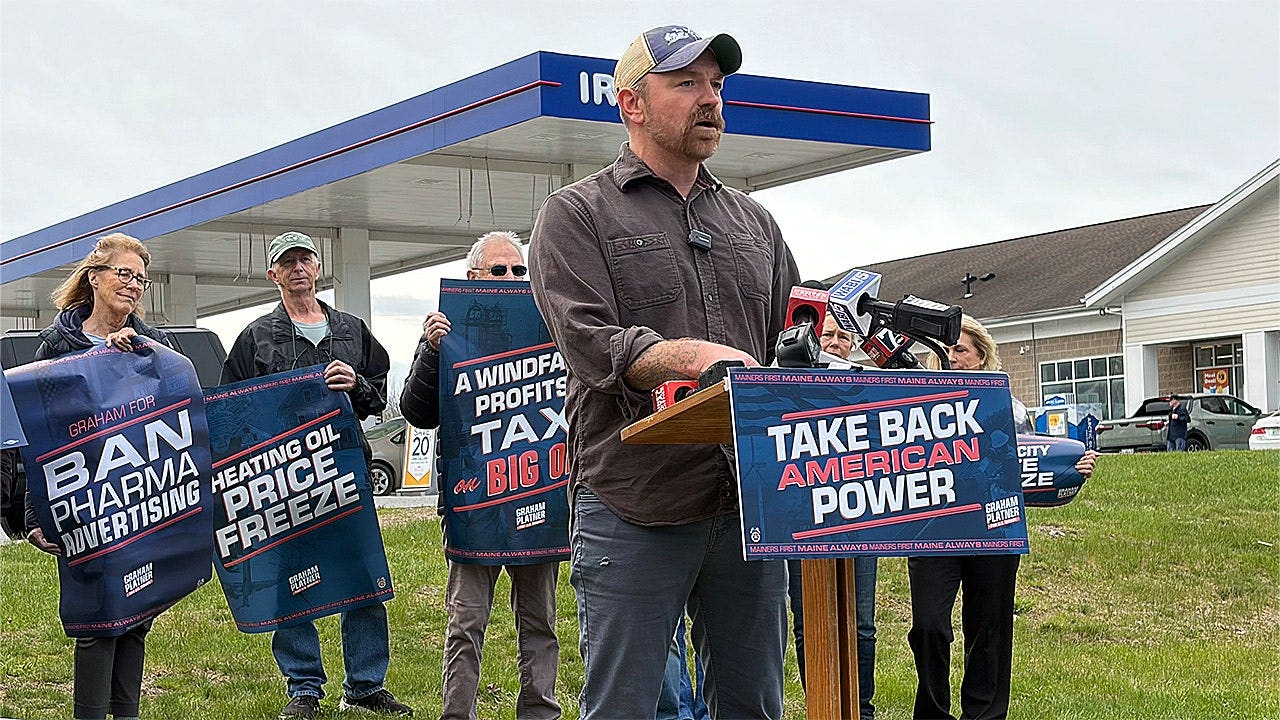
Graham Platner, the progressive oyster farmer and Marine veteran running for Maine’s Democratic Senate nomination, said the United States should cooperate with China rather than oppose it.
Platner, who is endorsed by Sen. Bernie Sanders of Vermont and Sen. Elizabeth Warren of Massachusetts, told an audience that a hawkish posture toward Beijing is absurd. He said the two countries should join forces to address climate change and make fossil fuels obsolete.
Polls show Platner positioned to challenge Republican Sen. Susan Collins in the general election. His comments drew immediate criticism from opponents who said China is the world’s largest polluter and has little interest in reducing emissions.
China generates most of its electricity from coal and emits more greenhouse gases than the developed world combined, critics noted. They added that Chinese factories operate under environmental rules that would be illegal in the United States.
China also dominates global supply chains for clean energy components. According to the International Energy Agency, it refines 19 of the 20 most important strategic minerals and controls roughly 70 percent of the market on average. It holds 80 percent or more of the battery supply chain and near-monopoly shares in some categories.
Beijing has already used that dominance as leverage. In 2025 it imposed export controls on lithium-ion battery materials and equipment. Earlier this year, controls on rare earth elements cut U.S. yttrium imports by about 95 percent and drove prices sharply higher.
Supporters of stronger U.S. energy production say the answer is to increase domestic output of critical minerals and clean energy technology. They point to the American shale revolution, which lowered U.S. emissions to a 25-year low during President Trump’s first term, and to market-driven investments in new power sources for data centers.
U.S. manufacturing is nearly four times more emissions efficient than China’s, they said. Growth, innovation and domestic regulation have cut carbon emissions more effectively than international agreements, they added.
Platner’s remarks drew comparisons to past reporting that downplayed foreign abuses. Critics said his approach would hand strategic leverage to an adversary that already controls key parts of the clean energy supply chain.
What's Your Reaction?
 Like
0
Like
0
 Dislike
0
Dislike
0
 Love
0
Love
0
 Funny
0
Funny
0
 Wow
0
Wow
0
 Sad
0
Sad
0
 Angry
0
Angry
0










Comments (0)