

Judges Cite Trump Social Media Posts in Rulings Against Administration

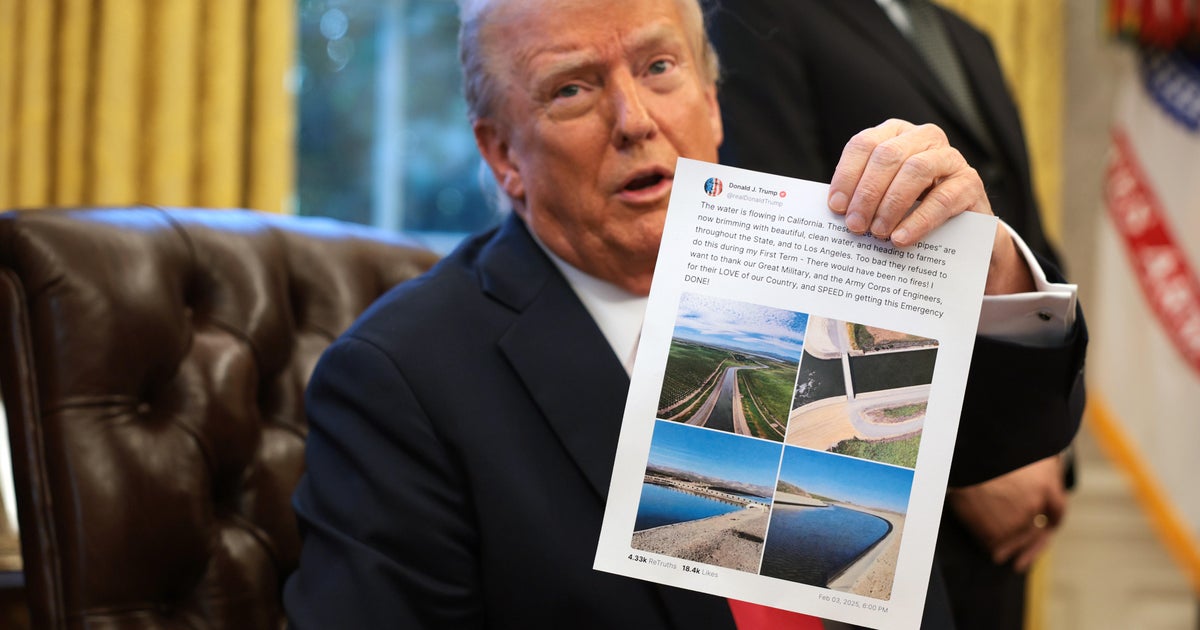
Washington — Justice Department lawyers defending President Trump's second-term policies face hurdles from the president's social media activity, which courts have used as evidence in rulings against the government.
Judges in at least a dozen of hundreds of lawsuits have pointed to posts from Trump or senior administration members. These decisions covered First Amendment challenges to actions against law firms, news outlets and international students protesting Israel. Other cases involved withholding federal benefits and grants, firing federal workers and ending temporary deportation protections for immigrants from certain countries.
U.S. District Judge James Boasberg blocked subpoenas from the U.S. Attorney's Office in Washington, D.C., to the Federal Reserve. He cited more than 100 Trump posts denouncing Fed Chairman Jerome Powell and called the subpoenas a pretext to harass Powell into lowering rates. "A mountain of evidence suggests that the dominant purpose is to harass Powell to pressure him to lower rates," Boasberg wrote in his March decision. "For years, the President has publicly targeted Powell because the Fed is not delivering the low rates that Trump demands."
U.S. Attorney Jeanine Pirro announced last month that her office was dropping its probe into Powell and Fed headquarters renovations.
"We say, let him keep talking. Let him keep tweeting," said Skye Perryman, president and CEO of Democracy Forward, which has filed hundreds of lawsuits against the administration. "Because every time that the president engages in or his associates and administration officials engage in this type of brash rhetoric, it is often helping us in court and exposing for both the court and the American people that the administration is taking a range of actions that are motivated, often unconstitutionally motivated, by the president's own viewpoint or retribution agenda."
Democracy Forward sued last November on behalf of small businesses and nonprofits over the Agriculture Department's suspension of Supplemental Nutrition Assistance Program benefits during the government shutdown. U.S. District Judge John McConnell cited Trump's Truth Social posts as proof of political motives. Trump had said the benefits "will be given only when the Radical Left Democrats open up government, which they can easily do, and not before!"
"This Court is not naïve to the administration's true motivations," McConnell wrote. "Far from being concerned with Child Nutrition funding, these statements make clear that the administration is withholding full SNAP benefits for political purposes. Such 'unjustifiable partisanship' has infected the USDA's decision-making, rendering it arbitrary and capricious."
The White House defended Trump's social media use. "The American people love and value President Trump's transparency. His posts aren't the problem — the problems are the unrelenting, unlawful rulings issued by lower court judges pushing their own policy agenda who are clearly triggered by President Trump's agenda," spokeswoman Abigail Jackson said in a statement to CBS News. "President Trump will not waver when implementing the America First initiatives he was elected on."
Since returning to the White House, Trump has used federal dollars to pressure critics. In April 2025, his administration froze more than $2 billion in grants to Harvard University over its treatment of Jewish students and antisemitism. Harvard sued, claiming retaliation for refusing administration demands. U.S. District Judge Allison Burroughs ruled for Harvard in September, citing Trump's posts that called the school a "joke" that "should no longer receive Federal Funds" and criticized it for hiring "woke, Radical Left, idiots and 'birdbrains.'" The Justice Department appealed.
Burroughs wrote that the posts and official statements showed the actions promoted governmental orthodoxy in violation of the First Amendment, not just fighting antisemitism.
Nikhel Sus, chief counsel for Citizens for Responsibility and Ethics in Washington, said Trump's open posts reveal true motives, aiding courts and the public. "If the president is going to take a particular action and then he wants to speak to the American people through some social media channel or through the press in ways that are honest and the real reason behind a particular policy, even if they hurt the government's legal case, I think that's a good thing," he said.
Trump signed an executive order to bar National Public Radio and the Public Broadcasting Service from public funds over biased reporting. He called them a "Radical Left Disaster, and 1000% against the Republican Party!" and "arms of the Radical Left Democrat Party." U.S. District Judge Randolph Moss blocked the order as unconstitutional viewpoint discrimination.
"On this record, there can be no doubt that the Executive Order does not target Plaintiffs merely because they have a viewpoint or consistent perspective and therefore fail to live up to some yet-to-be-attained platonic ideal of 'unbiased' journalism, but because he views their speech as unfavorable to him and the Republican party," Moss wrote. He added that Trump could criticize but not use government power to retaliate.
Out-of-court statements by opposing parties are admissible. Sus noted Trump's view of presidential control binds the Justice Department.
Trump's past posts factored into 2020 election cases and Jan. 6-related suits. U.S. District Judge Amit Mehta recently allowed a civil suit to proceed, finding most of nearly three dozen tweets unofficial acts, not immune official conduct.
Judges have questioned Trump's posts as official justification. U.S. District Judge Karin Immergut challenged using a Truth Social post to federalize Oregon National Guard members for Portland. Trump had directed Defense Secretary Pete Hegseth to send troops to protect against Antifa and others.
In firing Fed Governor Lisa Cook, U.S. District Judge Jia Cobb found inadequate notice from Trump's Truth Social demand that she "must resign, now!!" and a later firing letter. Supreme Court justices, including Sonia Sotomayor and Ketanji Brown Jackson, called the post irregular notice.
Ted Boutrous of Gibson Dunn said Trump's second-term use of Truth Social for announcements forces courts to interpret them. "When that's the chosen means of communication, then we should all be able to rely on them for better or worse."
Administration officials' posts have also influenced rulings. U.S. District Judge Paul Friedman struck down a Pentagon press policy, citing spokesman Sean Parnell's X post calling the New York Times "Trump-hating." Boutrous called it rare direct evidence of viewpoint discrimination.
What's Your Reaction?
 Like
0
Like
0
 Dislike
0
Dislike
0
 Love
0
Love
0
 Funny
0
Funny
0
 Wow
0
Wow
0
 Sad
0
Sad
0
 Angry
0
Angry
0




Comments (0)