

Iranian Activist Shirin Lives in Fear of Arrest and War After Protests

Shirin, not her real name, stays at home in Tehran these days and nights. She waits for the sound of aircraft or bombs, or for news of friends in detention. Constant anxiety grips her, with signs of post-traumatic stress disorder. Her left hand no longer works fully.
"Whenever I hear a disturbing sound, my body reacts involuntarily," she said. "The psychological pressure that entered my mind has numbed this part of my left hand. It doesn't work. I still have anxiety that the war might start again, and that is a terrifying thing."
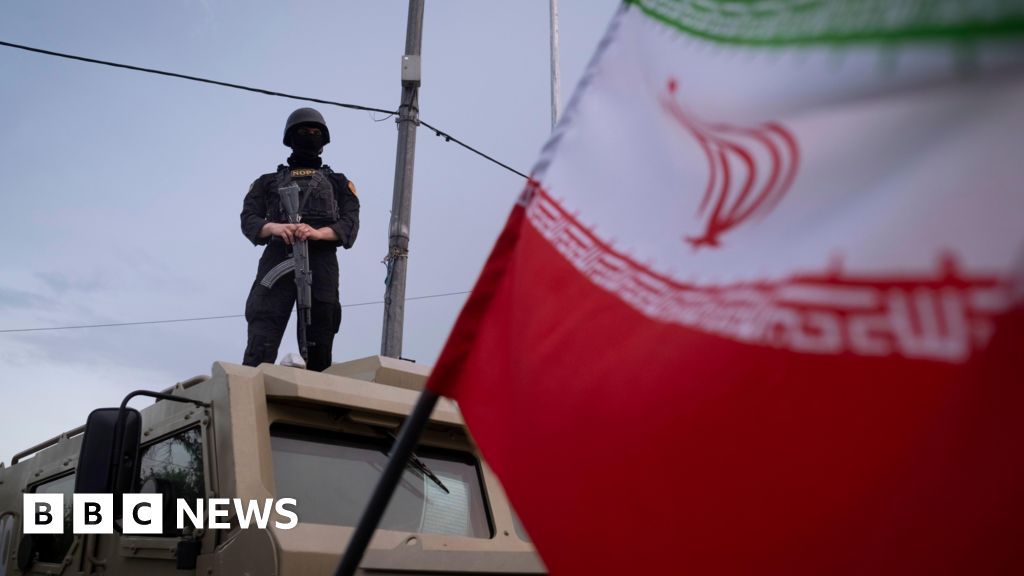
On the streets, the regime stages shows of strength. Women drive jeeps mounted with heavy machine guns or carry automatic rifles in parades.
The BBC spoke with Shirin using trusted sources inside Iran, where the regime silences voices.
As a political activist under severe repression, Shirin feels helpless.
"Things happened that we could do nothing about — for example, the execution of those arrested during the January uprising," she said. "The executions happened and the detainees were hanged. We have now lost the streets."
She listens for cars pulling up outside, a knock on the door, or a phone call summoning her to interrogation. Having been targeted once, the fear lingers.
The first time came in 2024, during the long fallout from the "Woman, Life, Freedom" protest movement. That movement followed the death in custody of 22-year-old Mahsa Amini, arrested by the Morality Police for allegedly not wearing her hijab properly.
Shirin was on the phone with her mother when a car pulled up beside her on the street. A man and a young woman got out and stood in front of her.
"Are you Mrs …?" the man asked.
"I said 'yes,'" Shirin recounted. "I told my mother I would call her back later and hung up."
They had been discussing food for their evening meal.
Shirin recognized the pair as secret police.
"I asked: 'What do you want?' They said, 'You are under arrest,'" she said.
Moments later, she sat inside the car. The young woman challenged her for not wearing a headscarf, leading to a scuffle.
"She said, 'Put on your headscarf.' She tried to force the headscarf on me," Shirin said. "I said: 'You shouldn't touch my headscarf.' I pulled her hand down."
Interrogators released Shirin after she signed a statement agreeing to public silence for two months, under threat of solitary confinement. Breaking it would mean jail. Today, such a choice seems unlikely.
Human Rights Watch states that "detainees, many of whom never should have been detained in the first place, are facing human rights violations, serious injury, and death."
Activists estimate more than 50,000 arrests since the most recent anti-regime protests in January. Many detainees are held incommunicado. Repression intensified after war began in February, with repeated allegations of torture.
A Human Rights Watch report last month quoted senior Iranian police commander Ahmadreza Radan: "We will not deem anyone who takes to the streets at the will of the enemies as a protester or anything else, but as the enemy [itself] and will [thus] treat them in the same manner that we would treat the enemy."
Shirin's anti-regime stance cost her job. Some colleagues blamed her and other activists for the Israeli-American attack on Iran. Her opposition remains firm, though war has shifted her views.
"I was very happy when the regime's military personnel were killed," she said. "But when civilians were killed, I fell apart — especially when I saw they had hit a half-finished, newly built building by the side of the street, and 25 people died in it. A one-year-old child lost his mother. That affected me deeply."
State repression combined with the US-Israeli bombing campaign has worsened Iran's mental health crisis.
The Iranian Red Crescent reports tens of thousands of calls to its helplines since the conflict started. The World Health Organization notes attacks on 18 medical facilities. An under-resourced system struggles with psychological problems.
A medic at a Tehran hospital told the BBC of patients' anguish from conflict-related trauma.
"As soon as you ask 'how are you feeling?', the patient starts crying," the medic said. "And we have one psychologist who only comes one day a week because they haven't signed a contract with him. Only one day a week for a population [in the area] of 26,000 people? I never thought everything would slip out of our hands like this."
Shirin worries about a suspended prison sentence the secret police could enforce at any time.
"They might enforce it," she says.
What's Your Reaction?
 Like
0
Like
0
 Dislike
0
Dislike
0
 Love
0
Love
0
 Funny
0
Funny
0
 Wow
0
Wow
0
 Sad
0
Sad
0
 Angry
0
Angry
0




Comments (0)