

House Passes FISA Section 702 Renewal in Bipartisan Vote, Pressuring Senate Before Deadline

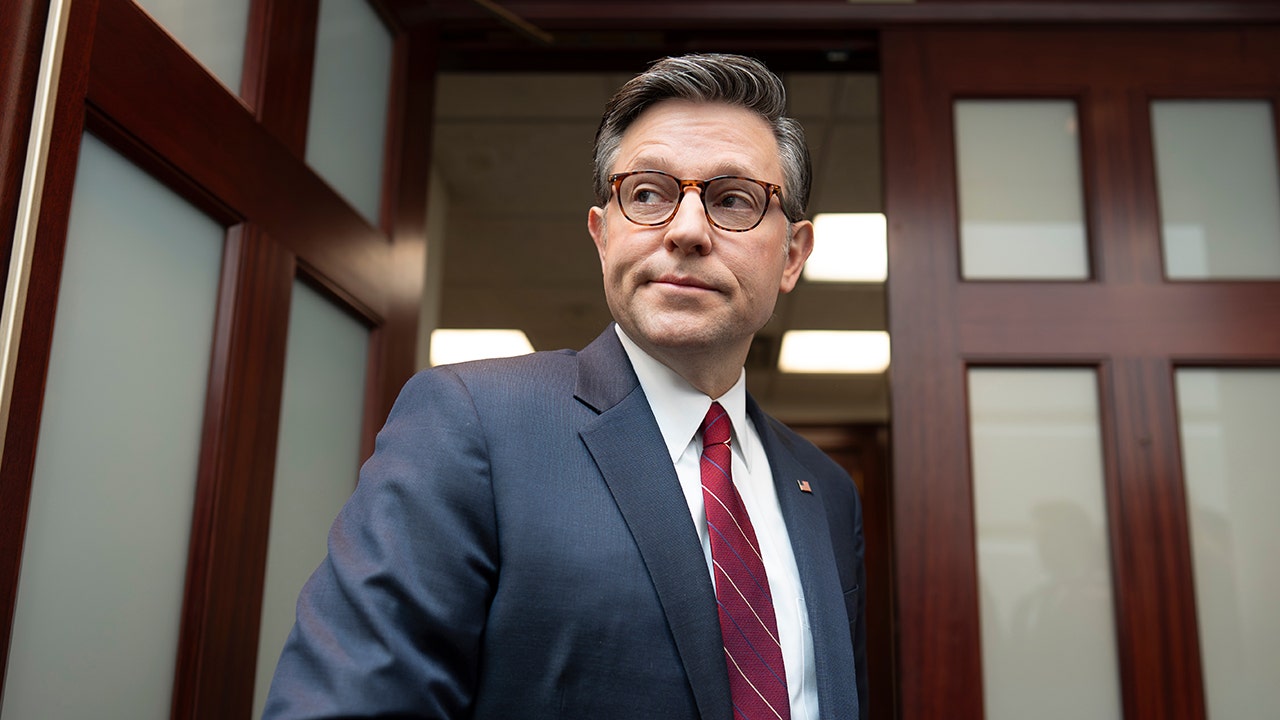
Congress extended Section 702 of the Foreign Intelligence Surveillance Act for 45 days after a 13-day patch expired. The House passed the measure in a bipartisan vote, applying pressure on the Senate ahead of the deadline.
Lawmakers knew for months that Section 702 would expire in mid-April. The House pulled renewal from its schedule earlier this year and failed on two attempts to reauthorize it before approving the 13-day extension last month. That deadline hit last week as the program faced lapse on May 1.
"These are some of the most complicated public policy matters that Congress deals with. And they are all sandwiched together because of the deadlines that are upon us," House Speaker Mike Johnson, R-La., said. "There's still some negotiation, deliberation and consternation."
House Republicans pushed a three-year extension that also blocked the Federal Reserve from creating a digital currency. Senate Majority Leader John Thune, R-S.D., said the Senate would reject any bill with that provision.
Johnson pressed forward anyway. "The Senate knows exactly what we're doing," he said. "I speak with Leader Thune all the time. They're watching this very closely. And hopefully they can process what we send them."
Rep. Chip Roy, R-Texas, backed the digital currency ban. "Government monitoring of the people," he said. "(People) don't want to have surveillance in their cars. They don't want their currency tracked or blocked. And they don't want the government looking at their correspondence and their emails. They all think it's the same stupid crap. But the government is looking at all of our stuff."
Section 702 lets the government collect electronic communications without warrants. Critics call it intrusive for documenting who sends messages to whom.
House Intelligence Committee Chairman Rick Crawford, R-Ark., said opponents dropped demands for warrants. "There were some people that were holding out for a warrant. And I think they realized that probably was not a tenable position," he said. "There were a whole lot of safeguards that have been woven into the text of the bill."
The House passed the three-year bill after a nine-hour negotiation on a procedural vote. Senate opposition to the length and digital currency language killed it.
Rep. Mike Flood, R-Neb., warned of risks. "If we go to bed tonight, and we don't have that program in place, I fear there will be blood on our hands."
Rep. Jim Himes, D-Conn., the top Democrat on the House Intelligence Committee, added, "History may judge the lapse of Section 702 authorities as one of the worst intelligence failures of our time."
Rep. Derrick Van Orden, R-Wis., said, "If you abuse FISA now, you are going to prison."
The Senate ignored the House bill and passed the 45-day extension by unanimous consent with all 100 senators. Section 702 skeptics won a promise of declassified information on past misuse.
"Every day that Section 702 is extended without meaningful reforms is a day that the program can continue to be abused," Sen. Ron Wyden, D-Ore., said.
Rep. Alexandria Ocasio-Cortez, D-N.Y., raised concerns about the Trump administration. "Have you seen (FBI Director) Kash Patel?" she asked. "He has demonstrated that he is willing to violate American civil liberties."
The House then approved the Senate's 45-day plan. Even without congressional action, a special court reauthorized the program until March 2027. Telecom companies might still withhold data without legal cover from Congress.
"The question is whether the carriers will feel that they have sufficient legal protection to continue to cooperate," said George Croner, former principal litigation counsel for the National Security Agency.
The extension runs until mid-June.
What's Your Reaction?
 Like
0
Like
0
 Dislike
0
Dislike
0
 Love
0
Love
0
 Funny
0
Funny
0
 Wow
0
Wow
0
 Sad
0
Sad
0
 Angry
0
Angry
0






Comments (0)