

England Local Elections Show First-Past-the-Post No Longer Favors Tories and Labour

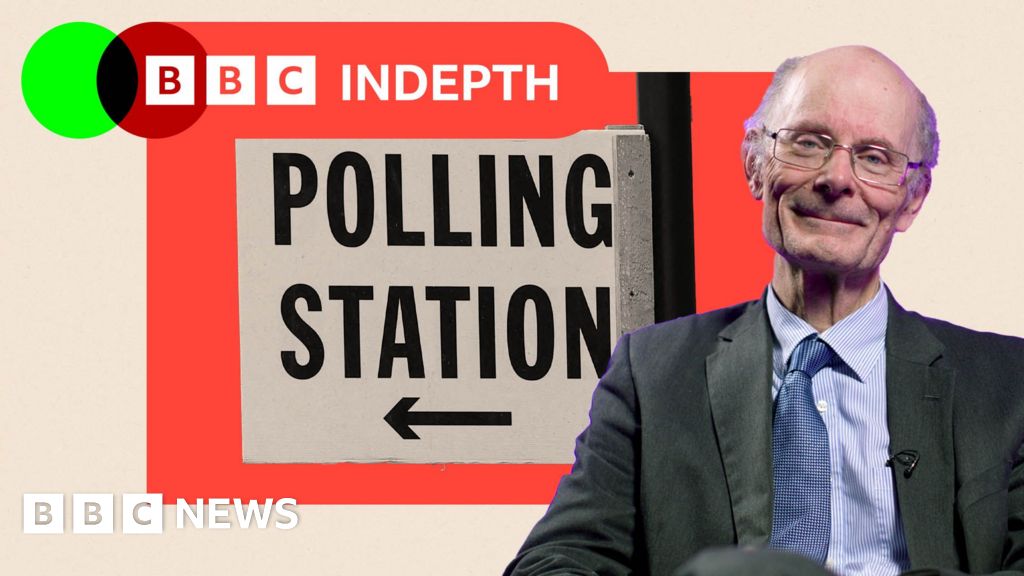
Under the first-past-the-post system, the candidate with the most votes in each seat wins. The UK uses it for general elections and local elections, including those held Thursday in England.
Proportional representation systems, by contrast, allocate seats to match parties' vote shares. Scotland's Parliament and Wales' Senedd use such methods.
First-past-the-post has favored the Conservatives and Labour for years. It disadvantages small parties with votes spread evenly across areas, blocking them from the House of Commons. Voters often skip them as a result.
The system also amplifies the winner's seat count in Conservative-Labour contests, allowing majority governments without coalitions.
Thursday's results question if first-past-the-post will keep benefiting them. The system treated all parties equally.
BBC projections show Britain in a multi-party era. If the country had voted locally Thursday, Reform would lead with 26 percent, Greens second at 18 percent. Conservatives and Labour would tie at 17 percent each, their 34 percent combined the lowest on record. Liberal Democrats got 16 percent.
Fewer than three in five voted Conservative or Labour in the 2024 general election, the lowest since 1922.
Third-party voting shows first-past-the-post no longer deters support for others. Past claims like 'A Liberal vote is wasted' have lost impact.
Reform and Greens voters saw their parties win seats. With few results left, Reform and Greens hold 2,063 council seats, nearly 200 more than Conservatives and Labour's 1,864. Liberal Democrats won 842.
This differs from 2024's general election, where Conservatives and Labour took 533 seats and Reform plus Greens just nine despite over 20 percent of votes.
The system amplified Conservative and Labour losses. In over 1,000 wards with BBC data, Labour's support dropped 25 points in defended seats versus 12 points elsewhere, compared to 2022. Conservatives fell 14 points in defended seats, 10 elsewhere.
Labour lost over 1,400 seats, Conservatives over 500.
First-past-the-post gave Reform majorities in councils on less than half the vote. In BBC samples, Reform dominated eight councils like Dudley, Plymouth and Rochdale with under 50 percent. It took over half the seats on 36 percent average vote, up to 67 percent seats.
Labour won 66 percent seats in Ealing and 56 percent in Merton on 29 percent vote.
In fragmented politics, relative performance yields big seat rewards on low votes, enabling majority control on modest shares.
A party losing votes can gain if rivals lose more. Conservatives took Westminster control despite a five-point drop, as Labour fell 17 points defending it. Greens got 17 percent but no seats.
Liberal Democrats lost four points on average but gained nearly 100 seats as Tory and Labour support plunged.
Greens won 56 percent seats in Manchester on 37 percent vote and helped deny Labour control in Cambridge and Exeter.
One in three of 63 councils with all seats contested now has no overall control, up from half a dozen.
First-past-the-post rarely guarantees majorities amid many parties.
What's Your Reaction?
 Like
0
Like
0
 Dislike
0
Dislike
0
 Love
0
Love
0
 Funny
0
Funny
0
 Wow
0
Wow
0
 Sad
0
Sad
0
 Angry
0
Angry
0











Comments (0)