

Column Calls for Tougher Penalties on Protests in Residential Areas After Brooklyn Anti-Israel March

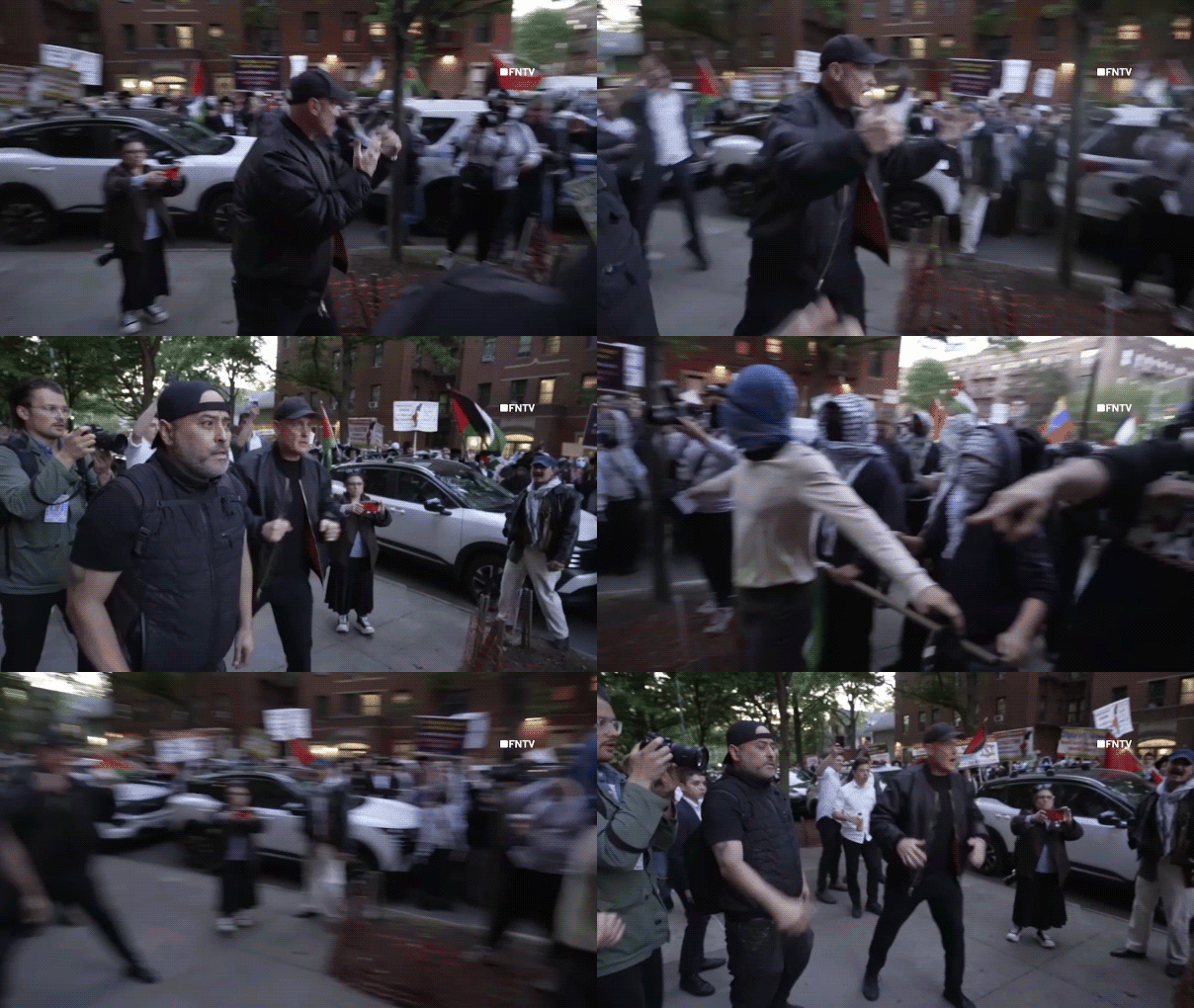
Scenes this week showed anti-Israel protesters flooding a Jewish residential neighborhood in Brooklyn to condemn Israel. The column declares these events a wake-up call, urging people to say, 'Don’t make trouble where our families live.'
Images captured terrified Orthodox Jews on their porches as radical progressives took over tree-lined streets. Several protesters faced arrest for acts of violence. The government must respond firmly to protect residential areas from mayhem.
The Constitution allows protests even in residential zones, such as outside a Supreme Court justice's home. Still, governments can impose time, place and manner restrictions to curb violence and intimidation.
Ilya Shapiro, director of constitutional studies at the Manhattan Institute, said, "The Constitution protects the right to protest, but as with speech protections more broadly, there can be time, place, and manner restrictions." He added, "Someone can properly be charged for disturbing the peace for using a megaphone at 2am to express his views about political leaders. More pointedly, a state or municipality can define ‘disturbing the peace’ in a way that protects residential areas as it does for schools, houses of worship, and other sensitive areas."
Local, state and federal governments should apply stiffer penalties for protest-related crimes in residential areas, where the aim appears to be intimidation rather than speech.
Agitation in residential areas carries a fraught history, from medieval anti-Jewish pogroms and the ransacking of Catholic neighborhoods in Elizabethan London to the KKK in the Jim Crow South and the Crown Heights riots of the 1990s. Such actions rarely end well, with no clear historical example of positive change from protests in residential enclaves, only instances of chaos and violence.
Renee Good and Alex Pretti would be alive today if they had protested in public squares rather than impeding federal agents in residential neighborhoods.
Towns and cities have long featured public spaces for large gatherings to celebrate or protest. Residential areas serve a different purpose.
The column questions the intent behind marching past innocent Jews' homes to protest Israel, calling it pure intimidation. These protesters also oppose buffer zones outside synagogues, raising questions about their need to get close to targets.
Federal legislation to increase penalties for protest crimes in residential areas is essential. Such steps have worked before: after Don Lemon and others invaded a Minnesota church and got arrested, no other churches saw similar overruns.
In 2020, the Trump administration warned that destroying federal statues carried a 10-year prison term, and the statues stopped falling.
Protest organizers, including New York City Mayor Zohran Mamdani, should keep demonstrations out of residential areas to respect people's homes. The column portrays these leftists as inflicting chaos and fear on Jews to push pro-Hamas views.
Freedom of speech sometimes allows moronic behavior, such as camping outside a conservative judge's home. But breaking the law in these settings should bring real jail time, not just a ticket, for terrorizing families.
Brooklyn features many homes and churches. So far, leftist protesters targeting them have not caused deaths. Congress should act before that changes to shield residences and families from political violence.
What's Your Reaction?
 Like
0
Like
0
 Dislike
0
Dislike
0
 Love
0
Love
0
 Funny
0
Funny
0
 Wow
0
Wow
0
 Sad
0
Sad
0
 Angry
0
Angry
0







Comments (0)