

CIA Director Ratcliffe Meets Cuban Officials in Havana, Delivers Message on Engagement and Changes

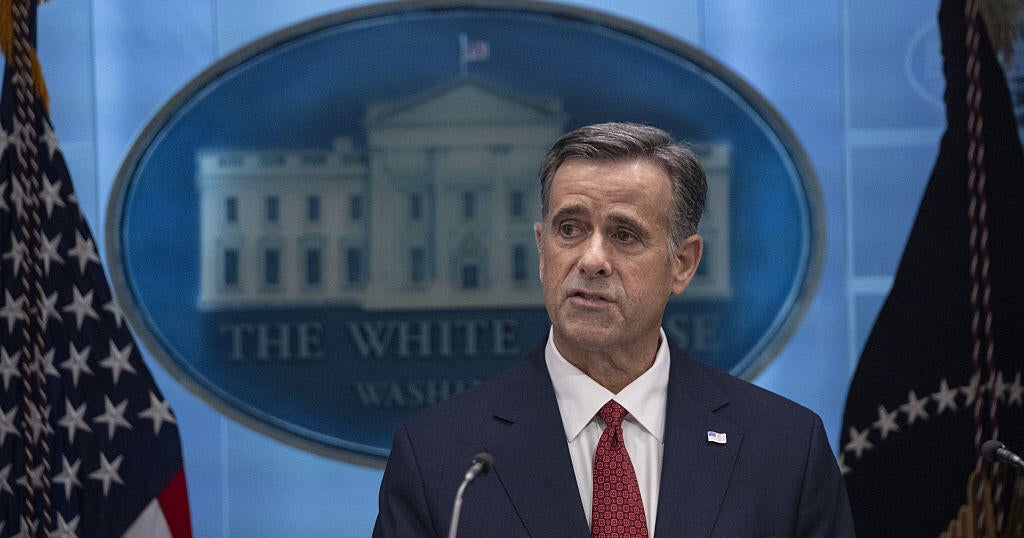
CIA Director John Ratcliffe traveled to Havana, Cuba, on Thursday for a rare meeting with senior Cuban officials. An agency official told CBS News that Ratcliffe used the visit to deliver a message: The U.S. was prepared to expand economic and security engagement with Cuba if Havana makes fundamental changes.
The meeting took place as Cuba grappled with a massive power failure on its national energy grid. U.S. sanctions have triggered an oil and gas shortage crisis on the island nation.
Ratcliffe met Raúl Rodriguez Castro, grandson of former Cuban President Raúl Castro. Multiple U.S. officials later confirmed to CBS News on Thursday that the U.S. is taking steps to indict the 94-year-old Raúl Castro, brother of Fidel Castro, in connection with Cuba's deadly 1996 shootdown of planes operated by humanitarian group Brothers to the Rescue.
Cuban Interior Minister Lazaro Alvarez Casas and the head of Cuba's intelligence services also attended Thursday's meeting, the CIA official said. The group discussed intelligence cooperation, economic stability, and security issues against the backdrop that Cuba can no longer serve as a safe haven for adversaries in the Western Hemisphere.
Ratcliffe told Cuban leaders the administration was offering a genuine opportunity for collaboration and a chance to stabilize Cuba's struggling economy. He cautioned that the opportunity would not remain open indefinitely and that the administration would enforce red lines if necessary, the official said.
The Havana meeting followed public comments from President Trump that talks with Cuba were imminent. Earlier this week, Trump said Cuba is asking for help and indicated talks would begin at the right time.
Cuban officials publicly confirmed the meeting, calling it part of efforts to maintain political dialogue despite complex bilateral relations. Cuban state media said officials sought to convince the U.S. delegation that Cuba does not threaten American national security and should be removed from the U.S. list of state sponsors of terrorism.
Earlier this week, the State Department renewed an offer of $100 million in direct humanitarian aid to the Cuban people through the Catholic Church and other independent groups. The assistance could move forward if Havana permitted it. Secretary of State Marco Rubio accused Cuba's government of blocking aid and refusing offers of support, including satellite internet access, amid the island's deepening economic crisis.
Cuban authorities said the national energy grid suffered a major failure early Thursday that cut power to the island's eastern provinces. Cuba's leaders said they would accept the aid as long as it comes in full conformity with universally recognized practices for humanitarian assistance.
In January, Ratcliffe traveled to Caracas to meet Venezuela's interim President Delcy Rodríguez. That marked the first Cabinet-level U.S. visit since the American operation that removed former Venezuelan leader Nicolás Maduro from power.
U.S. officials said at the time that Ratcliffe carried a message from Trump that Washington was open to an improved working relationship. They warned that Venezuela could no longer serve as a haven for narcotraffickers and other U.S. adversaries.
What's Your Reaction?
 Like
0
Like
0
 Dislike
0
Dislike
0
 Love
0
Love
0
 Funny
0
Funny
0
 Wow
0
Wow
0
 Sad
0
Sad
0
 Angry
0
Angry
0

Comments (0)