

CBS Poll: Voters See Redistricting as Unfair, Want Candidates to Oppose Trump

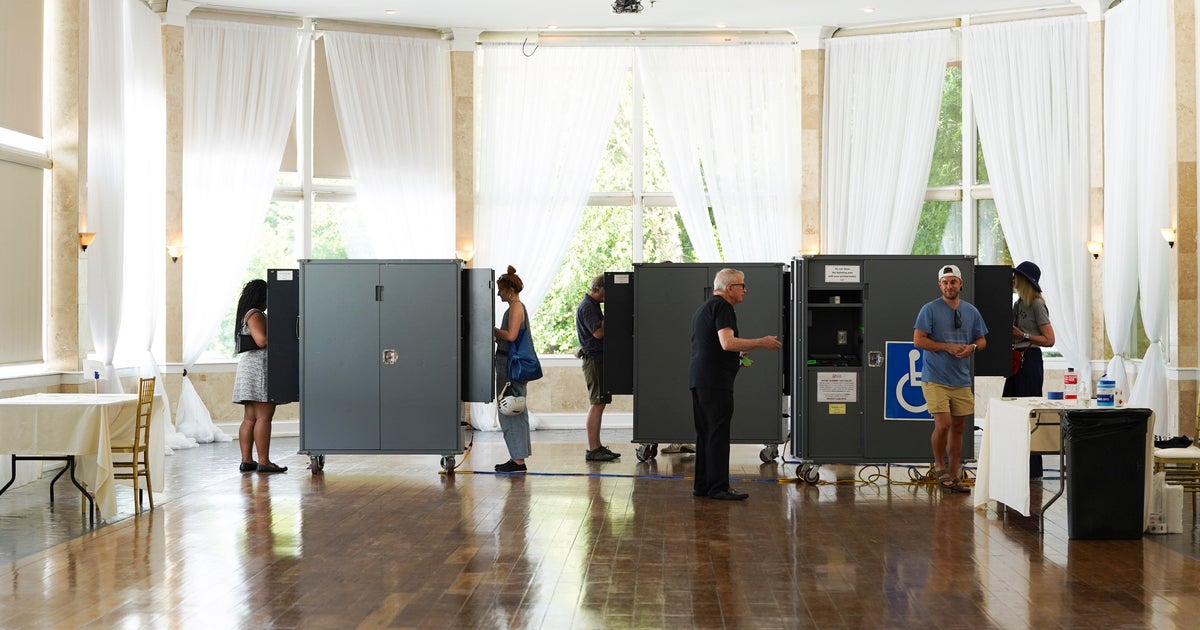
With fewer than six months until the midterm elections and primaries underway, a new CBS News poll examines how voters view redistricting and the role of President Trump.
Most voters believe the redistricting process is making congressional elections less fair and weakening U.S. democracy. They say they prefer districts that do not favor one party over another.
Voters see current redistricting efforts as giving more political power to Republicans and less to Democrats. They also see those efforts as increasing power for White voters and reducing it for Black and Hispanic voters.
Most voters think the Democratic Party treats White people and racial minorities the same way. They are more likely to say the Republican Party puts the interests of White people first. Those voters overwhelmingly believe redistricting will give more power to White voters and less to Black and Hispanic voters.
Though President Trump is not on the ballot this year, three in four Republican voters want a candidate who will support him at least most of the time. That figure rises to nine in 10 among MAGA voters, four in 10 of whom want a candidate who will support everything Trump wants.
Registered voters overall tend to want a candidate who will oppose, rather than support, most or all of what Mr. Trump wants.
Slightly more voters say they would prefer that Democrats, rather than Republicans, take control of Congress next year. This is a preference for control, not a direct vote of likely voters, and includes many who are not sure.
Even though more registered voters prefer Democrats to control Congress, that does not mean they view the Democratic Party more favorably. Both parties are viewed negatively in about equal measure. Neither party is seen by a majority as helping with the cost of living, though Democrats hold a relative edge.
The CBS News/YouGov survey was conducted with a nationally representative sample of 2,064 U.S. adults interviewed between May 13-15, 2026. The sample was weighted to be representative of adults nationwide according to gender, age, race, and education, based on the U.S. Census American Community Survey and Current Population Survey, as well as 2024 presidential vote. The margin of error is ±2.7 points for the total sample and ±2.9 points for registered voters.
What's Your Reaction?
 Like
0
Like
0
 Dislike
0
Dislike
0
 Love
0
Love
0
 Funny
0
Funny
0
 Wow
0
Wow
0
 Sad
0
Sad
0
 Angry
0
Angry
0









Comments (0)