

Cape Verde Builds Digital Hub to Draw Diaspora Capital and Cut Emigration

For much of its history since the Portuguese discovered the Cape Verde archipelago off west Africa in the mid-15th century, the islands served as a hub of the international slave trade. Africans were forcibly transported to marketplaces there before distribution across the Americas and Europe.
Now, almost 150 years since slavery's abolition in Cape Verde and just over 50 years since independence from Portugal, Pedro Fernandes Lopes wants the country to become a beacon for the free movement of human and financial capital across the African diaspora.
Lopes serves as Cape Verde’s secretary of state for the digital economy and plays a key role in its drive to become a digital hub for west Africa and beyond. The effort draws in part on Estonia’s digitization program.
The country had developed digital governance services for Portuguese-speaking Africa for decades when the Covid-19 pandemic hit. Tourism numbers briefly plummeted, and the government sped up plans to diversify the economy through technology. In 2021, it created the digital economy ministry with a goal of making the sector account for a quarter of GDP by 2030.
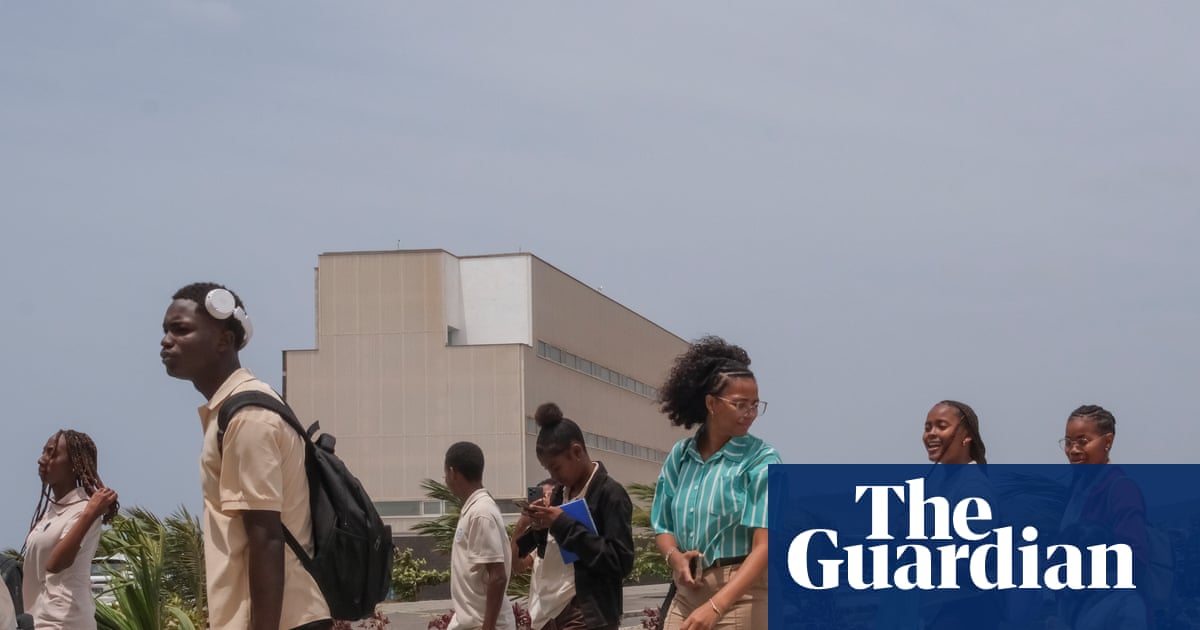
Signs point to success in many areas. The ministry already provides public services for the approximately 529,000 people living in Cape Verde’s 10 islands, as well as its vast diaspora, estimated at three to four times the country’s population. Internet penetration stands at 75 percent, double the African average. Schoolchildren learn robotics and coding in shipping containers, and more undersea cables run beneath the Atlantic.
“The routes enslaved people were taken along from Africa are the same routes that the submarine cables pass along in the Atlantic, which is crazy,” Lopes said in an interview in his office in the capital, Praia, opposite a large mural of prominent Cape Verdean poets painted on a rocky slope. “History repeats itself – but each generation has an opportunity to tell their own history.”
The digital push supports another goal: reducing Cape Verde’s emigration rate, one of the world’s highest relative to population.
Jessica Sanches Tavares advises the board of directors at TechParkCV, a £44.78 million technology facility with an incubation center for startups, a youth training center and a conference auditorium.
Born in Paris to parents who emigrated before her birth, Tavares wanted to “return” to Cape Verde since childhood and finally did so within the last few years.
“There is an energy, an ambition, a will to build, and it is really stimulating to be part of it,” she said. “There are still challenges but I think we are on the right trajectory.”
Most financing for the facility and its smaller campus in Mindelo came as a loan from the African Development Bank. In December, it will host the Web Summit, one of the world’s largest technology events, for its first appearance on the continent since it began in 2009.
Tavares said TechParkCV had attracted about two dozen companies seeking to benefit from its location in a tax-incentivized special economic zone.
“Companies can develop their activities from Cape Verde, work remotely with clients worldwide and do it in conditions that are at once technically and economically competitive,” she said.
“All this does not function in a silo. The talents trained can then lean on the datacentre, install themselves in the business centre, or even launch their projects via the incubation centre.”
Lopes said: “We don’t want to rely on foreign aid or support. I think nowadays there is a big opportunity for the global south to not depend on the former colonisers. What we’re going to do is open the market of Africa for unicorns but also trying to create unicorns of Africa here.”
Barriers remain, including poor air connectivity to destinations within Africa. Recurring reports say black Africans, particularly from Nigeria, one of the continent’s largest tech markets, face extra searches at Cape Verde’s airports.
Some in the ecosystem say startups rely too much on government support. Up to 100 startup founders reportedly receive funding to cover salaries of at least six staff members, while attendance at tech events abroad gets full subsidies.
Lopes stayed optimistic: “I’m sure that this generation doesn’t want to come back like their parents did when they are retired. If we change the idea that people leave the country and also tell bright minds to return, things will change. But we cannot just have the narrative. You have to walk the talk. And that’s what we are doing now.”
What's Your Reaction?
 Like
0
Like
0
 Dislike
0
Dislike
0
 Love
0
Love
0
 Funny
0
Funny
0
 Wow
0
Wow
0
 Sad
0
Sad
0
 Angry
0
Angry
0










Comments (0)