

Blue Origin New Glenn rocket explodes during test at Cape Canaveral

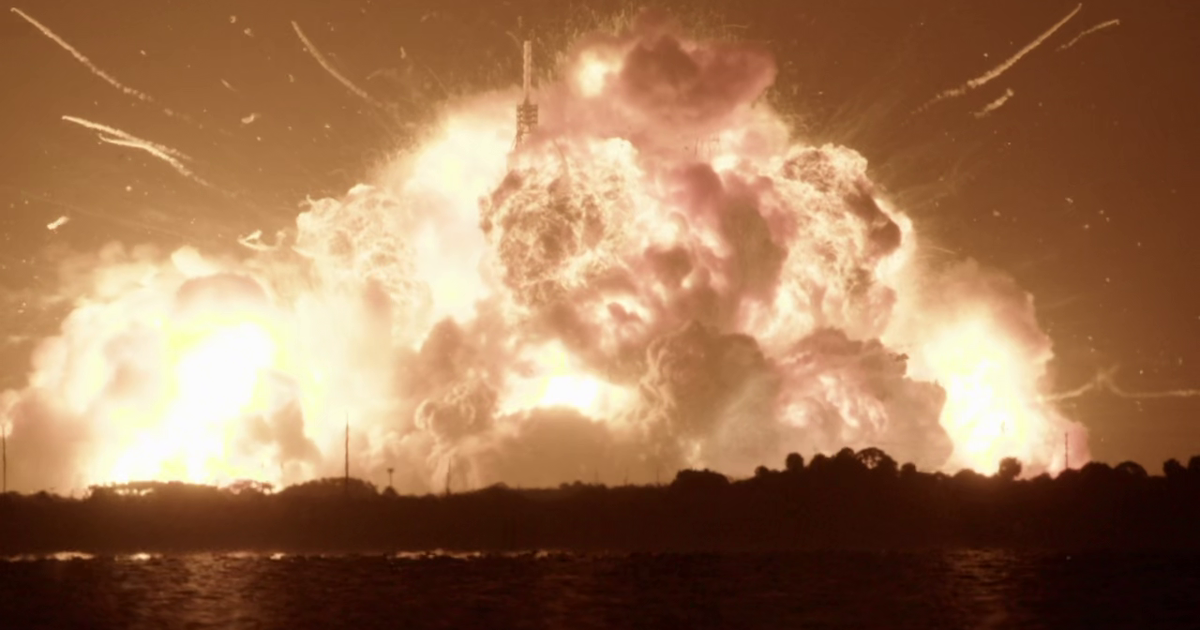
A powerful New Glenn rocket owned by Jeff Bezos' Blue Origin exploded in a fireball Thursday night during a test at Cape Canaveral Space Force Station.
The blast occurred around 9 p.m. EDT as engineers prepared for a brief test firing of the rocket's seven methane-fueled BE-4 first stage engines. Blue Origin had been preparing the rocket for a June launch carrying Amazon Leo internet satellites.
As the engines began firing, fire erupted at the base of the 188-foot-tall first stage. The upper stage tilted and fell as the first stage collapsed, and the vehicle exploded moments later in a fireball fueled by methane and liquid oxygen.
The rocket was destroyed. Video showed the erector-gantry and one of two lightning towers were no longer visible after the blast. The Amazon satellites were not aboard during the test.
All personnel were accounted for and no injuries were reported. Blue Origin founder Jeff Bezos posted that the company would determine the cause and rebuild as needed.
The U.S. Space Force Eastern Range said emergency responders were on scene and that officials were reviewing data to determine the cause. The range said it remains capable of supporting other launch sites.
SpaceX founder Elon Musk replied to Blue Origin that he hoped the company would recover quickly.
It was the first on-pad explosion at the Cape since a SpaceX Falcon 9 rocket exploded on pad 40 in September 2016. That pad was out of service for more than a year.
Blue Origin has only one New Glenn launch pad. The rocket has flown three times. Its most recent flight in April ended with an upper stage malfunction that left a commercial satellite short of its planned orbit.
The Federal Aviation Administration later cleared the rocket to resume flights after reviewing the failure analysis. The destroyed vehicle had been scheduled to launch 48 Amazon Leo satellites in June.
The New Glenn also supports NASA's Artemis program. NASA plans to use the rocket for a test of moon landers in low-Earth orbit next year and for possible lunar landing missions in 2028.
NASA Administrator Jared Isaacman said the agency would work with partners on an investigation and assess impacts to the Artemis program.
What's Your Reaction?
 Like
0
Like
0
 Dislike
0
Dislike
0
 Love
0
Love
0
 Funny
0
Funny
0
 Wow
0
Wow
0
 Sad
0
Sad
0
 Angry
0
Angry
0










Comments (0)