

Average Age of First-Time Mothers Hits 30.8 in DC, 24.7 in Mississippi Amid Party-Line Divide

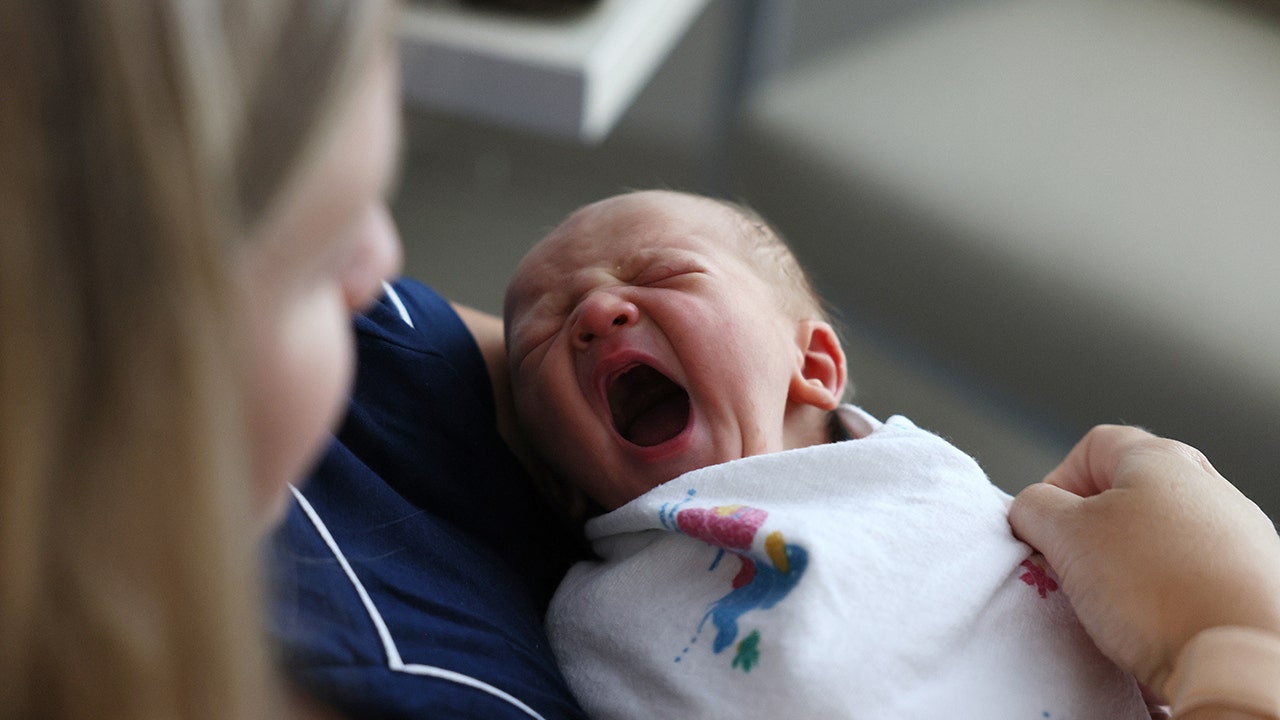
American women are having children later than ever, with birth rates at record lows and a growing divide between red and blue states.
A new analysis of birth rates spotlights Washington, D.C., and Mississippi as examples among first-time mothers. The data shows how education, economic opportunities, living costs and access to reproductive healthcare shape when Americans start families.
The party-line split stands out between areas with the highest and lowest ages for first-time mothers. The 10 states with the highest average age all voted for Democrats in the past five presidential elections. Nine of the 10 states with the lowest age voted Republican in those elections.
Washington, D.C., where three-quarters of voters are registered Democrats, leads with an average age of 30.8 years for first-time mothers. Mississippi, a deeply Republican state often ranked as the nation's poorest, has the lowest at 24.7 years.
Since the 1960s sexual revolution brought oral contraceptives and questioned traditional gender roles, American women have pushed back motherhood. The average age of first-time mothers climbed from 21 in 1972 to 27.5 in 2024, per Centers for Disease Control and Prevention data.
The analysis reveals a six-year gap between states with the youngest and oldest first-time mothers.
In Washington, D.C., later motherhood links to higher education, better career options and wider reproductive healthcare access. In Mississippi, women start families younger amid lower educational attainment and fewer economic opportunities than in the capital.
The 10 states with the highest ages for first-time mothers all voted blue in the 2024 presidential election. The 10 youngest all voted red.
Institute for Family Studies senior fellow Brad Wilcox said young people in blue states, especially the Northeast, prioritize careers over family. "So what we see in blue states across the country is that men and women are more likely to embrace a kind of Midas mindset where there's a premium on work and money and education, and they're less likely to embrace a kind of marriage mindset where there's a premium on focusing on love, marriage and starting a family," Wilcox told Fox News Digital.
"And so what we see as a consequence of that is that the age of first birth is more likely to be markedly higher in blue states, which often also have higher levels of education and income for women as well," he added.
CDC data shows women with higher education delay their first child. Those with professional or doctorate degrees average 34 years old. Women with a high school diploma average 27.2 years.
Women outpace men in college degrees, with 47% of women ages 25 to 34 holding degrees compared to 37% of men, according to Pew Research. Wilcox said men struggle in the job market. "Men on the employment front are sort of floundering," he said. "And so these trends we're seeing just make it harder, I think, for men to find their footing and to have a kind of constructive role to play, both in the family and society too often."
Maggie McKneely, director of Government Relations at Concerned Women for America, said women seek partners of equal education or economic status but often do not find them. "Men in particular are more reticent to settle down," she told Fox News Digital. "But I think another part of it is that women are more educated than they ever have been before, and many of them do not want to choose a partner less successful than themselves."
Raquel Debono, a 30-year-old single conservative influencer in New York City, has passed the state's average first-child age of 29.1. She said post-feminism views delaying motherhood as empowering. "In cosmopolitan cities especially, women are rewarded for becoming the main character of their own lives first," Debono told Fox News Digital. "The degree, the promotions, the chic apartment, the solo trip to Italy, the emotionally unavailable boyfriend who 'isn’t ready right now.' Motherhood becomes something you schedule in between Pilates and a board meeting."
Debono said dating apps hinder settling down. "Dating apps convinced everyone there’s always someone better one swipe away: taller, richer, hotter, more emotionally intelligent, less avoidant, more spiritually evolved," she said. "So people keep optimizing instead of choosing."
"Women have never had more freedom, yet many feel more anxious about love, commitment, and timing than ever before," Debono concluded.
What's Your Reaction?
 Like
0
Like
0
 Dislike
0
Dislike
0
 Love
0
Love
0
 Funny
0
Funny
0
 Wow
0
Wow
0
 Sad
0
Sad
0
 Angry
0
Angry
0








Comments (0)