

Anti-war protests surge in Japan as PM Takaichi lifts arms export ban

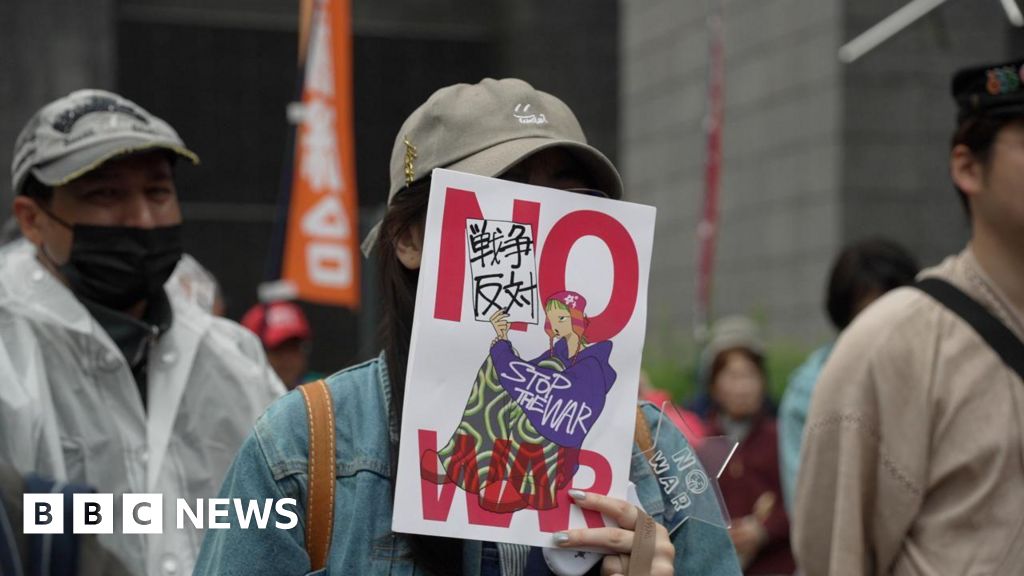
Anti-war protests have swept Japan as Prime Minister Sanae Takaichi pushes to strengthen the country's defense posture.
In Tokyo, crowds gathered on a street corner in pouring rain, holding drenched placards and flags. One placard bore two words in large Japanese kanji: "No War." These demonstrations mark Japan's largest anti-war protests in decades.
Takaichi took office in October 2025 and has moved away from Japan's post-war pacifist stance. Her government lifted long-standing restrictions on arms exports and expanded the military's role abroad. Officials say the steps respond to a tense regional security environment.
Many residents view the changes with alarm. Fears are rising that Japan could become a war-capable nation, fueling protest momentum.
Public demonstrations in Japan usually remain restrained, reflecting a cultural emphasis on social harmony. Large turnouts signal deeper concerns over the nation's identity.
Japan's 1947 constitution includes Article 9, which renounces war as a sovereign right and bars maintaining armed forces for warfare. The clause has allowed self-defense forces through reinterpretation.
Takaichi argues the framework no longer fits reality. Japan faces an assertive China, unpredictable North Korea and nearby Russia. The United States, its closest ally, urges Tokyo to take a bigger security role.
Conservative leaders, especially from the ruling Liberal Democratic Party, have sought constitutional changes for decades. Former Prime Minister Shinzo Abe pushed to revise Article 9 and formalize the self-defense forces. In 2015, the Diet passed a security bill under Abe to permit limited collective self-defense, including aid to allies under attack.
On April 21, the government lifted its ban on exporting lethal weapons, citing a severe security environment that requires ally support.
The move provoked public backlash. Outside the prime minister's office, as rain cleared and sun emerged, the crowd grew and chants intensified. Younger people joined older protesters.
Akari Maezono, in her 30s, held paper lanterns calling for peace. "I'm angry that these changes could be made without properly listening to us, the public," she said.
An older man with a red banner added: "The Japanese constitution, Article 9 in particular, must be protected at all costs. It kept Japan from being drawn into past conflicts like the US-Iran war. Without it, we surely would have entered the war by now."
The constitution took effect two years after World War Two ended with U.S. atomic bombings of Hiroshima and Nagasaki, which killed 200,000 people by late 1945. Supporters viewed Article 9 as a break from wartime militarism, though critics saw it as U.S.-imposed and risky amid Cold War tensions.
For many with memories of war and atomic bombings, any pacifism shift sparks fear. Hiroshima survivors recently urged nuclear arms abolition at the United Nations. "Nuclear weapons were used because we went to war," said Jiro Hamasumi, a hibakusha, at the 2026 Nuclear Non-Proliferation Treaty review conference. "No more war, no more hibakusha."
Protests have spread to Osaka, Kyoto and Fukuoka, with attendance rising weekly. Social media posts on platforms like X help organize and draw younger participants.
Opinion remains split. Polls show some support for a stronger military to match global realities, while others resist. Pro-revision voices say Article 9, born from defeat, restricts deterrence and ally support in an unstable region.
One man dismissed the protesters: "They're always here." He added: "Time for a new Japan."
Japan now weighs preserving its pacifist past against adapting to a volatile future.
What's Your Reaction?
 Like
0
Like
0
 Dislike
0
Dislike
0
 Love
0
Love
0
 Funny
0
Funny
0
 Wow
0
Wow
0
 Sad
0
Sad
0
 Angry
0
Angry
0





Comments (0)