

US strikes Iranian military sites after helicopter downing

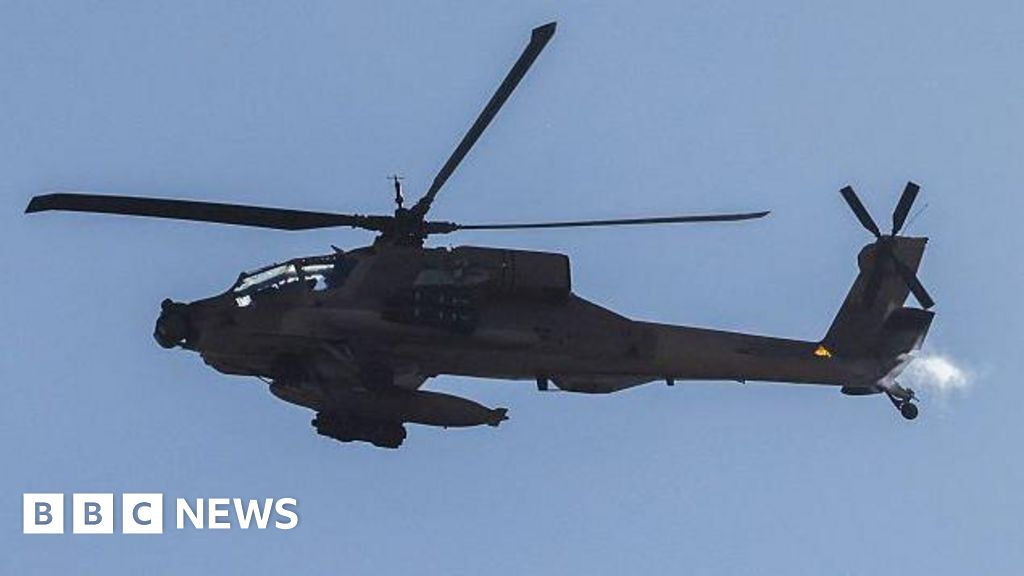
The US says it has carried out a series of strikes on Iranian military and surveillance sites in response to the downing of an American helicopter in the Gulf.
Air defence systems, ground control stations and radar sites were targeted near the Strait of Hormuz, the US military Central Command said.
In response, Iran's Islamic Revolutionary Guard Corps said it launched strikes on 21 targets at US bases in the region, one in Bahrain and the other in Jordan, while Kuwait's army said it was also intercepting an attack.
The US has described its strikes as a proportional response for the Apache helicopter downing on Monday, while the IRGC described the attacks as vicious.
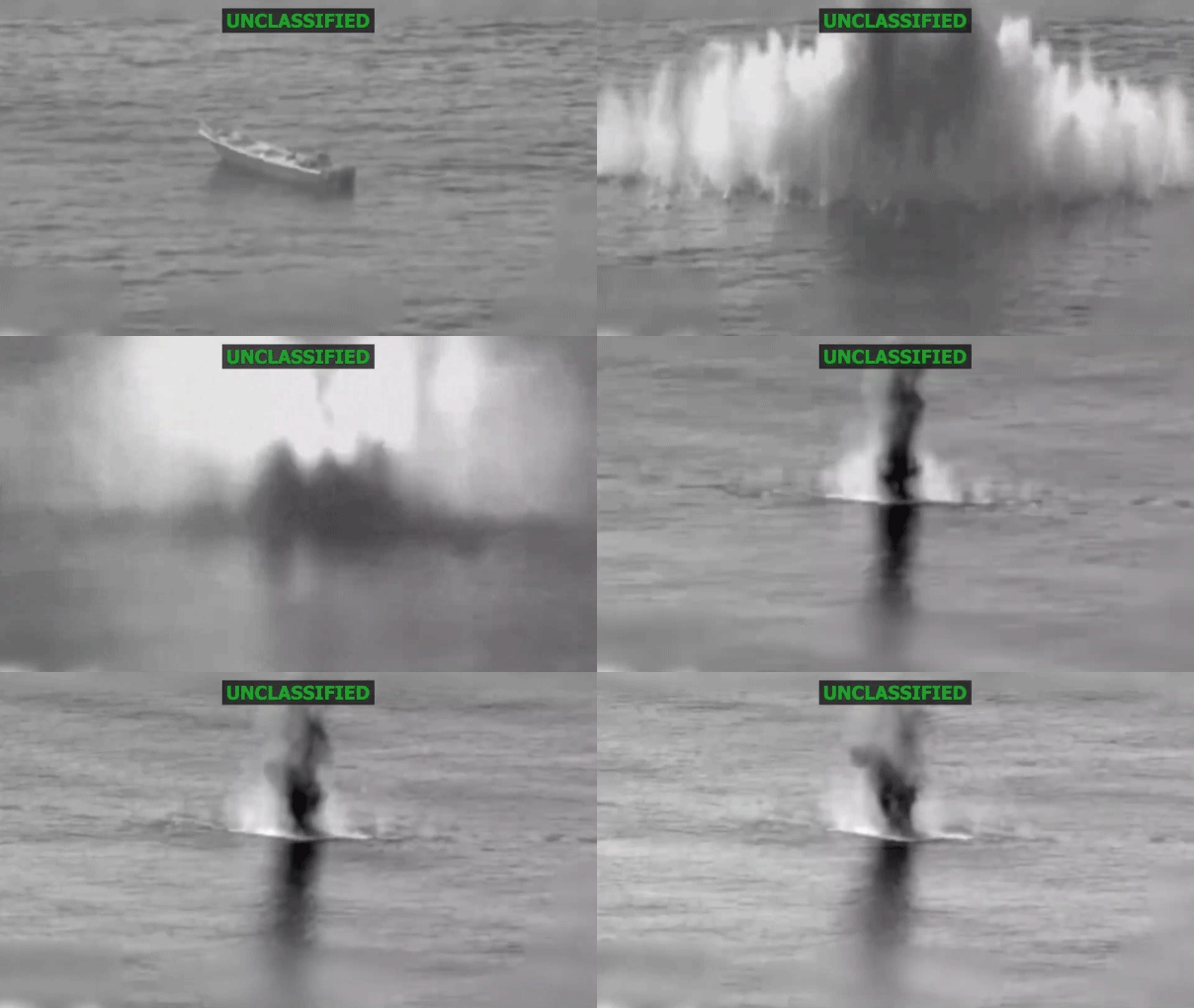
Centcom earlier said two crew members from the helicopter were rescued by an American sea drone. It was the first time the US military publicly confirmed that type of vessel was used in such an operation.
According to US officials, Iran used a drone to launch the attack on the helicopter. But it is not clear whether the Iranian drone had deliberately attacked, an unnamed US official told CBS News. The semi-official Mehr News Agency reported that Iran had not claimed responsibility for the downed aircraft.
In response, Centcom said US fighter jets struck Iranian air defense, ground control stations, and surveillance radar sites near the Strait of Hormuz.
The IRGC said US strikes had damaged a telecommunications tower and two water tanks. Iran said the US had targeted the cities of Jask and Sirik, and Qeshem, an island in the Gulf.
Centcom released the statement saying the mission was completed just over three hours after it announced an initial wave of strikes triggered by the downing of the US helicopter on Monday.
US officials are yet to comment on reports of attacks on its bases and it is unclear if there has been any damage. However, an air raid alert was issued in Bahrain, according to local authorities who said Iranian attacks had been repelled.
US President Donald Trump said earlier on Tuesday the downed helicopter had been patrolling the Strait of Hormuz, a critical shipping channel that was effectively closed days after the US launched its first strikes on Iran in late February.
There were two pilots involved, both are safe and uninjured, Trump wrote on Truth Social. Nevertheless, the United States must, of necessity, respond to this attack.
In Washington, US House Speaker Mike Johnson said he was in the room with Trump when he decided that US attacks on Iran should resume.
We lament that it became necessary, said the top Republican in Congress, adding that we're going to have to take care of this business.
Iran's foreign minister issued a threat to the US in the aftermath of the renewed US attacks, saying the country will leave no attack or threat unanswered.
Despite its defeats on the battlefield, the US opted to test our determination, Iran's Foreign Minister Abbas Araghchi wrote on X.
He added: Leave our region if you want to be safe.
Araghchi said on Tuesday that foreign forces near Iran's territory were at constant risk on account of their own human errors, plain accidents or potentially being caught in crossfire.
To reduce risk, best solution is for them to leave, the Iranian leader said in a post on X.
Minutes before Trump's comments on the downed American Apache helicopter on Tuesday, Iran's top negotiator in peace talks with Washington, Mohammad Baqer Qalibaf, took to social media to signal retaliation.
We prefer the language of diplomacy, but we speak other languages far more fluently. Break your commitments, and we'll switch to what we speak best.
You ride the horse you saddled, he wrote.
The flare-up between the US and Iran comes after Israeli forces carried out strikes across southern Lebanon on Tuesday.
Israel and Iran halted attacks on each other after exchanging fire over the weekend for the first time since April's truce.
What's Your Reaction?
 Like
0
Like
0
 Dislike
0
Dislike
0
 Love
0
Love
0
 Funny
0
Funny
0
 Wow
0
Wow
0
 Sad
0
Sad
0
 Angry
0
Angry
0




Comments (0)