

US and Iran reach deal to end Middle East war and reopen Strait of Hormuz

European Council President Antonio Costa welcomed a deal between the United States and Iran to end the Middle East war. He said the European Union stood ready to help shape a plan for lasting peace.
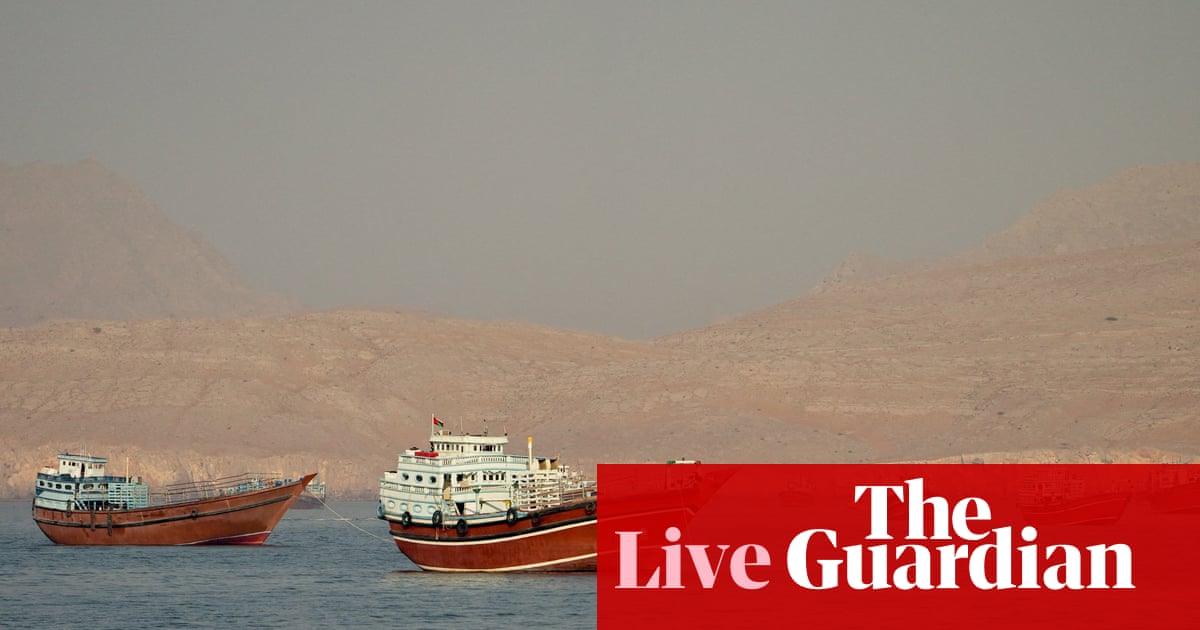
Costa wrote on X that he looked forward to an end to the war and the full restoration of freedom of navigation in the Strait of Hormuz.
The United States and Iran said they reached an agreement to halt fighting on all fronts, including Lebanon, and to reopen the Strait of Hormuz. The two sides gave little detail on Iran's nuclear program. Washington and Tehran said the deal would be signed Friday in Switzerland.
Iran's Mehr news agency reported that the United States would release $12 billion in frozen Iranian assets before talks begin. It also cited a 14-point memorandum of understanding that would free $24 billion in frozen assets during a 60-day negotiation period after the document is signed.
The Trump administration offered no immediate comment on those details. The pact may face resistance in Washington because it does not settle the future of Iran's nuclear ambitions or its stockpile of highly enriched uranium.
In a New York Times interview, President Trump said talks were still under way on whether Iran would suspend uranium enrichment for 20 years.
French President Emmanuel Macron said the agreement would be discussed at the G7 summit that opened Monday in Evian-les-Bains. He said leaders would review support for Lebanon, the reopening of the Strait of Hormuz, and a possible deal on Iran's nuclear and ballistic missile programs. Egypt, Qatar and the United Arab Emirates will join the talks Tuesday.
Global oil prices fell on hopes that the deal would ease the energy supply crisis. Brent crude dropped below $84 a barrel as trading opened in Asia.
Middle East expert Kylie Moore-Gilbert said the pause in fighting would likely prove temporary. She noted that the agreement left aside Iran's nuclear ambitions, its use of regional proxies, its missile program and human rights issues.
"Every single reason cited for this war by the Trump administration has not been addressed," she told Australian Associated Press. "All those sticking points remain, and we can expect that the Islamic Republic will continue in its intransigence."
Qatar's foreign ministry voiced full support for efforts to improve regional security. Turkish President Recep Tayyip Erdogan urged all sides to avoid provocations before the signing. British Prime Minister Keir Starmer called for toll-free navigation in the Strait of Hormuz and said Britain stood ready to help with mine clearance. He repeated that Iran must never obtain a nuclear weapon.
Australian Prime Minister Anthony Albanese and Foreign Minister Penny Wong urged continued restraint and said Iran must address concerns over its nuclear program.
Markets reacted quickly. West Texas Intermediate crude fell toward $80 a barrel, and Brent dropped more than 4 percent to about $83.60. Asian stocks rose, with Tokyo and Seoul each gaining more than 5 percent.
President Trump posted on Truth Social that he had authorized the immediate reopening of the Strait of Hormuz and the removal of the U.S. naval blockade.
What's Your Reaction?
 Like
0
Like
0
 Dislike
0
Dislike
0
 Love
0
Love
0
 Funny
0
Funny
0
 Wow
0
Wow
0
 Sad
0
Sad
0
 Angry
0
Angry
0


Comments (0)